Stock Analysis · EchoStar Corporation (SATS)
Overview
EchoStar Corporation is a communications company built around pay-TV distribution, wireless services, broadband connectivity, and satellite-related infrastructure. After combining DISH Network and EchoStar, the group became a broader telecom platform with consumer television, mobile service, enterprise connectivity, and network assets under the same corporate structure. In simple terms, it serves households that want TV or mobile plans, businesses that need connectivity, and government or commercial customers that use satellite capacity and related services.
Its revenue base is still led by mature consumer businesses, while newer wireless and connectivity activities are central to the long-term strategic case. Based on recent company reporting, the business mix is approximately:
- Pay-TV services: about 55% to 65% of revenue. This includes DISH TV and Sling TV subscription services, equipment, and related fees.
- Retail wireless and wireless services: about 20% to 30% of revenue. This includes Boost Mobile and other wireless subscriber revenue, devices, and service plans.
- Broadband, enterprise, and satellite services: about 10% to 20% of revenue. This includes Hughes broadband, managed network services, satellite capacity, and connectivity solutions for businesses, governments, aviation, and other specialized uses.
- Equipment and other revenue: a smaller share tied to hardware, installation-related activity, and miscellaneous services.
The broad direction is clear: legacy TV remains the largest source of cash generation, but the company’s future depends much more on wireless expansion and the monetization of its network and spectrum assets. That creates an unusual profile for a large telecom company: a shrinking core business funding a capital-intensive transition.
Revenue has been trending lower over the last several years, and profit conversion has become much weaker than it was earlier in the decade. The business still has meaningful scale, but the composition of that scale matters because the fastest-changing segments also require the most investment.
The long-term picture shows a company that used to convert a much larger share of revenue into operating profit. More recently, revenue has declined, gross profit has narrowed, and interest costs have become much heavier, which helps explain why a large business can still produce weak bottom-line results.
Key Figures
| Metric | Value | Sector ⓘ |
|---|---|---|
| Date | Sep 12, 2026 | |
| Context | ||
| Sector | Communication Services | |
| Industry | Telecom Services | |
| Market Cap ⓘ | $30.12B | |
| Beta ⓘ | 0.96 | |
Value (Cheapness) | ||
| P/E Ratio ⓘ | N/A | 18.61 |
| FCF Yield ⓘ | -3.02% | 13.68% |
| EBIT / EV ⓘ | -31.78% | 4.54% |
| PEG ⓘ | 1.33 | |
Growth (Business expansion) | ||
| Revenue Growth ⓘ | -5.20% | 5.40% |
| RPS Growth (5Y CAGR) ⓘ | -4.59% | 4.62% |
| EPS Growth (5Y CAGR) ⓘ | N/A | -18.01% |
| Margin Growth (5Y Trend) ⓘ | -133.24% | 1.10% |
| FCF Growth (5Y CAGR) ⓘ | N/A | 5.88% |
Quality (Business durability) | ||
| ROIC (Latest) ⓘ | -37.52% | 8.38% |
| ROIC (5Y Median) ⓘ | 0.71% | 8.32% |
| Net Debt / EBIT (Latest) ⓘ | N/A | 1.99 |
| Net Debt / EBIT (5Y Median) ⓘ | 0.32 | 2.94 |
| Operating Margin (Latest) ⓘ | -114.61% | 14.89% |
| Operating Margin (5Y Median) ⓘ | 2.57% | 12.96% |
| Debt to Equity (Latest) ⓘ | 520.06% | 59.59% |
| Profit Margin (Latest) ⓘ | -97.56% | 8.77% |
| Free Cash Flow (Latest) ⓘ | -$908.58M | |
Momentum (Price trend) | ||
| 3Y Return ⓘ | +510.55% | +46.64% |
| 12M Return (excl. last month) ⓘ | +528.54% | +2.16% |
| 6M Return ⓘ | -4.56% | +5.05% |
| Price vs. 200-Day MA ⓘ | +0.74% | +2.88% |
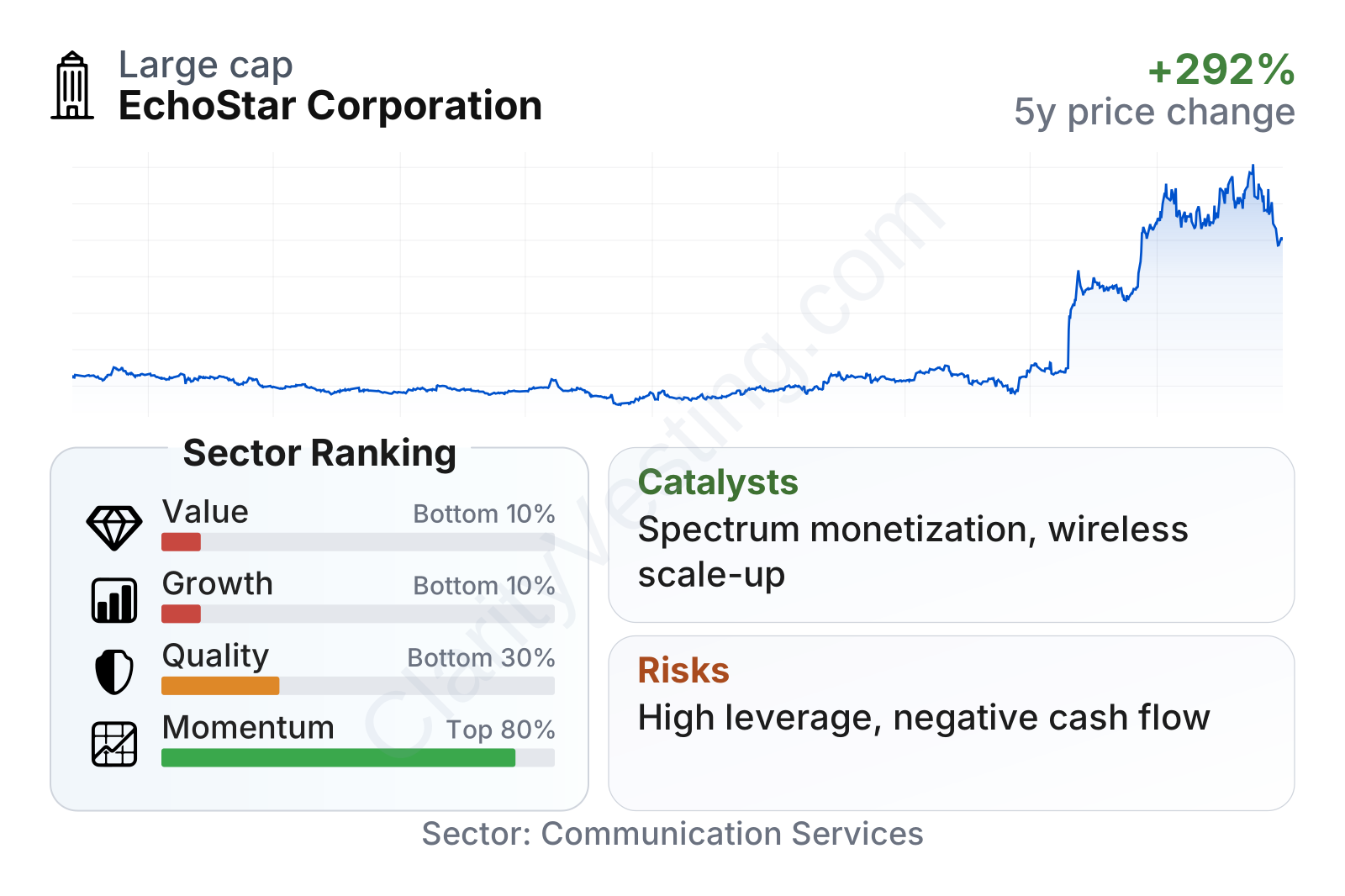
EchoStar is a large communications company by market value, but the operating profile currently looks weak relative to most of its sector. Value and growth metrics rank near the bottom of the peer group, and quality is also below average because profitability and returns on capital have turned negative. The one area that stands out is share-price momentum over the last few years, which has been much stronger than the sector, even though recent business performance has not improved at the same pace. That gap between market enthusiasm and operating fundamentals is one of the central issues in understanding the stock.
Growth
EchoStar operates in sectors that matter for the future of communications. Wireless connectivity, mobile data usage, private and rural broadband access, and satellite-enabled networks all remain relevant long-term markets. In that sense, the company is not stuck in a declining industry overall. The problem is that its largest legacy activity, pay-TV, is in structural decline, while the businesses tied to future growth need heavy execution and funding.
The strategic logic does make sense on paper. EchoStar controls spectrum, owns network assets, has an established satellite and broadband presence through Hughes, and has a national consumer distribution platform through Boost and DISH. If management can combine those pieces effectively, the company could become more than a traditional satellite TV operator. That is the core reason the market has paid attention to the stock despite weak headline earnings.
Recent revenue trends, however, show that the transition is still unfinished. Revenue growth was boosted during the combination period, but that effect did not last. Since then, year-over-year performance has mostly been negative, and the latest reading remains below the sector median. That suggests the newer growth engines are not yet large enough to offset subscriber losses and pressure in older businesses.
Cash generation is another major part of the growth debate. Free cash flow has moved from positive territory earlier in the period to deeply negative territory more recently. For a telecom company trying to build out wireless capabilities, negative free cash flow is not automatically surprising, but it does mean that future growth depends not only on market opportunity but also on balance-sheet capacity and disciplined spending.
A meaningful catalyst is the company’s spectrum and wireless network position. Spectrum can become more valuable if it is used productively, leased, partnered, or otherwise monetized through network expansion. Another potential opportunity is demand for connectivity in underserved areas, enterprise networking, and satellite-backed services where Hughes remains a recognized brand. If management can stabilize subscriber trends and show clearer operating progress in wireless, the growth narrative becomes easier to justify.
Recent company communications have also kept attention on network development, subscriber strategy, and financing flexibility. Those subjects matter because they determine whether EchoStar can move from an asset-rich narrative to consistent operating improvement.
Risks
This article is for informational purposes only and does not constitute financial advice. Some content is AI-generated. See Disclaimer