Stock Analysis · Sunrun Inc (RUN)
Overview
Sunrun is a U.S. residential solar and home energy company. It designs, sells, installs, finances, and services rooftop solar systems, battery storage, and related energy products for homeowners. In simple terms, it helps households produce their own electricity and, increasingly, store it for use at night, during peak pricing hours, or during grid outages.
The company’s business model is different from a traditional equipment seller. A large part of Sunrun’s activity comes from offering customers long-term agreements rather than asking them to pay the full system cost upfront. That means Sunrun often owns the system and collects recurring payments over many years, while also earning revenue from installations, equipment sales, and grid-related services.
Based on recent company filings, Sunrun’s revenue mix is mainly built around customer agreements and solar energy systems, with smaller contributions from incentives, grid services, and other customer-related items. The exact mix can shift from quarter to quarter because of sales timing, financing structures, and accounting treatment, but the main buckets are:
- Customer agreements and incentives: approximately 45% to 55% of revenue in recent periods. This includes payments from customers under leases and power purchase agreements, along with certain contract and incentive-related items tied to deployed systems.
- Solar energy systems and product sales: approximately 35% to 45%. This covers direct sales of solar systems, battery storage, and installed products for homeowners.
- Other revenue, including grid services and related items: approximately 5% to 15%. This includes smaller activities such as energy services, platform-related items, and other ancillary revenue streams.
What matters for long-term analysis is that Sunrun is not only selling hardware. It is building a base of contracted customers whose systems can also become part of a broader home energy network, especially as battery adoption grows.
The business has also shown major swings in profitability and financing costs over time. Revenue has grown sharply over several years, but costs, interest expense, and the capital needed to fund systems have had a large effect on reported results.
One visible pattern is that revenue and gross profit improved meaningfully into 2025, but financing costs remained very heavy. That reinforces a key point for Sunrun: operational progress can be offset by the cost of carrying a highly financed business model.
Key Figures
| Metric | Value | Sector ⓘ |
|---|---|---|
| Date | Sep 12, 2026 | |
| Context | ||
| Sector | Technology | |
| Industry | Solar | |
| Market Cap ⓘ | $2.06B | |
| Beta ⓘ | 2.36 | |
Value (Cheapness) | ||
| P/E Ratio ⓘ | 5.99 | 29.51 |
| FCF Yield ⓘ | -66.15% | 4.25% |
| EBIT / EV ⓘ | -0.22% | 2.85% |
| PEG ⓘ | 3.07 | |
Growth (Business expansion) | ||
| Revenue Growth ⓘ | 52.80% | 15.40% |
| RPS Growth (5Y CAGR) ⓘ | 8.56% | 8.56% |
| EPS Growth (5Y CAGR) ⓘ | 8.98% | -11.88% |
| Margin Growth (5Y Trend) ⓘ | N/A | 0.46% |
| FCF Growth (5Y CAGR) ⓘ | -35.88% | 9.80% |
Quality (Business durability) | ||
| ROIC (Latest) ⓘ | -0.16% | 9.44% |
| ROIC (5Y Median) ⓘ | -4.25% | 8.30% |
| Net Debt / EBIT (Latest) ⓘ | N/A | 0.54 |
| Net Debt / EBIT (5Y Median) ⓘ | N/A | 0.44 |
| Operating Margin (Latest) ⓘ | -1.15% | 9.58% |
| Operating Margin (5Y Median) ⓘ | -39.97% | 8.25% |
| Debt to Equity (Latest) ⓘ | 435.69% | 33.33% |
| Profit Margin (Latest) ⓘ | 11.59% | 7.14% |
| Free Cash Flow (Latest) ⓘ | -$1.36B | |
Momentum (Price trend) | ||
| 3Y Return ⓘ | -41.49% | +45.48% |
| 12M Return (excl. last month) ⓘ | -13.84% | +23.48% |
| 6M Return ⓘ | -28.49% | +20.93% |
| Price vs. 200-Day MA ⓘ | -40.15% | +7.43% |
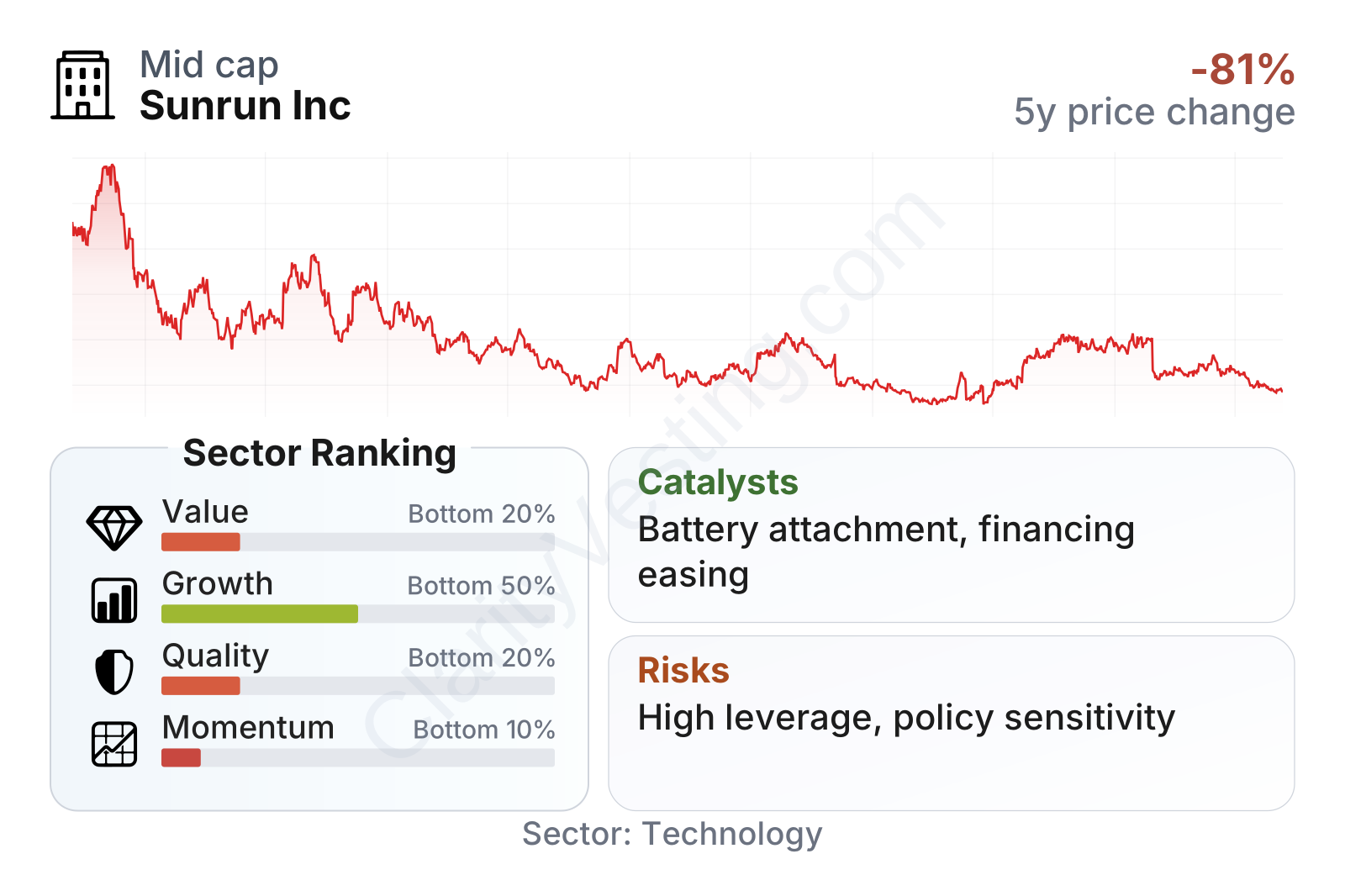
Sunrun is a mid-sized company with a stock that has been very volatile, which fits its high beta. The factor profile is mixed: recent revenue growth looks strong, but quality and balance-sheet metrics rank weakly versus the broader sector. The valuation multiples look low on earnings, yet that picture is less comforting when free cash flow remains deeply negative and returns on invested capital are still below sector norms.
The stock history also shows how sensitive the market has been to interest rates, financing conditions, and confidence in the company’s path to durable profitability. After trading much higher in 2021, the shares went through a long reset and have remained prone to large swings in both directions.
Growth
Sunrun operates in a sector with long-term structural support. Residential solar and home batteries benefit from several durable themes: rising electricity prices in many regions, consumer interest in energy independence, pressure on grids during extreme weather, and the gradual shift toward cleaner power. In that sense, Sunrun is positioned in a market that still has room to expand over the next decade, even if growth is not smooth year to year.
The company’s strategy also has a logical long-term angle. Instead of acting only as an installer, Sunrun is trying to build a recurring revenue platform around home energy. Solar paired with batteries can make each household more valuable over time because the customer relationship extends beyond installation into monitoring, storage, service, and potentially grid support. That creates a larger economic opportunity than a one-time panel sale.
Recent revenue growth has reaccelerated sharply after a weak stretch in 2023 and 2024. The latest year-over-year growth rate is above 50%, well ahead of the sector median, which suggests Sunrun has regained some commercial momentum. Still, the longer five-year growth picture is more average than exceptional, so the current rebound needs to be sustained before it can be treated as a stable trend.
Cash generation is the more complicated part of the growth case. Free cash flow remains negative, but the recent direction has improved substantially from the very large outflows seen in prior years. That matters because Sunrun’s model requires significant upfront capital to fund customer systems. If the company can keep improving cash consumption while maintaining growth, that would strengthen the long-term business profile considerably.
A meaningful catalyst is battery attachment. Home batteries improve customer value by offering backup power and by allowing households to use electricity more strategically. They also support virtual power plant programs, where aggregated batteries can help utilities manage peak demand. Sunrun has been active in this area, and broader adoption could expand both revenue opportunities and the strategic importance of its installed base.
Another important catalyst is financing normalization. The residential solar market was pressured when interest rates rose because higher financing costs made monthly customer economics less attractive and also weighed on companies funding long-lived assets. If financing conditions become more favorable over time, Sunrun’s model could benefit on both customer demand and capital efficiency.
Risks
This article is for informational purposes only and does not constitute financial advice. Some content is AI-generated. See Disclaimer