Stock Analysis · Rumble Inc (RUM)
Overview
Rumble Inc operates a video-sharing platform and a cloud infrastructure business built around what the company describes as an independent internet ecosystem. In simple terms, it runs a platform where creators upload videos, audiences watch content, and advertisers or distribution partners help generate income. Alongside that, Rumble has been building Rumble Cloud, a hosting and infrastructure offering meant to reduce dependence on large technology platforms and to serve organizations that want an alternative cloud provider.
Its revenue base is still relatively concentrated and is led by advertising and platform-related monetization tied to the video business. Based on company filings and management commentary, the main sources of revenue can be grouped as follows:
- Advertising and audience monetization: approximately 55% to 70% of revenue in recent periods. This includes ads sold against video views on Rumble-owned and partner-distributed content.
- Licensing, content distribution, and other platform services: approximately 20% to 35%. This covers content syndication, publisher relationships, and arrangements tied to distribution and monetization support.
- Subscription, cloud, and other emerging services: generally a smaller but growing share. This includes offerings such as Rumble Premium, creator tools, and early revenue from cloud infrastructure and enterprise services where disclosed.
What stands out is that Rumble is trying to evolve from a single app into a broader digital platform with infrastructure attached. That matters because advertising alone can be cyclical and difficult to scale profitably, while software and cloud services can potentially provide steadier economics if adoption improves.
The business mix also shows why profitability remains difficult. Revenue has expanded sharply over the last several years, but costs tied to hosting, infrastructure, product development, content operations, and commercialization have also been high. More recently, gross profit turned positive after being negative in earlier years, suggesting that the economics of the platform improved, even if the company is still far from consistent earnings.
The long-term pattern is clear: revenue has grown from a very small base to around the low nine figures annually, while cost of revenue has consumed a large portion of sales. The notable improvement is that gross profit moved back above zero in 2025, which suggests better monetization and cost discipline than in 2023 and 2024.
Key Figures
| Metric | Value | Sector ⓘ |
|---|---|---|
| Date | Sep 12, 2026 | |
| Context | ||
| Sector | Communication Services | |
| Industry | Internet Content & Information | |
| Market Cap ⓘ | $3.55B | |
| Beta ⓘ | 1.22 | |
Value (Cheapness) | ||
| P/E Ratio ⓘ | N/A | 18.61 |
| FCF Yield ⓘ | -4.33% | 13.68% |
| EBIT / EV ⓘ | -3.14% | 4.54% |
| PEG ⓘ | N/A | |
Growth (Business expansion) | ||
| Revenue Growth ⓘ | 60.90% | 5.40% |
| RPS Growth (5Y CAGR) ⓘ | 64.04% | 4.62% |
| EPS Growth (5Y CAGR) ⓘ | -28.44% | -18.01% |
| Margin Growth (5Y Trend) ⓘ | N/A | 1.10% |
| FCF Growth (5Y CAGR) ⓘ | N/A | 5.88% |
Quality (Business durability) | ||
| ROIC (Latest) ⓘ | -15.33% | 8.38% |
| ROIC (5Y Median) ⓘ | -48.10% | 8.32% |
| Net Debt / EBIT (Latest) ⓘ | N/A | 1.99 |
| Net Debt / EBIT (5Y Median) ⓘ | N/A | 2.94 |
| Operating Margin (Latest) ⓘ | -105.39% | 14.89% |
| Operating Margin (5Y Median) ⓘ | -112.14% | 12.96% |
| Debt to Equity (Latest) ⓘ | 37.53% | 59.59% |
| Profit Margin (Latest) ⓘ | -134.60% | 8.77% |
| Free Cash Flow (Latest) ⓘ | -$153.97M | |
Momentum (Price trend) | ||
| 3Y Return ⓘ | +4.06% | +46.64% |
| 12M Return (excl. last month) ⓘ | -4.67% | +2.16% |
| 6M Return ⓘ | +31.56% | +5.05% |
| Price vs. 200-Day MA ⓘ | +7.51% | +2.88% |
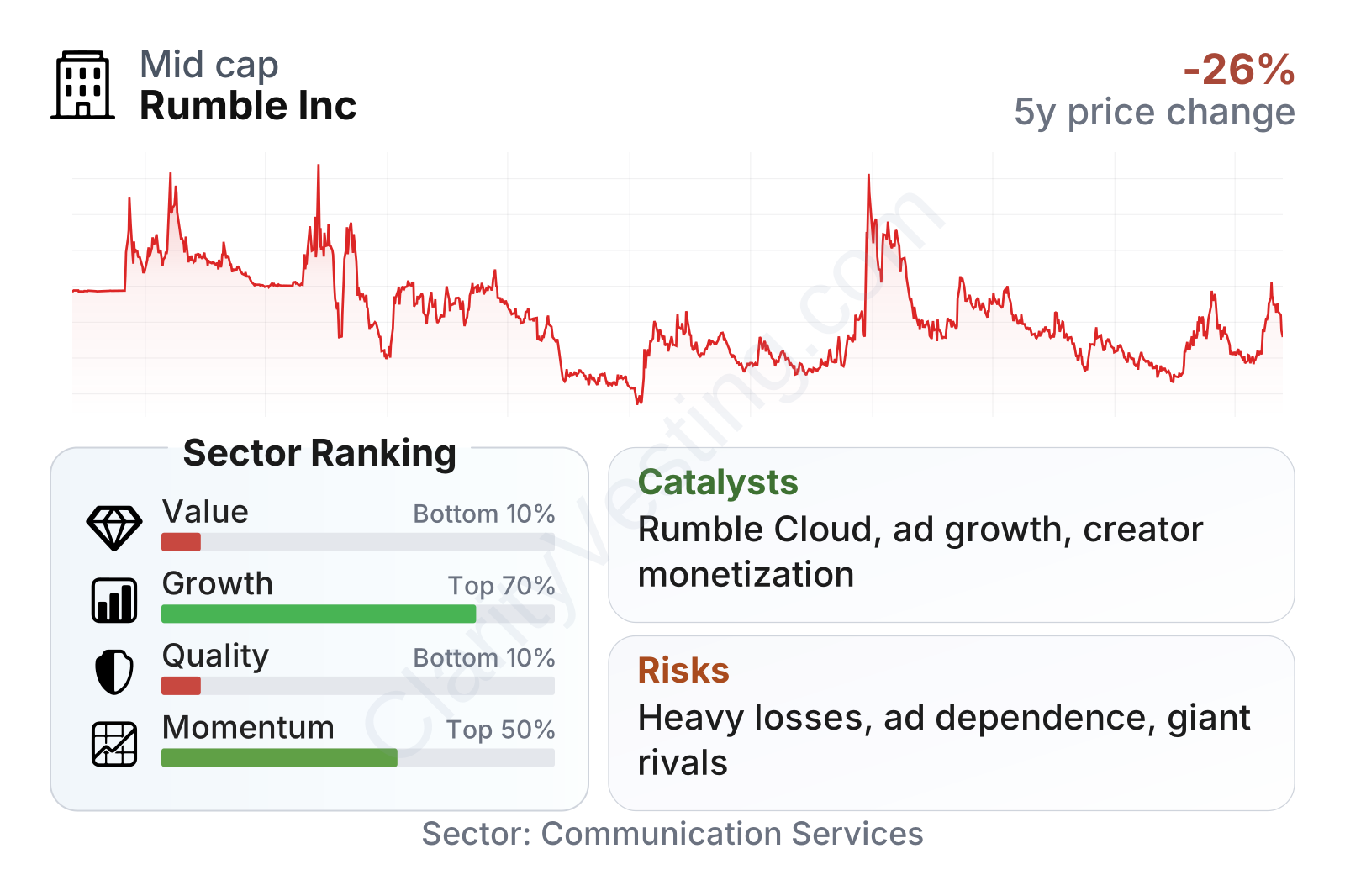
Rumble is a mid-sized public company in market value terms, but financially it still behaves more like an early-stage platform than a mature internet business. The strongest part of the profile is top-line growth, which ranks above much of its sector. The weakest areas are profitability and capital efficiency: returns on invested capital, operating margin, and free cash flow remain well below sector norms. The balance sheet looks less stretched than many peers on a debt basis, but that is offset by continued operating losses and negative cash generation over the trailing twelve months.
The stock’s trading history also shows that the market has treated Rumble as a high-volatility name. After large swings since listing, the shares have remained sensitive to sentiment, platform engagement trends, and expectations around monetization rather than stable earnings power.
Growth
Rumble operates in a sector with long-term structural growth behind it. Online video consumption continues to expand, digital advertising keeps taking share from traditional media, and cloud infrastructure remains a large and strategic market. On paper, that gives the company exposure to several attractive themes at once: creator-led media, alternative social platforms, and sovereign or independent cloud infrastructure.
The company’s strategy broadly makes sense for future growth because it is trying to build multiple layers of monetization around the same ecosystem. A creator platform can drive audience scale; that audience can support ad revenue and subscriptions; the broader platform can support enterprise and infrastructure products. If those pieces reinforce one another, Rumble could improve monetization per user over time rather than relying only on raw traffic growth.
Revenue growth has been uneven, which is common for younger media platforms, but the recent rebound is meaningful. The latest year-over-year pace is far above the sector median, showing that the business is still capable of expanding quickly when monetization or usage improves. The challenge is that growth has not yet become predictable enough to remove execution concerns.
A major catalyst is Rumble Cloud. This initiative aims to turn the company from a content platform into part of the underlying internet infrastructure stack. That opportunity is much larger than video hosting alone if Rumble can win customers that value redundancy, political neutrality, or lower dependence on dominant providers. The company has also emphasized partnerships, creator monetization tools, and international reach as areas that can widen the addressable market.
Another positive factor is that management has continued to position Rumble as an alternative platform at a time when concerns around platform concentration, content moderation policies, and infrastructure dependence remain part of the public debate. Whether one agrees with that positioning or not, it gives the company a distinct brand identity that can attract certain creators, audiences, and enterprise clients.
Cash generation remains the weak spot in the growth thesis. Free cash flow briefly turned positive, but the latest trailing period moved back into materially negative territory. That means the growth strategy still requires spending ahead of proven profitability, especially in infrastructure and go-to-market efforts.
Risks
This article is for informational purposes only and does not constitute financial advice. Some content is AI-generated. See Disclaimer


