Stock Analysis · Ringcentral Inc (RNG)
Overview
RingCentral is a cloud communications software company. In simple terms, it helps businesses handle phone calls, video meetings, messaging, contact centers, and customer interactions through internet-based software instead of older on-premise phone systems. Its platform is mainly used by companies that want one system for employee communications and, in many cases, another layer for customer service operations.
The business model is largely subscription-based, which means customers usually pay recurring monthly or annual fees. That tends to make revenue more predictable than one-time software sales. RingCentral has also built important distribution relationships with large telecom and technology partners, which helps it reach business customers without relying only on its own direct sales force.
Based on the company’s recent annual reporting structure, revenue is dominated by subscriptions, while services make up a much smaller share.
- Subscriptions: approximately 94% to 96% of revenue. This includes cloud business communications products such as RingEX, video, messaging, and contact center-related software sold on a recurring basis.
- Professional services and other: approximately 4% to 6% of revenue. This generally includes implementation, support-related work, and other non-recurring items tied to customer deployments.
Within subscriptions, the largest economic driver is RingCentral’s core unified communications offering for businesses, while contact center products and partner-led solutions add another layer of growth. The company’s financial flow over the last few years shows a clear improvement: revenue kept rising, gross profit remained strong, and operating losses gradually narrowed until the company turned modestly profitable on an operating and net income basis in 2025.
Key Figures
| Metric | Value | Sector ⓘ |
|---|---|---|
| Date | Sep 12, 2026 | |
| Context | ||
| Sector | Technology | |
| Industry | Software - Application | |
| Market Cap ⓘ | $5.76B | |
| Beta ⓘ | 1.15 | |
Value (Cheapness) | ||
| P/E Ratio ⓘ | 55.14 | 29.51 |
| FCF Yield ⓘ | 11.67% | 4.25% |
| EBIT / EV ⓘ | 2.68% | 2.85% |
| PEG ⓘ | 0.34 | |
Growth (Business expansion) | ||
| Revenue Growth ⓘ | 5.90% | 15.40% |
| RPS Growth (5Y CAGR) ⓘ | 13.25% | 8.56% |
| EPS Growth (5Y CAGR) ⓘ | -6.90% | -11.88% |
| Margin Growth (5Y Trend) ⓘ | N/A | 0.46% |
| FCF Growth (5Y CAGR) ⓘ | N/A | 9.80% |
Quality (Business durability) | ||
| ROIC (Latest) ⓘ | 26.69% | 9.44% |
| ROIC (5Y Median) ⓘ | -8.57% | 8.30% |
| Net Debt / EBIT (Latest) ⓘ | 6.75 | 0.54 |
| Net Debt / EBIT (5Y Median) ⓘ | N/A | 0.44 |
| Operating Margin (Latest) ⓘ | 7.06% | 9.58% |
| Operating Margin (5Y Median) ⓘ | -5.49% | 8.25% |
| Debt to Equity (Latest) ⓘ | -220.13% | 33.33% |
| Profit Margin (Latest) ⓘ | 4.27% | 7.14% |
| Free Cash Flow (Latest) ⓘ | $671.36M | |
Momentum (Price trend) | ||
| 3Y Return ⓘ | +125.33% | +45.48% |
| 12M Return (excl. last month) ⓘ | +127.24% | +23.48% |
| 6M Return ⓘ | +81.73% | +20.93% |
| Price vs. 200-Day MA ⓘ | +69.86% | +7.43% |
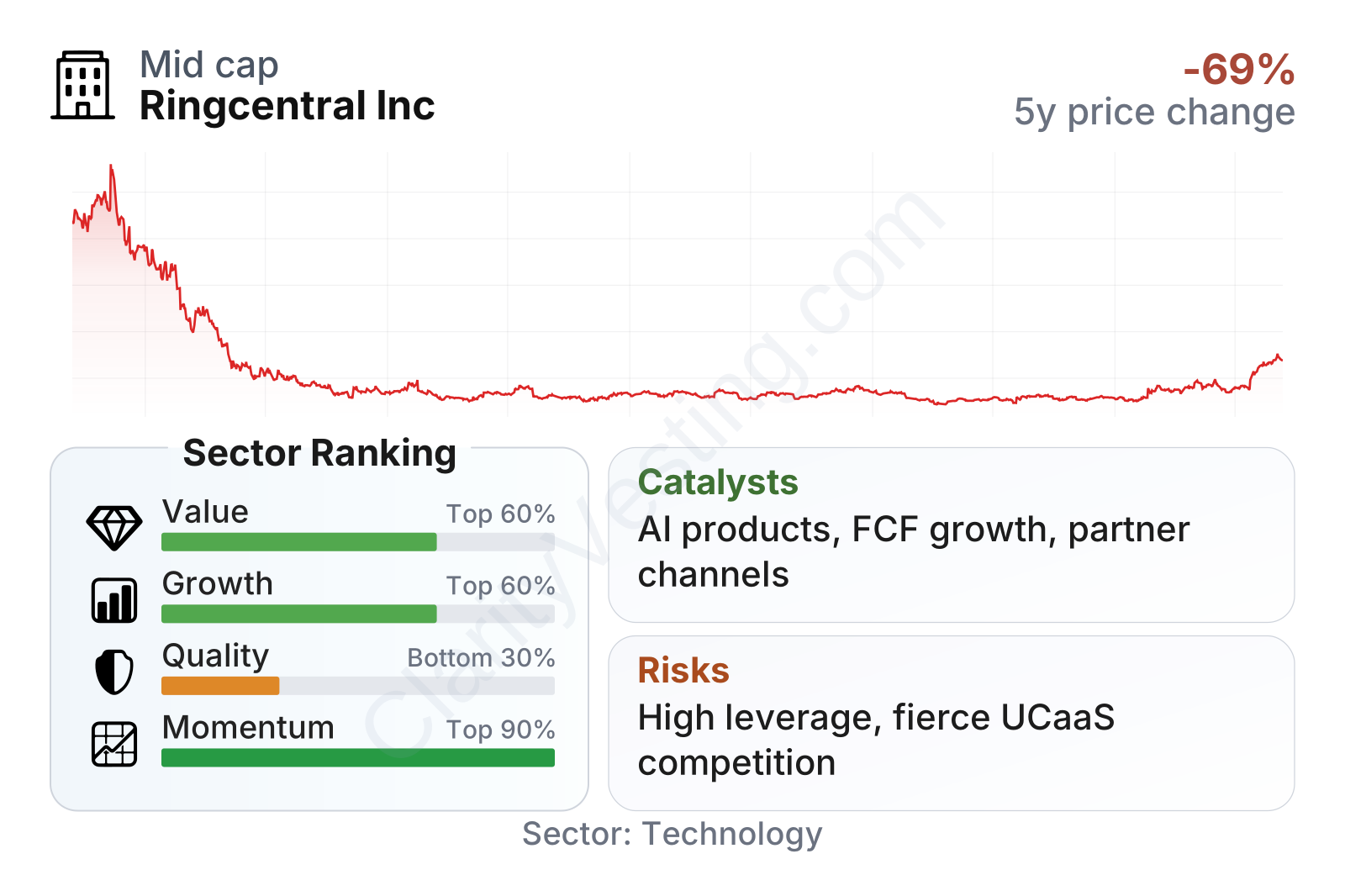
RingCentral sits in the mid-cap range, with a stock that has been much more volatile than many mature software names. The share price collapsed from its 2021 peak, then recovered sharply more recently, which reflects a business that moved from high-growth expectations to a harder focus on profitability and cash generation. In the factor breakdown, value and momentum look relatively favorable, while quality is held back by balance sheet pressure and margins that still trail many software peers. Growth is no longer exceptional, but the longer-term revenue-per-share trend remains better than the sector median.
Growth
RingCentral operates in a sector with long-term relevance. Businesses are still shifting communications from legacy hardware systems to cloud-based software, and many companies want integrated calling, messaging, meetings, and customer support tools. That broad market trend remains supportive, even though the fastest phase of adoption has already passed and the market is more competitive than it was several years ago.
The company’s current strategy is more disciplined than before. Instead of chasing growth at any cost, management has been emphasizing enterprise customers, partner channels, product bundling, and efficiency. That approach has trade-offs: growth has slowed materially from the 20% to 30% range seen earlier in the decade to around 5% to 6% more recently, below the software sector median. Still, the slowdown has come alongside much better operating performance.
The most important growth signal today is not rapid top-line expansion but improving business quality. Revenue growth has decelerated for several years, yet the rate appears to have stabilized in the mid-single digits rather than continuing to collapse. For a recurring-revenue software company, that can matter if retention stays healthy and upselling opportunities remain intact.
Free cash flow is one of RingCentral’s strongest current positives. Over the last several years, it moved from negative territory to a substantial positive level, reaching roughly $650 million to $670 million on a trailing basis. That is a major shift because it gives the company more flexibility to manage debt, invest in products, and absorb slower growth without depending on new capital.
Potential catalysts for future expansion include wider adoption of AI-enabled communications tools, deeper cross-selling between unified communications and contact center products, and continued sales through partners such as telecom operators and large enterprise channels. RingCentral has also been positioning its platform around AI-based assistance for calls, conversations, summaries, and workflow support. If these features improve customer productivity and reduce churn, they could support both retention and pricing power.
Recent company communications have also emphasized continued profitability improvement and larger-customer execution. That matters because enterprise accounts tend to be stickier, although they can take longer to win. For RingCentral, the most meaningful opportunity is probably not a return to hypergrowth, but proving that a slower-growth communications platform can still produce durable cash flow and steady earnings expansion.
Risks
This article is for informational purposes only and does not constitute financial advice. Some content is AI-generated. See Disclaimer


