Stock Analysis · Ralph Lauren Corp (RL)
Overview
Ralph Lauren is a global luxury and premium lifestyle company best known for apparel, but its business is broader than clothing alone. Through brands such as Ralph Lauren, Polo Ralph Lauren, Double RL, Lauren Ralph Lauren, Chaps, and Club Monaco licensing relationships where applicable, the company sells products across men’s, women’s, and children’s wear, as well as footwear, accessories, home goods, fragrances, and hospitality-related experiences. Its strategy centers on protecting brand prestige while expanding distribution through its own stores, e-commerce, and selected wholesale partners.
The business makes money from a mix of direct sales to consumers, wholesale shipments to other retailers, and licensing royalties. Based on the latest annual filing, the revenue mix is approximately the following:
- Direct-to-consumer: about 66% — sales from company-operated stores and digital commerce websites and apps.
- Wholesale: about 32% — products sold to department stores, specialty stores, and other third-party retailers.
- Licensing: about 2% — royalties from partners using Ralph Lauren brands in categories such as fragrances, eyewear, or certain geographic markets.
Geographically, Ralph Lauren is still led by North America, but Europe and Asia have become increasingly important growth engines. Category-wise, apparel remains the core of the business, while accessories, footwear, home, and fragrance help broaden the brand and raise average spending per customer.
The financial profile has improved meaningfully over the last several years. Revenue has climbed from a little above $6.2 billion in fiscal 2022 to more than $8.1 billion in fiscal 2026, while net income has risen from about $600 million to roughly $940 million. That combination suggests that recent growth has not come from sales alone, but also from stronger pricing, product mix, and operating discipline.
The business has been converting a larger share of sales into profit. Gross profit has expanded faster than cost of goods, and operating income has advanced steadily even while marketing, store, and administrative costs also increased. That points to stronger brand economics rather than simple cost cutting.
Key Figures
| Metric | Value | Sector ⓘ |
|---|---|---|
| Date | Sep 12, 2026 | |
| Context | ||
| Sector | Consumer Cyclical | |
| Industry | Apparel Manufacturing | |
| Market Cap ⓘ | $20.20B | |
| Beta ⓘ | 1.35 | |
Value (Cheapness) | ||
| P/E Ratio ⓘ | 21.23 | 17.10 |
| FCF Yield ⓘ | 5.16% | 8.53% |
| EBIT / EV ⓘ | 5.89% | 6.46% |
| PEG ⓘ | 1.81 | |
Growth (Business expansion) | ||
| Revenue Growth ⓘ | 14.00% | 5.75% |
| RPS Growth (5Y CAGR) ⓘ | 11.69% | 9.14% |
| EPS Growth (5Y CAGR) ⓘ | -16.85% | -18.21% |
| Margin Growth (5Y Trend) ⓘ | 1.51% | -0.23% |
| FCF Growth (5Y CAGR) ⓘ | 7.97% | 4.91% |
Quality (Business durability) | ||
| ROIC (Latest) ⓘ | 24.61% | 12.61% |
| ROIC (5Y Median) ⓘ | 19.03% | 10.72% |
| Net Debt / EBIT (Latest) ⓘ | 1.03 | 2.10 |
| Net Debt / EBIT (5Y Median) ⓘ | 1.89 | 2.32 |
| Operating Margin (Latest) ⓘ | 14.88% | 9.25% |
| Operating Margin (5Y Median) ⓘ | 13.00% | 9.64% |
| Debt to Equity (Latest) ⓘ | 110.37% | 75.78% |
| Profit Margin (Latest) ⓘ | 11.76% | 5.33% |
| Free Cash Flow (Latest) ⓘ | $1.04B | |
Momentum (Price trend) | ||
| 3Y Return ⓘ | +202.40% | +14.53% |
| 12M Return (excl. last month) ⓘ | +33.68% | +3.08% |
| 6M Return ⓘ | +1.72% | +0.55% |
| Price vs. 200-Day MA ⓘ | -7.16% | -0.54% |
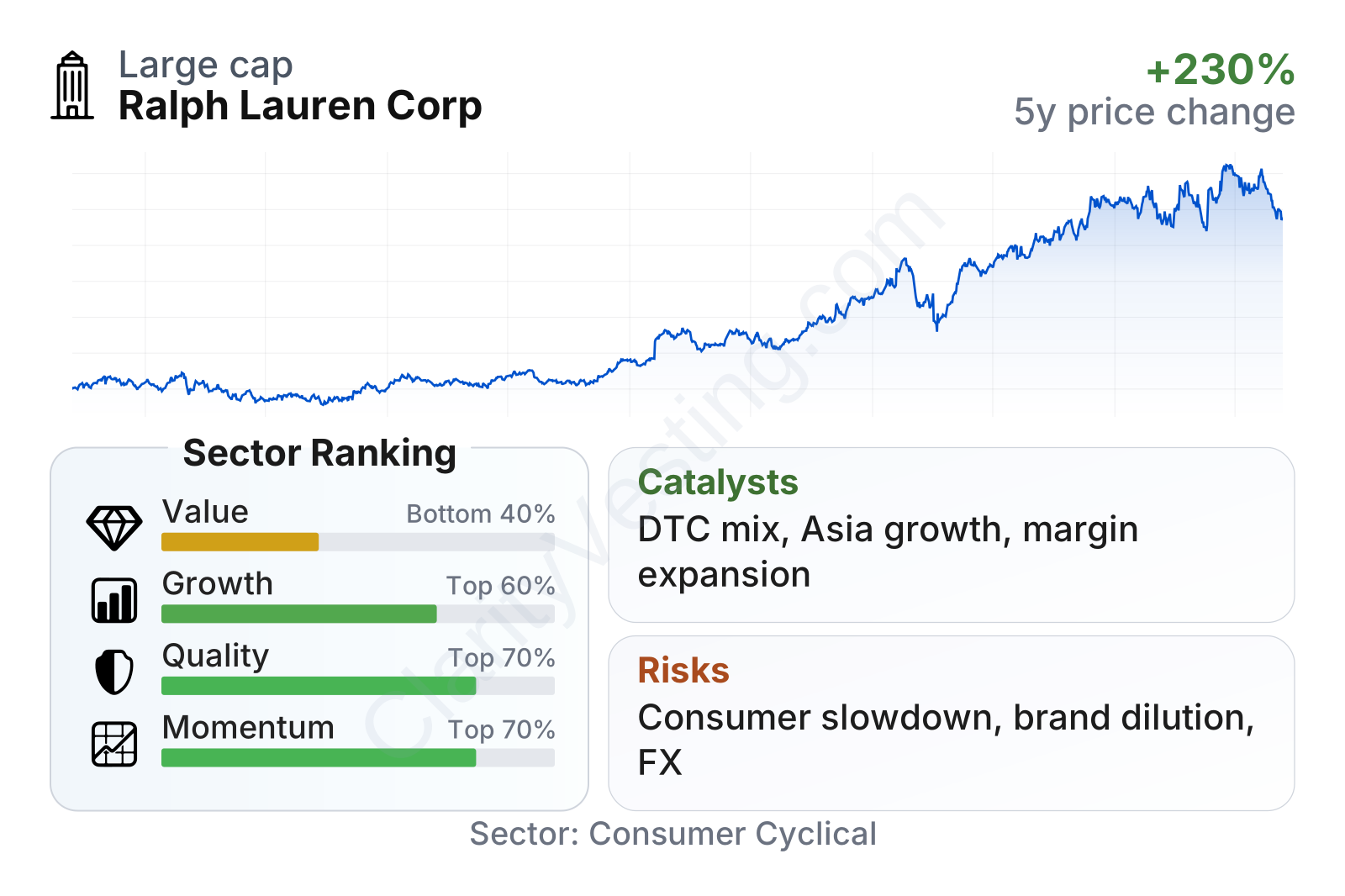
Ralph Lauren stands out more for business quality and market performance than for traditional cheapness. Profitability is well above the sector median, with operating margin near 15%, profit margin close to 12%, and return on invested capital around the low-20% range. Growth has also been better than much of the sector, especially on revenue and cash flow over multi-year periods. The weaker area is valuation: earnings and cash flow multiples sit above sector norms, so the market is already recognizing much of this improvement.
The stock’s longer-term performance has been strong, especially since early 2024, although the path has not been smooth. That pattern fits a company that moved from recovery into re-rating: the market has gradually assigned a higher multiple as margins, brand momentum, and international growth improved.
Growth
Ralph Lauren operates in a part of consumer spending that can still grow over long periods: global premium and luxury lifestyle goods. This is not a high-volume commodity market. Growth usually comes from brand strength, pricing power, international expansion, category extensions, and a larger direct relationship with customers. That makes the sector attractive for companies with durable brand identity, even if year-to-year demand can be cyclical.
Ralph Lauren’s strategy is aligned with those drivers. Management has emphasized elevating the brand, expanding direct-to-consumer channels, improving digital capabilities, and increasing penetration in Europe and Asia. This matters because direct sales usually carry higher margins than wholesale, and stronger brand control can reduce discounting and support premium pricing.
Recent growth has been clearly stronger than the broader sector. Year-over-year revenue growth accelerated into the low-to-mid teens in the latest periods, compared with a much lower sector median. That is a notable sign for a mature apparel company, especially because it follows several years of more modest expansion. It suggests that the brand still has room to deepen customer demand rather than merely defend its current position.
Cash generation has also remained solid, even though it can fluctuate from year to year with inventory and working-capital movements. Free cash flow moved back above $1 billion in fiscal 2025 before easing in fiscal 2026, which still leaves the business with a healthy cash-producing profile. For a branded consumer company, that matters because cash funds store investments, digital expansion, dividends, and share repurchases without relying heavily on external financing.
A meaningful catalyst is continued international expansion, especially in Asia and Europe, where premium Western brands often retain pricing appeal. Another is the company’s focus on higher-quality revenue: more direct sales, better product mix, and fewer promotions can support both growth and margins at the same time. Ralph Lauren has also been building lifestyle extensions beyond core apparel, which can raise customer lifetime value and broaden the brand’s reach without changing its identity.
Recent company communications have also pointed to ongoing momentum in core brands, consumer engagement, and selective store and digital investments. None of that guarantees uninterrupted growth, but it does support the view that the current strategy is coherent and aimed at long-duration brand development rather than short-term volume chasing.
Risks
This article is for informational purposes only and does not constitute financial advice. Some content is AI-generated. See Disclaimer


