Stock Analysis · RH (RH)
Overview
RH, formerly known as Restoration Hardware, is a luxury home furnishings company. It sells furniture, lighting, textiles, bath products, décor, outdoor collections, and interior design services. Over time, RH has tried to move beyond traditional retail by presenting itself as a luxury lifestyle brand, using large-format galleries, hospitality concepts, and curated product collections to create a more premium customer experience.
The business is concentrated in home-related spending, especially higher-end household furniture and décor. RH operates mainly in North America, while also investing in international expansion and new brand extensions. Its model combines product sales, direct-to-customer ordering, design support, and membership-driven pricing intended to encourage repeat purchases and larger baskets.
Based on company disclosures, revenue is primarily generated from merchandise sales, with the mix broadly centered on the home category.
- Furniture: approximately 60% to 65% of revenue. This includes indoor furniture collections for living rooms, dining rooms, bedrooms, offices, and children’s spaces.
- Outdoor: approximately 15% to 20% of revenue. This covers patio and outdoor living products, a category the company has emphasized as part of its luxury positioning.
- Lighting: approximately 8% to 10% of revenue. RH has built a sizable premium lighting assortment that supports both stand-alone purchases and full-room projects.
- Textiles, bath, décor, and other home accessories: approximately 8% to 12% of revenue. These products help complete projects and increase average order value.
- Shipping revenue, design services, hospitality, and other activities: a low-single-share portion of revenue, with hospitality and services still relatively small compared with merchandise sales.
One notable financial pattern is that revenue and gross profit remain substantial, but a much larger share of earnings now gets absorbed by operating costs and interest expense than during RH’s peak period. That helps explain why the business still produces meaningful sales and gross profit, yet net income is far below earlier highs.
Key Figures
| Metric | Value | Sector ⓘ |
|---|---|---|
| Date | Sep 14, 2026 | |
| Context | ||
| Sector | Consumer Cyclical | |
| Industry | Specialty Retail | |
| Market Cap ⓘ | $2.54B | |
| Beta ⓘ | 1.86 | |
Value (Cheapness) | ||
| P/E Ratio ⓘ | 23.69 | 17.10 |
| FCF Yield ⓘ | 9.76% | 8.53% |
| EBIT / EV ⓘ | 5.07% | 6.46% |
| PEG ⓘ | 0.63 | |
Growth (Business expansion) | ||
| Revenue Growth ⓘ | 2.60% | 5.75% |
| RPS Growth (5Y CAGR) ⓘ | 9.52% | 9.14% |
| EPS Growth (5Y CAGR) ⓘ | -63.35% | -18.19% |
| Margin Growth (5Y Trend) ⓘ | -12.46% | -0.23% |
| FCF Growth (5Y CAGR) ⓘ | -14.70% | 4.91% |
Quality (Business durability) | ||
| ROIC (Latest) ⓘ | 9.85% | 12.61% |
| ROIC (5Y Median) ⓘ | N/A | 10.72% |
| Net Debt / EBIT (Latest) ⓘ | 4.42 | 2.11 |
| Net Debt / EBIT (5Y Median) ⓘ | 8.88 | 2.32 |
| Operating Margin (Latest) ⓘ | 9.59% | 9.25% |
| Operating Margin (5Y Median) ⓘ | 13.36% | 9.64% |
| Debt to Equity (Latest) ⓘ | 1318.33% | 75.99% |
| Profit Margin (Latest) ⓘ | 3.23% | 5.34% |
| Free Cash Flow (Latest) ⓘ | $247.73M | |
Momentum (Price trend) | ||
| 3Y Return ⓘ | -56.33% | +14.39% |
| 12M Return (excl. last month) ⓘ | -24.04% | +3.08% |
| 6M Return ⓘ | +2.07% | +0.55% |
| Price vs. 200-Day MA ⓘ | -17.48% | -0.54% |
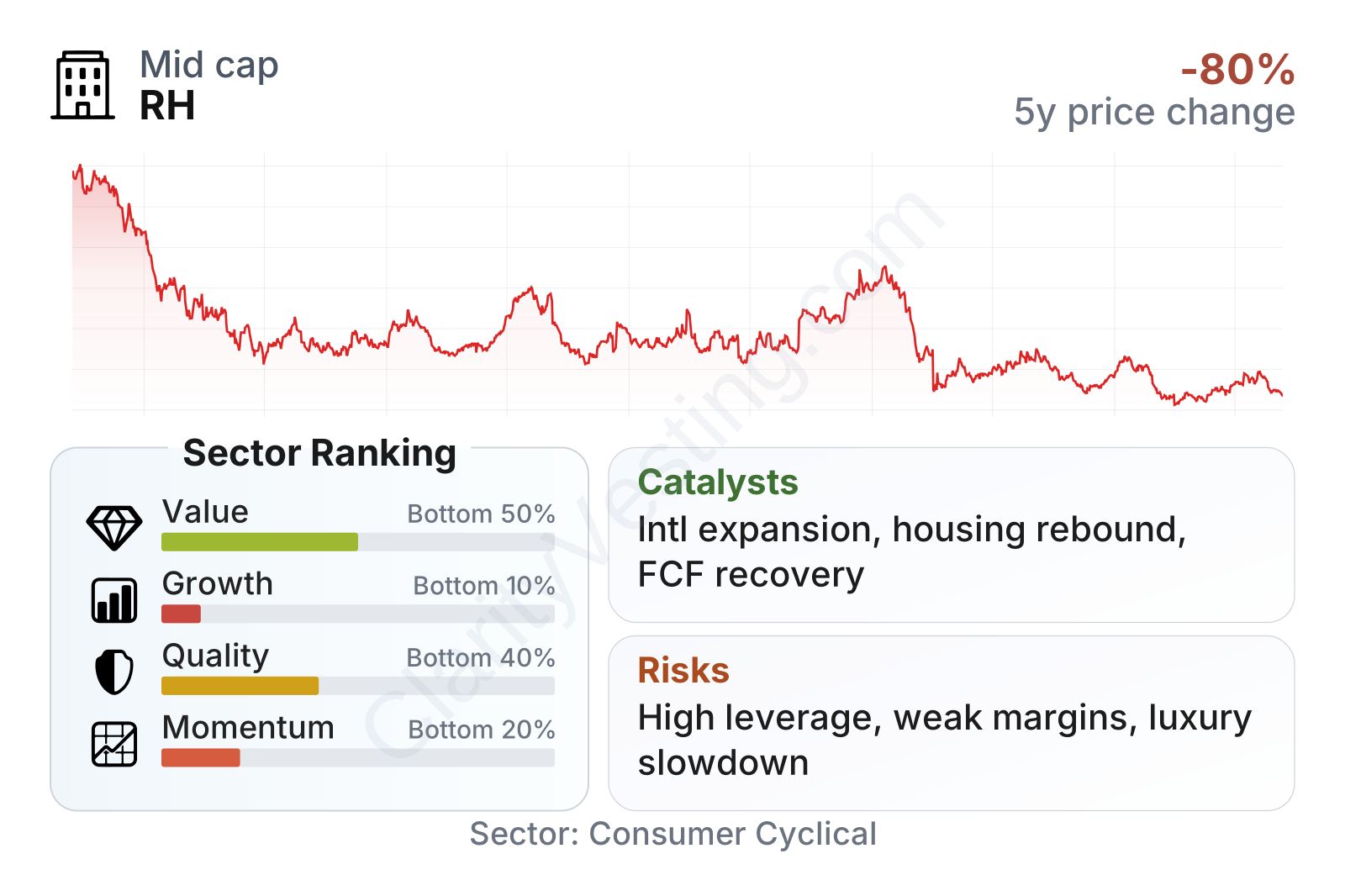
RH is a mid-sized consumer cyclical company with a stock that has been very volatile, reflected in a beta well above 1. The market-based picture is weak compared with much of the sector: recent share-price momentum ranks in the lower part of the group, and the stock remains far below its 2021 peak. On fundamentals, the profile is mixed. Cash generation has improved, and free cash flow yield is slightly better than the sector median, but growth and quality measures are generally weaker. Revenue growth is modest, earnings trends over five years are poor, and leverage remains elevated. Valuation multiples do not screen as clearly cheap relative to the sector, even after the stock’s large pullback.
Growth
RH operates in a sector with long-term potential, but one that is highly cyclical. The broader home furnishings market can grow over time through housing turnover, remodeling activity, premiumization, and international expansion. However, demand is very sensitive to mortgage rates, housing sentiment, consumer confidence, and the financial health of affluent households. That means the sector can look attractive structurally while still producing weak results for several years if the macro backdrop is unfavorable.
RH’s strategy is distinctive and, at least in concept, logical for future growth. Rather than competing on mass-market price, it aims to dominate the luxury end of the home category. Its large galleries, integrated design services, membership program, and brand extensions are meant to create a more differentiated experience than standard furniture retailers. If this model works, RH can potentially generate larger orders, better customer loyalty, and pricing power that lower-end competitors may struggle to match.
The company also has several potential growth catalysts. International expansion remains one of the most visible. RH has been opening galleries outside the United States and continues to frame global luxury home as a major long-run opportunity. New concepts in hospitality and design services could also deepen brand engagement, even if they are still small contributors today. Another catalyst is a more normal housing and renovation environment: RH does not need explosive industry growth to improve results, but it does benefit meaningfully when high-end consumer spending stabilizes and project activity resumes.
The recent revenue trend suggests the sharp contraction phase has eased. After steep declines in 2023, growth turned positive for much of 2024 and 2025, then slowed again into a low single-digit range. That points more to stabilization than to a strong acceleration. In other words, the business appears to be recovering from a difficult base, but it has not yet re-established a consistently strong growth profile.
Cash generation tells a similar story. Free cash flow moved from strong positive territory to negative levels during the downturn, then recovered back to a solid positive run-rate. That rebound matters because it shows RH can still convert demand recovery into cash, even while earnings remain under pressure. It also gives the company more flexibility to support expansion plans and manage its debt burden.
Recent company updates have continued to emphasize product refreshes, gallery development, and international rollout. The main opportunity is not a new one-time event but the possibility that RH’s premium brand platform regains operating leverage if demand conditions improve. For a company with high fixed costs and a luxury positioning, even moderate revenue improvement can have an outsized effect on profitability if expenses are controlled.
Risks
This article is for informational purposes only and does not constitute financial advice. Some content is AI-generated. See Disclaimer