Stock Analysis · RTL Group S.A (RGLXF)
Overview
RTL Group S.A. is a European entertainment company focused on television, radio, and streaming. Its business combines traditional broadcasting with digital video platforms and program production. The group operates well-known free-to-air TV channels, owns streaming services such as RTL+ in key markets, and controls Fremantle, a large international content production business that creates scripted shows, unscripted formats, films, and documentaries for broadcasters and streaming platforms around the world.
This mix matters because RTL is not only a broadcaster selling advertising time. It also earns money from subscriptions, content licensing, production services, and radio activities. That gives it broader exposure than a pure TV network, although advertising still remains highly important to overall performance.
Based on recent annual reporting, the main sources of revenue are approximately:
- TV advertising and related broadcasting revenue: about 45% to 50% of group revenue. This includes advertising sold on RTL’s television channels and associated media activities in markets such as Germany, France, and other European countries.
- Content production and distribution through Fremantle: about 35% to 40%. This covers production of TV programs, films, digital content, and licensing of formats and finished programs internationally.
- Streaming and digital subscriptions: about 5% to 10%. This mainly reflects paid streaming offers such as RTL+ and related digital monetization.
- Radio, publishing, and other media activities: about 5% to 10%. These include radio broadcasting, digital audio, and smaller ancillary operations.
Geographically, Germany is the core profit engine, while Fremantle gives RTL a more international footprint. That combination creates a company with mature cash-generating assets on one side and a global content business on the other. Over the last several years, total revenue has stayed broadly in the low-to-mid €6 billion range, but profitability has become less stable as TV advertising softened and competition in streaming increased.
The financial profile shows a business that still converts a large revenue base into meaningful gross profit, but operating income is far below the unusually strong 2021 level. Revenue has been relatively steady, while earnings have become more volatile, reflecting pressure in advertising and higher financing and investment needs.
Key Figures
| Metric | Value | Sector ⓘ |
|---|---|---|
| Date | Sep 12, 2026 | |
| Context | ||
| Sector | Communication Services | |
| Industry | Broadcasting | |
| Market Cap ⓘ | $6.19B | |
| Beta ⓘ | 0.69 | |
Value (Cheapness) | ||
| P/E Ratio ⓘ | 22.53 | 18.61 |
| FCF Yield ⓘ | 5.54% | 13.68% |
| EBIT / EV ⓘ | N/A | 4.54% |
| PEG ⓘ | N/A | |
Growth (Business expansion) | ||
| Revenue Growth ⓘ | 3.90% | 5.40% |
| RPS Growth (5Y CAGR) ⓘ | -2.30% | 4.62% |
| EPS Growth (5Y CAGR) ⓘ | -15.96% | -18.01% |
| Margin Growth (5Y Trend) ⓘ | -22.65% | 1.10% |
| FCF Growth (5Y CAGR) ⓘ | -13.64% | 5.88% |
Quality (Business durability) | ||
| ROIC (Latest) ⓘ | N/A | 8.38% |
| ROIC (5Y Median) ⓘ | 11.48% | 8.32% |
| Net Debt / EBIT (Latest) ⓘ | 4.60 | 1.99 |
| Net Debt / EBIT (5Y Median) ⓘ | 0.93 | 2.94 |
| Operating Margin (Latest) ⓘ | 5.17% | 14.89% |
| Operating Margin (5Y Median) ⓘ | 10.38% | 12.96% |
| Debt to Equity (Latest) ⓘ | 43.13% | 59.59% |
| Profit Margin (Latest) ⓘ | 16.21% | 8.77% |
| Free Cash Flow (Latest) ⓘ | $343.00M | |
Momentum (Price trend) | ||
| 3Y Return ⓘ | +68.28% | +46.64% |
| 12M Return (excl. last month) ⓘ | +36.61% | +2.16% |
| 6M Return ⓘ | +36.61% | +5.05% |
| Price vs. 200-Day MA ⓘ | +17.10% | +2.88% |
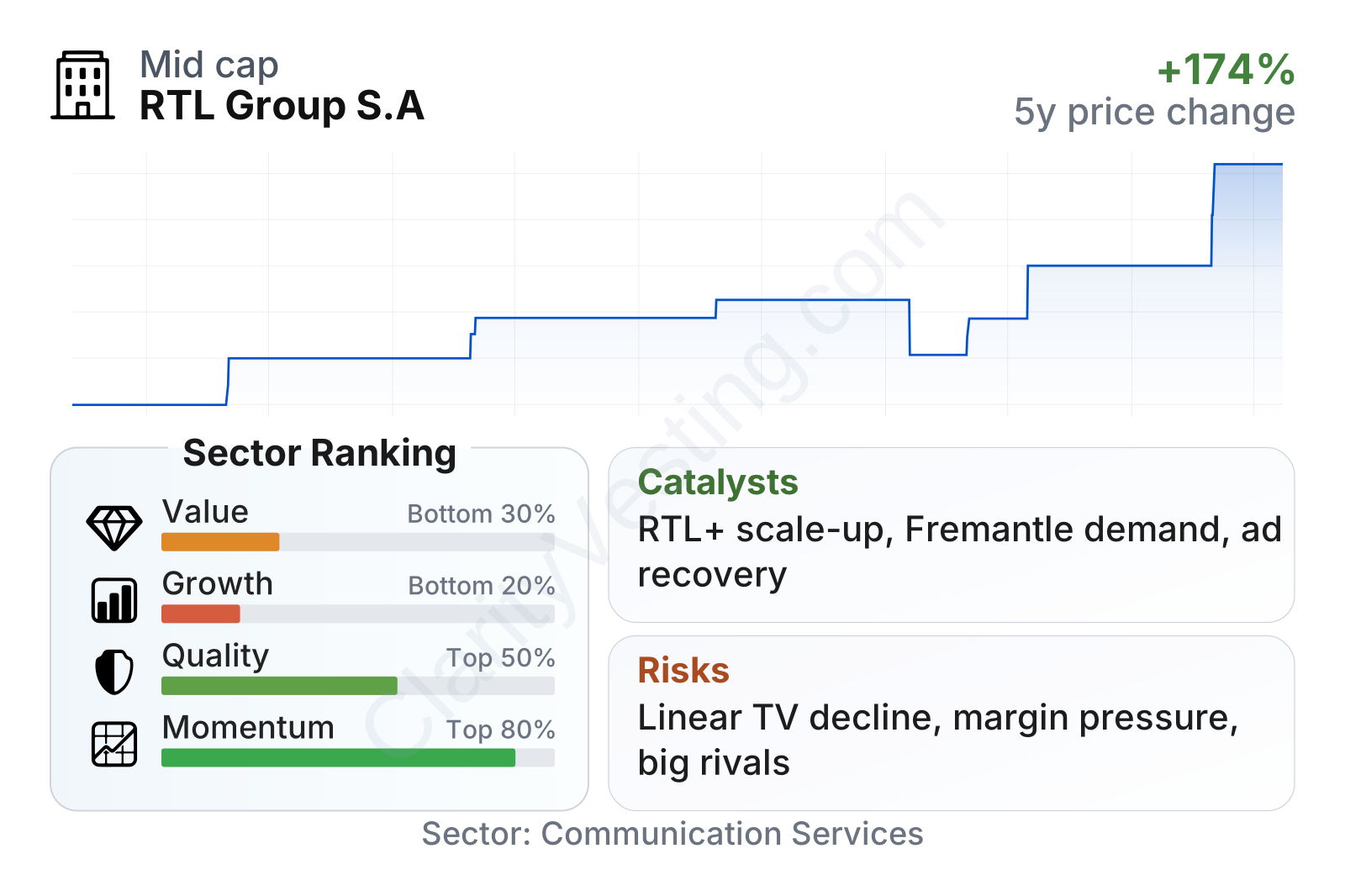
RTL sits in the large-cap range for its niche and its share-price volatility has been lower than the broader market, with a beta below 1. The factor breakdown is mixed: quality looks respectable, momentum is very strong, while growth and value rank weakly against the wider communication services sector. In practical terms, the market has rewarded the shares recently even though the underlying business has not been a strong grower over the last five years.
The contrast between profitability measures is important. Current operating margin is only about 5%, well below the sector median, but net margin is stronger at roughly 16%, helped by items outside core operating performance. Debt-to-equity is around 43%, which is not excessive in isolation, and trailing free cash flow remains solid at roughly €343 million.
Growth
RTL operates in a sector that is changing rather than simply expanding. Traditional linear television and radio face structural pressure as audiences shift toward on-demand viewing, global streaming services, short-form video, and digital advertising platforms. That means the attractive part of the market is not conventional broadcasting itself, but the migration toward streaming subscriptions, addressable advertising, and owning content that can be sold across many platforms.
RTL’s strategy broadly fits that reality. The company has been investing in RTL+ to build a stronger paid streaming position in German-speaking markets, while Fremantle gives it exposure to global demand for content. That second leg is especially relevant for long-term growth because successful formats and production capabilities can travel across countries and buyers, reducing dependence on local TV ad cycles.
Recent growth, however, has been modest. Year-over-year revenue growth is in the low single digits and trails the sector median, while the five-year trend for revenue per share is negative. This suggests the business is still in transition: digital and production activities are growing, but not yet enough to fully offset pressure in legacy media.
Cash generation remains one of the more constructive parts of the profile. Even with uneven earnings, RTL is still producing positive free cash flow at a meaningful scale. For a mature media company, that matters because it supports investments in streaming, content, and shareholder distributions without requiring a dramatic balance-sheet stretch.
A notable catalyst is the company’s effort to deepen its streaming ecosystem in its core markets, especially where local language content and established brands can be used as a differentiator against global platforms. Another potential opportunity comes from the broader recovery of advertising spending if European economic conditions improve. On top of that, Fremantle can benefit from continued demand for outsourced production from broadcasters and streamers that prefer flexible content sourcing rather than keeping all production in-house.
Recent corporate developments have also kept strategic attention on RTL’s asset base, including continued discussion around portfolio optimization, partnerships, and how best to scale digital media activities. For long-term analysis, the key point is that management is not standing still: the group is actively trying to shift earnings toward subscriptions, digital advertising, and content monetization.
Risks
This article is for informational purposes only and does not constitute financial advice. Some content is AI-generated. See Disclaimer


