Stock Analysis · Restaurant Brands International Inc (QSR)
Overview
Restaurant Brands International Inc. is one of the world’s largest quick-service restaurant groups. It owns four major brands: Tim Hortons, Burger King, Popeyes, and Firehouse Subs. The company operates a largely franchised model, which means most restaurants are run by independent franchisees rather than by the company itself. This structure usually makes the business less capital-intensive than a traditional restaurant operator and helps turn systemwide restaurant sales into royalty, rental, and franchise fee income.
Its business is geographically diversified, with meaningful exposure to Canada, the United States, and international markets. Burger King is the biggest brand by restaurant count and global reach, Tim Hortons is especially important in Canada, Popeyes gives the group exposure to fast-growing chicken demand, and Firehouse Subs is still relatively small but adds another expansion platform in sandwiches.
The main revenue sources are broadly the following:
- Franchise and property revenues: the largest source, estimated at well above 50% of total revenue in recent years. This includes royalties based on restaurant sales, franchise fees, and rental income from properties leased to franchisees.
- Company restaurant sales: a significant but smaller share, estimated around 20% to 35%. This comes from restaurants operated directly by the company, including some locations tied to acquisitions and specific markets.
- Supply chain and other revenues: a smaller but still meaningful contribution, estimated around 10% to 20%, depending on the year and reporting mix. This can include sales tied to distribution, advertising-related arrangements, and other brand support activities.
The big attraction in this model is that franchise-heavy restaurant groups can produce strong operating margins and cash flow when brands remain relevant and franchisees keep opening stores or generating higher sales at existing locations.
Over the last several years, revenue has moved meaningfully higher, while operating income has remained strong. The main thing to watch is that rising revenue has not translated into equally smooth net income growth every year, partly because interest costs, taxes, and mix effects can materially influence the final result.
Key Figures
| Metric | Value | Sector ⓘ |
|---|---|---|
| Date | Sep 12, 2026 | |
| Context | ||
| Sector | Consumer Cyclical | |
| Industry | Restaurants | |
| Market Cap ⓘ | $35.04B | |
| Beta ⓘ | 0.53 | |
Value (Cheapness) | ||
| P/E Ratio ⓘ | 19.36 | 17.10 |
| FCF Yield ⓘ | 4.49% | 8.53% |
| EBIT / EV ⓘ | 5.99% | 6.46% |
| PEG ⓘ | 0.88 | |
Growth (Business expansion) | ||
| Revenue Growth ⓘ | 4.60% | 5.75% |
| RPS Growth (5Y CAGR) ⓘ | 13.66% | 9.14% |
| EPS Growth (5Y CAGR) ⓘ | -13.00% | -18.21% |
| Margin Growth (5Y Trend) ⓘ | -8.81% | -0.23% |
| FCF Growth (5Y CAGR) ⓘ | -2.75% | 4.91% |
Quality (Business durability) | ||
| ROIC (Latest) ⓘ | 12.69% | 12.61% |
| ROIC (5Y Median) ⓘ | 11.76% | 10.72% |
| Net Debt / EBIT (Latest) ⓘ | 5.85 | 2.10 |
| Net Debt / EBIT (5Y Median) ⓘ | 7.09 | 2.32 |
| Operating Margin (Latest) ⓘ | 25.69% | 9.25% |
| Operating Margin (5Y Median) ⓘ | 28.85% | 9.64% |
| Debt to Equity (Latest) ⓘ | 406.52% | 75.78% |
| Profit Margin (Latest) ⓘ | 13.13% | 5.33% |
| Free Cash Flow (Latest) ⓘ | $1.57B | |
Momentum (Price trend) | ||
| 3Y Return ⓘ | +27.68% | +14.53% |
| 12M Return (excl. last month) ⓘ | +19.85% | +3.08% |
| 6M Return ⓘ | +8.68% | +0.55% |
| Price vs. 200-Day MA ⓘ | +5.72% | -0.54% |
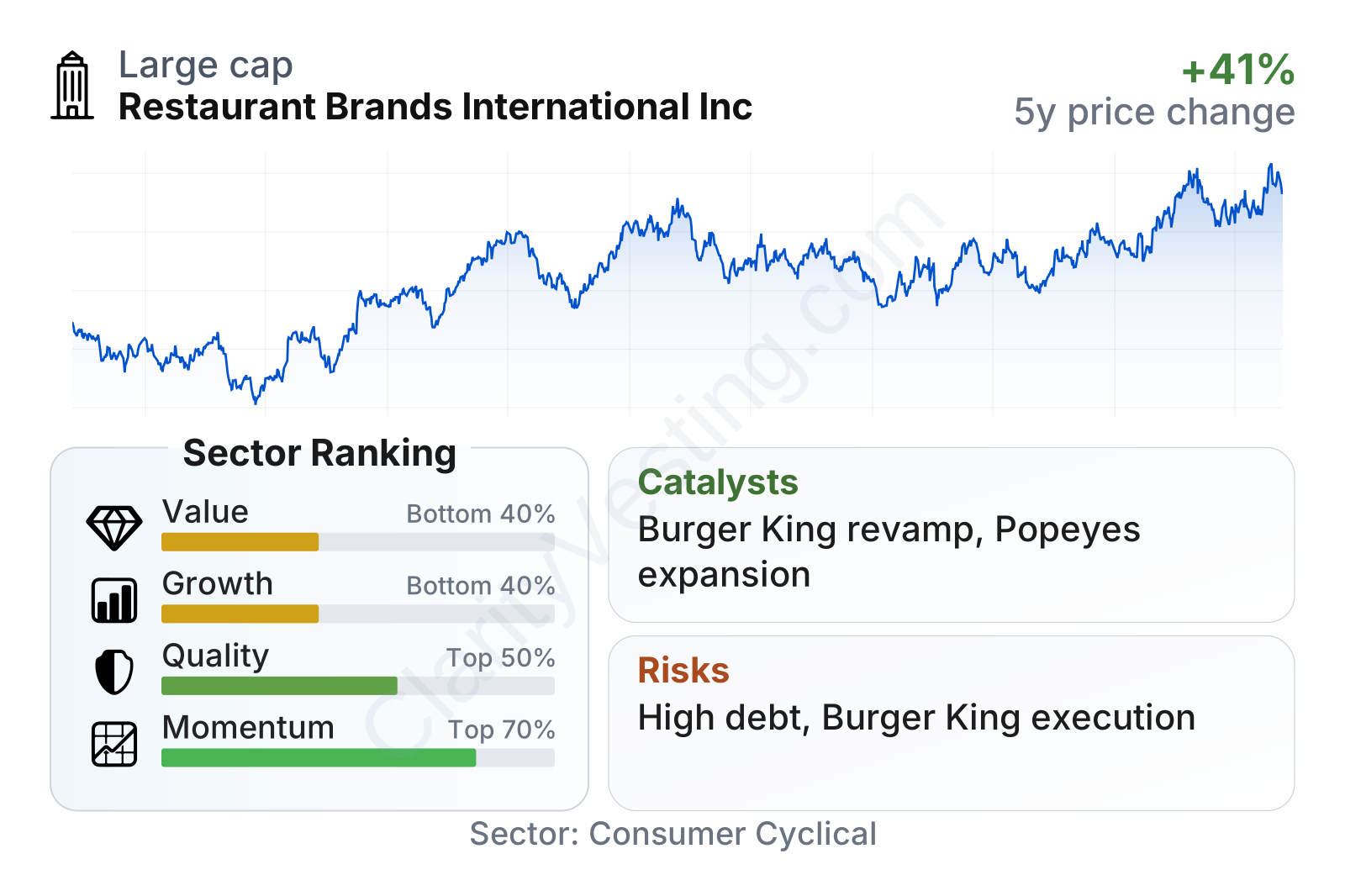
Restaurant Brands is a large-cap restaurant company with relatively low share-price volatility, as reflected by a beta clearly below 1. On profitability and returns on invested capital, it looks stronger than much of the restaurant sector. On growth and value factors, the picture is more mixed: recent revenue growth has been positive but not especially fast compared with the broader sector, while cash flow yield is not particularly high. The balance sheet stands out for leverage, which is much heavier than the sector median and remains one of the most important variables in the investment case.
Growth
The quick-service restaurant industry is a mature sector, but it still offers long-term growth through new unit openings, international expansion, menu innovation, digital ordering, delivery, and pricing. Within that landscape, Restaurant Brands is positioned in categories with durable consumer demand: coffee and breakfast through Tim Hortons, burgers through Burger King, fried chicken through Popeyes, and sandwiches through Firehouse Subs. Chicken and convenience-led food occasions remain especially relevant growth areas globally.
Its strategy is coherent for long-term expansion because the company does not need to fund most new restaurant construction itself. Franchisees carry much of that burden, while the parent company focuses on brand building, operations support, marketing, technology, and international development. That model can support expansion with less capital than a company-owned chain would typically require.
Revenue growth has stayed positive, but the pace has cooled from the much stronger post-pandemic rebound period. More recently, growth has moved into a mid-single-digit range, which suggests the business is still expanding but no longer benefiting from the unusually easy comparisons seen earlier. Over a five-year view, revenue per share growth has actually been solid, even though the latest year-over-year comparison looks less impressive than the sector median.
Cash generation remains one of the more attractive parts of the business. Free cash flow has been resilient and has recently recovered toward earlier highs after a softer stretch. That matters because a franchised restaurant group ultimately depends on its ability to convert sales and royalties into dependable cash that can support debt service, dividends, and reinvestment in the brands.
Recent company communications have continued to emphasize brand revitalization and global development, especially at Burger King through its multi-year turnaround efforts and at Popeyes through international openings. Another meaningful catalyst is digital engagement: loyalty programs, mobile ordering, and delivery partnerships can increase frequency, improve marketing efficiency, and strengthen customer retention. If those initiatives lift same-store sales while the company continues adding restaurants internationally, the growth profile could improve without requiring a dramatic change in the business model.
Risks
This article is for informational purposes only and does not constitute financial advice. Some content is AI-generated. See Disclaimer