Stock Analysis · Qorvo Inc (QRVO)
Overview
Qorvo is a semiconductor company that designs and supplies radio-frequency and power technologies used to connect, control, and protect electronic devices. In simple terms, its chips help phones connect to wireless networks, help infrastructure move signals efficiently, and help industrial, automotive, and defense systems manage power and sensing functions. The company operates mainly as a designer of specialized chips and modules rather than as a consumer brand, so most end customers interact with Qorvo technology indirectly through larger device makers.
In its fiscal year ended March 29, 2026, Qorvo reported revenue through two main segments. Based on the company’s latest annual filing, the revenue mix was approximately:
- High Performance Analog (HPA): about 58% of revenue. This segment includes radio-frequency, power management, ultra-wideband, silicon carbide, and other analog products used in smartphones, Wi‑Fi equipment, automotive, industrial applications, defense, and networking infrastructure.
- Advanced Cellular Group (ACG): about 42% of revenue. This business focuses on highly integrated radio-frequency solutions for mobile devices, especially smartphones, including transmit and receive modules, filters, and other front-end components.
Customer concentration remains important. Qorvo has historically generated a large portion of revenue from a small number of major customers, particularly in mobile devices. That can be very profitable when product cycles go well, but it also makes results more sensitive to changes in handset demand and customer sourcing decisions.
Looking at the broader income structure, revenue has not yet returned to the peak reached earlier in the cycle, but profitability improved meaningfully in the most recent fiscal year. Gross profit recovered while operating expenses were brought down from recent highs, which helped net income rebound from the weak period seen in fiscal 2024 and fiscal 2025.
The business has clearly become leaner after the downturn. Sales are still below the 2022 peak, but margins and earnings recovered as cost of revenue and operating expenses became better aligned with the current revenue base.
Key Figures
| Metric | Value | Sector ⓘ |
|---|---|---|
| Date | Sep 12, 2026 | |
| Context | ||
| Sector | Technology | |
| Industry | Semiconductors | |
| Market Cap ⓘ | $9.91B | |
| Beta ⓘ | 1.46 | |
Value (Cheapness) | ||
| P/E Ratio ⓘ | 26.07 | 29.51 |
| FCF Yield ⓘ | 6.55% | 4.25% |
| EBIT / EV ⓘ | 5.65% | 2.85% |
| PEG ⓘ | 0.97 | |
Growth (Business expansion) | ||
| Revenue Growth ⓘ | -4.20% | 15.40% |
| RPS Growth (5Y CAGR) ⓘ | -1.43% | 8.56% |
| EPS Growth (5Y CAGR) ⓘ | -36.98% | -11.88% |
| Margin Growth (5Y Trend) ⓘ | -13.97% | 0.46% |
| FCF Growth (5Y CAGR) ⓘ | -5.04% | 9.80% |
Quality (Business durability) | ||
| ROIC (Latest) ⓘ | 9.24% | 9.44% |
| ROIC (5Y Median) ⓘ | 7.81% | 8.30% |
| Net Debt / EBIT (Latest) ⓘ | 0.41 | 0.54 |
| Net Debt / EBIT (5Y Median) ⓘ | 3.66 | 0.44 |
| Operating Margin (Latest) ⓘ | 14.74% | 9.58% |
| Operating Margin (5Y Median) ⓘ | 5.41% | 8.25% |
| Debt to Equity (Latest) ⓘ | 44.62% | 33.33% |
| Profit Margin (Latest) ⓘ | 10.95% | 7.14% |
| Free Cash Flow (Latest) ⓘ | $649.51M | |
Momentum (Price trend) | ||
| 3Y Return ⓘ | +23.43% | +45.48% |
| 12M Return (excl. last month) ⓘ | +9.44% | +23.48% |
| 6M Return ⓘ | +48.09% | +20.93% |
| Price vs. 200-Day MA ⓘ | +31.95% | +7.43% |
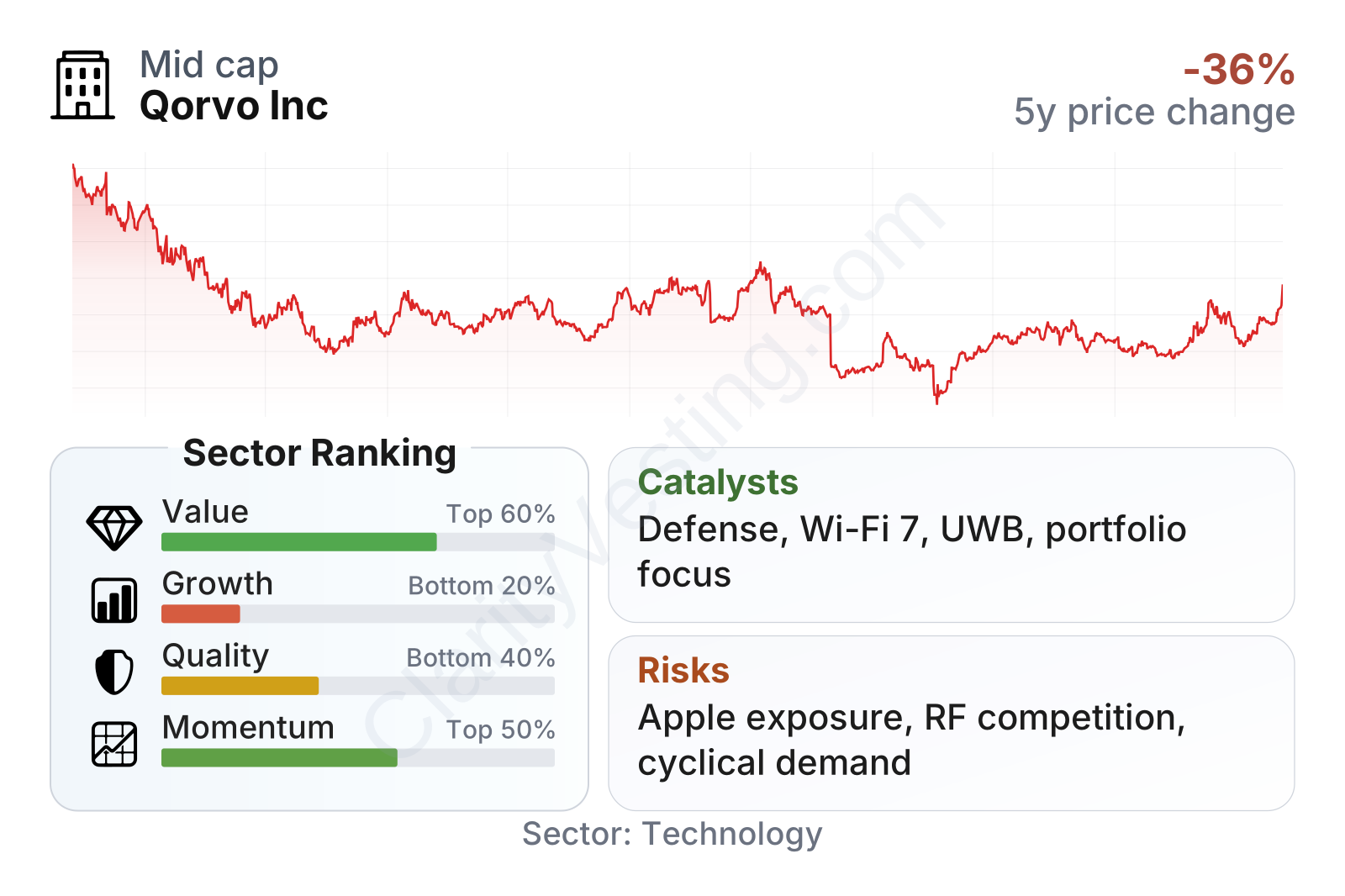
Qorvo is a mid-sized semiconductor company with above-average share price volatility, as shown by a beta of roughly 1.4. On valuation, several measures look less demanding than the sector median: the earnings multiple is below the semiconductor median, while free-cash-flow yield and EBIT relative to enterprise value are stronger than average. That said, the table also shows why the market remains cautious: growth ranks near the bottom of the sector, and longer-term earnings and revenue trends have been weak. Profitability has improved recently, but the company is still working its way out of a difficult cycle rather than building from uninterrupted momentum.
Growth
Qorvo operates in markets that have long-term structural relevance. Wireless connectivity, more complex radio content inside devices, Wi‑Fi upgrades, automotive electrification, defense electronics, and industrial sensing all point to continued demand for specialized analog and RF semiconductors. These are real growth areas, even if quarterly demand can be uneven.
The key question is not whether Qorvo’s end markets matter, but whether the company can capture enough of that demand consistently. Its strategy is centered on moving beyond dependence on premium smartphones and expanding into broader analog markets such as power management, connectivity, ultra-wideband, automotive, and defense. Strategically, that makes sense: those businesses can offer longer product cycles and reduce exposure to a single consumer category.
Recent revenue trends still show a company in recovery mode rather than in a clean expansion phase. After a deep slump, growth turned positive for parts of 2024 and late 2025, but the latest year-over-year readings slipped back slightly negative. That pattern suggests the business has stabilized compared with the worst of the downturn, yet demand remains uneven and below the pace seen in stronger semiconductor niches.
Cash generation is a more encouraging part of the picture. Free cash flow recovered to roughly the upper end of its recent range after falling sharply in the previous year. For a long-term business assessment, this matters because it shows Qorvo can still convert a meaningful amount of revenue into cash even when sales growth is muted. That financial flexibility supports research spending, debt management, and share repurchases.
One notable catalyst is the company’s push into higher-content solutions outside traditional handset cycles. In recent company communications, management has emphasized demand opportunities tied to defense programs, Wi‑Fi 7, ultra-wideband, power products, and silicon carbide development. Another positive factor is that mobile demand no longer needs to return to past peaks for Qorvo to improve earnings; better mix and tighter cost control can also lift results.
A recent strategic step was Qorvo’s agreement to sell its Power Management business to Alpha and Omega Semiconductor. That move points to a sharper portfolio focus. It may help simplify the business and redirect resources toward areas where Qorvo sees stronger returns or clearer competitive positioning.
Risks
This article is for informational purposes only and does not constitute financial advice. Some content is AI-generated. See Disclaimer


