Stock Analysis · Peloton Interactive Inc (PTON)
Overview
Peloton Interactive is a connected fitness company that sells exercise equipment tied to a paid digital membership. Its main products are stationary bikes, treadmills, and a fitness app offering live and on-demand classes such as cycling, running, strength, yoga, and bootcamp. The business combines hardware, software, and recurring subscriptions, which makes it different from a traditional equipment maker.
Peloton’s revenue mainly comes from two segments reported in its filings: Connected Fitness Products and Subscription. Based on the latest fiscal year mix disclosed by the company, revenue is approximately split as follows:
- Subscription: about 60% of revenue. This includes Connected Fitness subscriptions tied to Peloton equipment and App subscriptions for users who access classes without owning Peloton hardware.
- Connected Fitness Products: about 40% of revenue. This includes Bikes, Bike+, Tread, accessories, apparel, and related delivery revenue.
This mix matters because subscriptions usually carry better margins and are more predictable than hardware sales. Over the last several years, Peloton has become less dependent on equipment demand and more centered on monetizing its installed member base. That shift is visible in the company’s financial profile: revenue has declined from pandemic highs, but gross profit and operating performance have improved as the business mix moved toward subscriptions and expenses were reduced.
The business has changed significantly since 2022. Total revenue is lower than it was during the demand surge, but the cost structure is much leaner. Gross profit has held up better than sales, while operating expenses have fallen sharply, allowing Peloton to move from deep operating losses to positive operating income and recent net profitability.
Key Figures
| Metric | Value | Sector ⓘ |
|---|---|---|
| Date | Sep 12, 2026 | |
| Context | ||
| Sector | Consumer Cyclical | |
| Industry | Leisure | |
| Market Cap ⓘ | $2.17B | |
| Beta ⓘ | 2.53 | |
Value (Cheapness) | ||
| P/E Ratio ⓘ | 35.36 | 17.10 |
| FCF Yield ⓘ | 18.16% | 8.53% |
| EBIT / EV ⓘ | 7.02% | 6.46% |
| PEG ⓘ | N/A | |
Growth (Business expansion) | ||
| Revenue Growth ⓘ | 0.10% | 5.75% |
| RPS Growth (5Y CAGR) ⓘ | -19.38% | 9.14% |
| EPS Growth (5Y CAGR) ⓘ | N/A | -18.21% |
| Margin Growth (5Y Trend) ⓘ | N/A | -0.23% |
| FCF Growth (5Y CAGR) ⓘ | N/A | 4.91% |
Quality (Business durability) | ||
| ROIC (Latest) ⓘ | 16.47% | 12.61% |
| ROIC (5Y Median) ⓘ | -26.07% | 10.72% |
| Net Debt / EBIT (Latest) ⓘ | 8.88 | 2.10 |
| Net Debt / EBIT (5Y Median) ⓘ | N/A | 2.32 |
| Operating Margin (Latest) ⓘ | 7.64% | 9.25% |
| Operating Margin (5Y Median) ⓘ | -14.68% | 9.64% |
| Debt to Equity (Latest) ⓘ | -1223.55% | 75.78% |
| Profit Margin (Latest) ⓘ | 2.58% | 5.33% |
| Free Cash Flow (Latest) ⓘ | $394.60M | |
Momentum (Price trend) | ||
| 3Y Return ⓘ | -8.33% | +14.53% |
| 12M Return (excl. last month) ⓘ | -33.42% | +3.08% |
| 6M Return ⓘ | +31.30% | +0.55% |
| Price vs. 200-Day MA ⓘ | -9.43% | -0.54% |
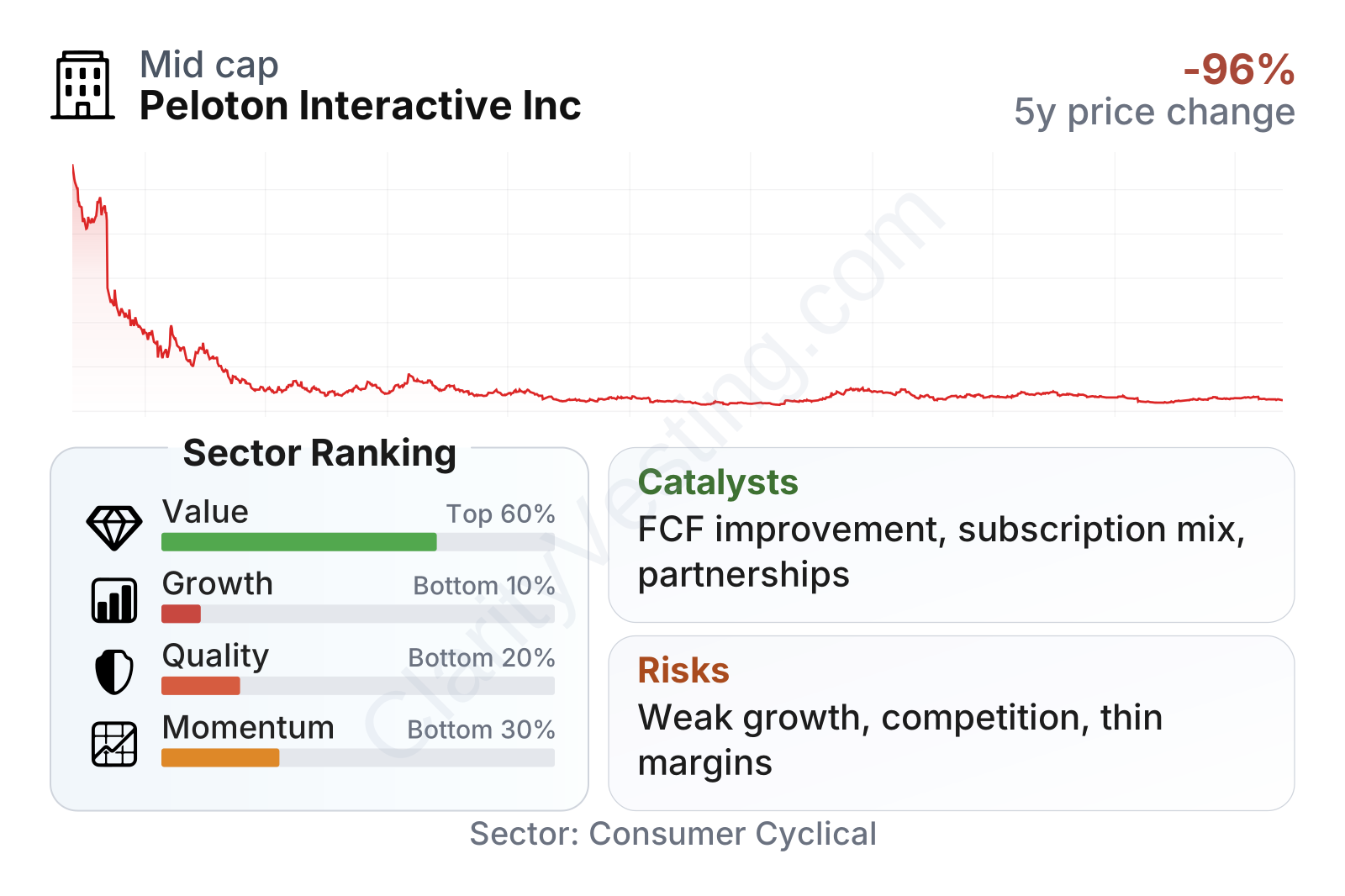
Peloton stands out as a smaller public company with unusually high share-price volatility, reflected in a beta above 2.5. Its factor profile is mixed. Value metrics look better than might be expected because free cash flow yield is strong and enterprise-value-based earnings measures are around the sector middle, but the P/E ratio remains elevated because profitability is still recent and not yet firmly established. Growth ranks near the bottom of the sector, showing that the turnaround has been driven more by efficiency than by expanding sales. Quality is also mixed: return on invested capital has improved, cash generation is strong, and net debt relative to EBIT looks favorable, but margins remain below the sector median and the long-term record is still burdened by earlier losses.
The stock chart also shows why Peloton is often viewed as a turnaround rather than a steady compounder. After the sharp collapse from 2021 levels, the shares have remained volatile, with rebounds followed by pullbacks. That pattern suggests the market is still debating whether the company has reached a durable new base.
Growth
Peloton operates in the large fitness and wellness market, which remains attractive over the long run because consumers continue to spend on health, convenience, and personalized digital experiences. The connected fitness niche is no longer experiencing the extraordinary pandemic-era demand spike, but the broader trend toward hybrid fitness, combining at-home and outside-the-home activity, still supports the category.
Peloton’s current strategy is more disciplined than its earlier expansion phase. Management has focused on stabilizing subscriptions, improving member retention, simplifying operations, reducing costs, and using partnerships to extend reach without taking on as much fixed cost. That is a sensible approach for a company that already built a recognizable brand but needs more durable economics.
Revenue growth has been weak for an extended period, with several quarters of contraction after the pandemic boom faded. More recently, the business appears closer to stabilization, with year-over-year sales roughly flat rather than collapsing. That does not yet amount to strong growth, but it is an important change because it suggests the restructuring may be offsetting hardware pressure.
Cash generation has improved much more clearly than sales. Peloton moved from very large negative free cash flow in 2022 to solid positive free cash flow by 2025 and 2026. For a long-term analysis, that is one of the most meaningful developments: it indicates the company is no longer consuming cash at the pace it once did and has become more financially flexible.
One important catalyst is the continued expansion of lower-cost access points into the ecosystem, especially the app and partnership channels. Peloton has worked with third parties such as gym operators and digital distribution partners to broaden exposure to its content. Another catalyst is the possibility of stronger monetization of its installed hardware base through retention, upselling, and better engagement. If subscription economics continue improving while hardware declines moderate, overall profitability could strengthen faster than revenue growth alone would suggest.
Recent company communications have also emphasized operational execution over aggressive expansion. That may sound less exciting than a rapid-growth plan, but in Peloton’s case it is significant: the turnaround now depends more on keeping members, lifting margins, and preserving cash than on chasing volume at any cost.
Risks
This article is for informational purposes only and does not constitute financial advice. Some content is AI-generated. See Disclaimer


