Stock Analysis · Paramount Skydance Corporation (PSKY)
Overview
Paramount Skydance Corporation is a large entertainment company built around filmed content, television networks, streaming services, and direct-to-consumer distribution. Its assets include the Paramount film studio, CBS, a portfolio of cable networks such as Nickelodeon, MTV and Comedy Central, and streaming platforms including Paramount+ and Pluto TV. In simple terms, the company makes and owns shows and movies, distributes them through theaters, television, and streaming, and earns money from advertising, subscriptions, licensing, and affiliate fees paid by distributors.
Its revenue base is diversified, although the exact mix can shift from quarter to quarter depending on film releases, sports schedules, advertising conditions, and licensing timing. Based on the company’s recent segment structure and disclosures, the main sources of revenue are broadly ranked as follows:
- TV Media: roughly 65% to 75% of revenue. This includes broadcast and cable advertising, affiliate and subscription fees from pay-TV distributors, and content licensing tied to the television business.
- Direct-to-Consumer: roughly 15% to 25% of revenue. This includes subscription and advertising revenue from Paramount+ and Pluto TV, along with related streaming distribution activity.
- Filmed Entertainment: roughly 10% to 15% of revenue. This segment includes theatrical releases, home entertainment, and licensing of films and television content to third parties.
The broad pattern is important: Paramount Skydance still depends heavily on traditional television cash flows, while streaming and studio operations are the main areas expected to shape its future. That mix creates both opportunity and pressure, because the legacy business generates scale but faces structural decline, while streaming offers long-term relevance but requires disciplined execution.
The company’s financial flow over the last several years shows a business that has kept revenue relatively stable around the high tens of billions of dollars, but profitability has deteriorated sharply. Gross profit held up better than operating income, which suggests the main strain has come from heavy operating costs, restructuring, content spending, and other charges rather than a collapse in top-line demand alone.
Key Figures
| Metric | Value | Sector ⓘ |
|---|---|---|
| Date | Sep 12, 2026 | |
| Context | ||
| Sector | Communication Services | |
| Industry | Entertainment | |
| Market Cap ⓘ | $11.65B | |
| Beta ⓘ | 1.52 | |
Value (Cheapness) | ||
| P/E Ratio ⓘ | 346.00 | 18.61 |
| FCF Yield ⓘ | 3.78% | 13.68% |
| EBIT / EV ⓘ | -19.04% | 4.54% |
| PEG ⓘ | 0.73 | |
Growth (Business expansion) | ||
| Revenue Growth ⓘ | 0.90% | 5.40% |
| RPS Growth (5Y CAGR) ⓘ | -11.84% | 4.62% |
| EPS Growth (5Y CAGR) ⓘ | -33.53% | -18.01% |
| Margin Growth (5Y Trend) ⓘ | N/A | 1.10% |
| FCF Growth (5Y CAGR) ⓘ | -14.31% | 5.88% |
Quality (Business durability) | ||
| ROIC (Latest) ⓘ | -16.90% | 8.38% |
| ROIC (5Y Median) ⓘ | N/A | 8.32% |
| Net Debt / EBIT (Latest) ⓘ | N/A | 1.99 |
| Net Debt / EBIT (5Y Median) ⓘ | N/A | 2.94 |
| Operating Margin (Latest) ⓘ | -16.85% | 14.89% |
| Operating Margin (5Y Median) ⓘ | -1.12% | 12.96% |
| Debt to Equity (Latest) ⓘ | 128.76% | 59.59% |
| Profit Margin (Latest) ⓘ | -2.13% | 8.77% |
| Free Cash Flow (Latest) ⓘ | $440.00M | |
Momentum (Price trend) | ||
| 3Y Return ⓘ | -17.49% | +46.64% |
| 12M Return (excl. last month) ⓘ | -11.97% | +2.16% |
| 6M Return ⓘ | +9.24% | +5.05% |
| Price vs. 200-Day MA ⓘ | -2.20% | +2.88% |
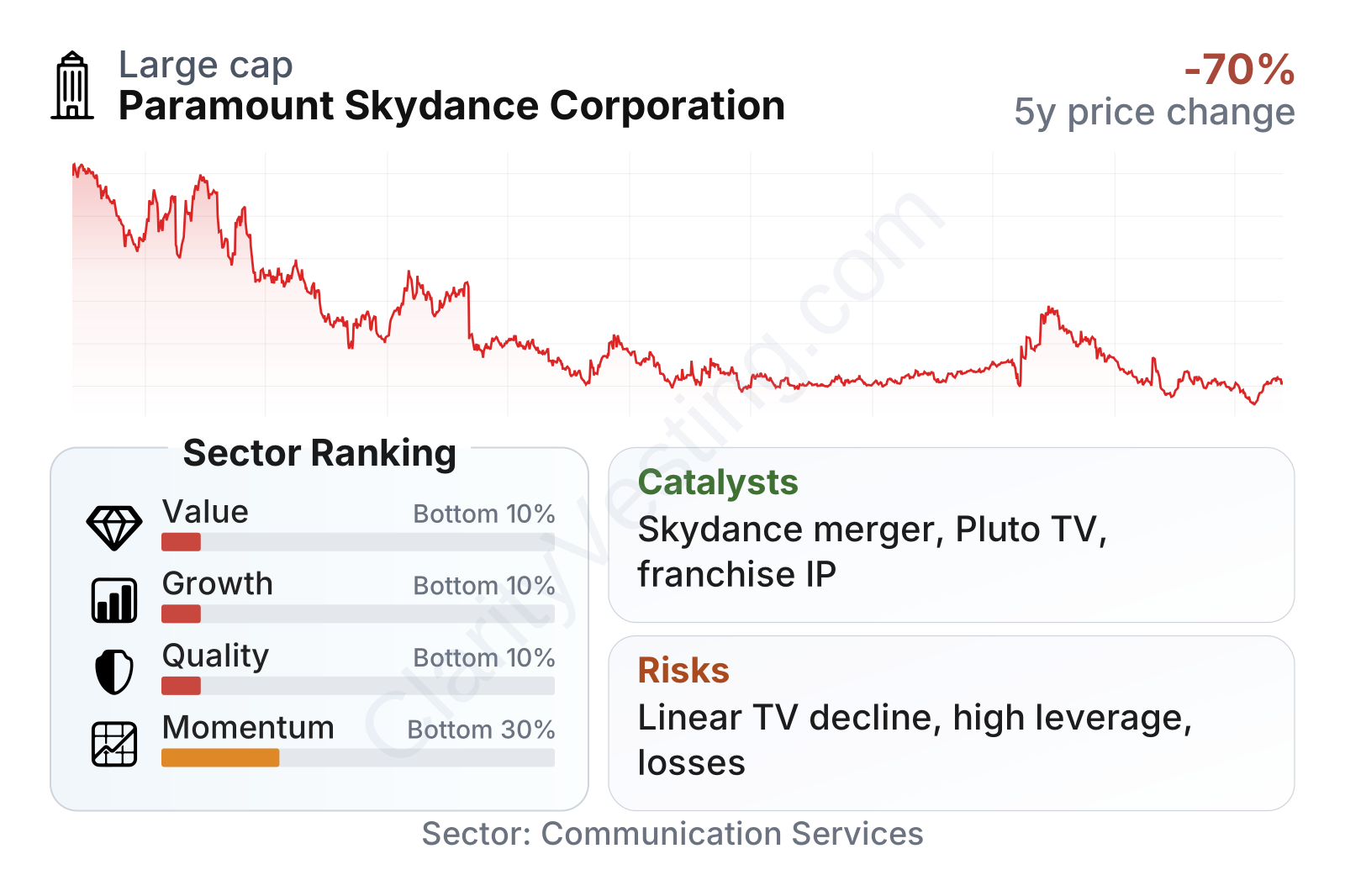
Paramount Skydance is a mid-sized player in public market terms, but its financial profile currently screens weak versus much of the Communication Services sector. The company ranks near the bottom of the sector on value, growth, quality, and momentum factors. The most striking points are the very high headline P/E ratio, negative operating profitability, weak returns on capital, and a debt load that sits well above the sector median. Free cash flow remains positive on a trailing basis, which is a helpful offset, but the broader picture is that the market is looking at a business in transition rather than a consistently profitable compounder.
Growth
The company operates in a sector with clear long-term demand: global video entertainment is still growing, but the growth is shifting away from linear television toward streaming, franchise content, advertising-supported digital platforms, and global licensing. That means Paramount Skydance is participating in an attractive market, but not from the strongest starting position. It has valuable brands, a deep content library, live sports, kids programming, and one of the larger free ad-supported streaming platforms through Pluto TV. Those assets give it a real place in the next phase of media, even if the transition has been costly.
The core strategic logic makes sense. A studio and television library can feed multiple revenue channels at once: theatrical release, licensing, streaming subscriptions, advertising, consumer products, and international distribution. That kind of content reuse is a major advantage in media when it is managed well. The company is also trying to rely less on declining cable economics and more on direct audience relationships through streaming and digital ad inventory.
Recent revenue growth has been modest and uneven. The latest year-over-year trend is close to flat, well below the sector median, which shows that the turnaround is not yet visible in headline sales. Over the last several years, revenue has moved up and down rather than compounding steadily. For a company in transformation, that matters because weak growth reduces flexibility when management also needs to invest in streaming and manage debt.
Cash generation offers a more encouraging signal than earnings. Free cash flow was deeply negative earlier in the transition, then turned positive, and it remains positive on a trailing basis even though it has come down from the stronger rebound period. That suggests the company still has assets capable of producing real cash, especially when content spending, working capital, and release timing are favorable. For a media company under pressure, staying cash generative is an important stabilizer.
A major catalyst is the Skydance transaction and the broader corporate reshaping around it. The combination aims to refresh leadership, strengthen the film and franchise pipeline, and create a more unified strategy across studio production, streaming, and distribution. Skydance brings experience in commercial franchises and production execution, and the deal has also been framed around balance-sheet support and strategic repositioning. If integration is handled well, that could improve the company’s ability to monetize its intellectual property across multiple channels.
Another meaningful opportunity is the advertising-supported segment. Pluto TV gives the company a large foothold in free streaming television, a market that is growing as consumers look for lower-cost viewing options. Combined with Paramount+ and a broad sports and entertainment catalog, the company has more than one route to attract audiences without relying only on premium subscriptions.
Risks
This article is for informational purposes only and does not constitute financial advice. Some content is AI-generated. See Disclaimer


