Stock Analysis · Pony AI Inc (PONY)
Overview
Pony AI is an autonomous driving company focused on building the software, operating system, and vehicle integration needed for self-driving transportation. Its main activities are robotaxi services, robotruck development, and broader autonomous driving technology solutions delivered with automakers and fleet partners. In simple terms, the company is trying to commercialize driverless mobility rather than just selling a single piece of hardware.
The business is still in an early commercialization phase, which means revenue exists but remains small compared with its research and operating spending. Based on the company’s public filings and operating disclosures, revenue mainly comes from autonomous mobility and technology services tied to vehicle integration, testing, and commercial deployments. Exact segment percentages are not always broken out in a way that allows a precise ranking every quarter, but the business can be understood through these main sources:
- Autonomous driving technology services and solutions — the largest disclosed revenue bucket in practical terms, including engineering, software-related services, and commercialization work with partners.
- Robotaxi and mobility-related operations — revenue linked to passenger services, pilot programs, and autonomous fleet activity.
- Robotruck and other autonomous applications — early-stage commercial activity tied to freight and other use cases, still smaller than the broader technology and mobility business.
The broader financial flow shows a business that has grown revenue meaningfully from very low levels over the last several years, but costs remain far above sales. Revenue moved from roughly $8 million in 2021 to about $90 million in 2025, while research and development stayed exceptionally high. That profile is typical of a company still trying to scale a complex technology platform before profitability.
The long-term pattern is clear: sales have expanded sharply, but most of the economic burden still comes from heavy research and development spending. Encouragingly, operating losses narrowed in 2025 versus 2024, yet the company remains far from self-funding at its current scale.
Key Figures
| Metric | Value | Sector ⓘ |
|---|---|---|
| Date | Sep 12, 2026 | |
| Context | ||
| Sector | Technology | |
| Industry | Information Technology Services | |
| Market Cap ⓘ | $2.88B | |
| Beta ⓘ | N/A | |
Value (Cheapness) | ||
| P/E Ratio ⓘ | N/A | 29.51 |
| FCF Yield ⓘ | -8.16% | 4.25% |
| EBIT / EV ⓘ | N/A | 2.85% |
| PEG ⓘ | N/A | |
Growth (Business expansion) | ||
| Revenue Growth ⓘ | 68.80% | 15.40% |
| RPS Growth (5Y CAGR) ⓘ | 78.76% | 8.56% |
| EPS Growth (5Y CAGR) ⓘ | -63.44% | -11.88% |
| Margin Growth (5Y Trend) ⓘ | N/A | 0.46% |
| FCF Growth (5Y CAGR) ⓘ | N/A | 9.80% |
Quality (Business durability) | ||
| ROIC (Latest) ⓘ | N/A | 9.44% |
| ROIC (5Y Median) ⓘ | N/A | 8.30% |
| Net Debt / EBIT (Latest) ⓘ | N/A | 0.54 |
| Net Debt / EBIT (5Y Median) ⓘ | N/A | 0.44 |
| Operating Margin (Latest) ⓘ | N/A | 9.58% |
| Operating Margin (5Y Median) ⓘ | -216.89% | 8.25% |
| Debt to Equity (Latest) ⓘ | 1.21% | 33.33% |
| Profit Margin (Latest) ⓘ | -118.47% | 7.14% |
| Free Cash Flow (Latest) ⓘ | -$235.27M | |
Momentum (Price trend) | ||
| 3Y Return ⓘ | N/A | +45.48% |
| 12M Return (excl. last month) ⓘ | -42.90% | +23.48% |
| 6M Return ⓘ | -46.01% | +20.93% |
| Price vs. 200-Day MA ⓘ | -38.81% | +7.43% |
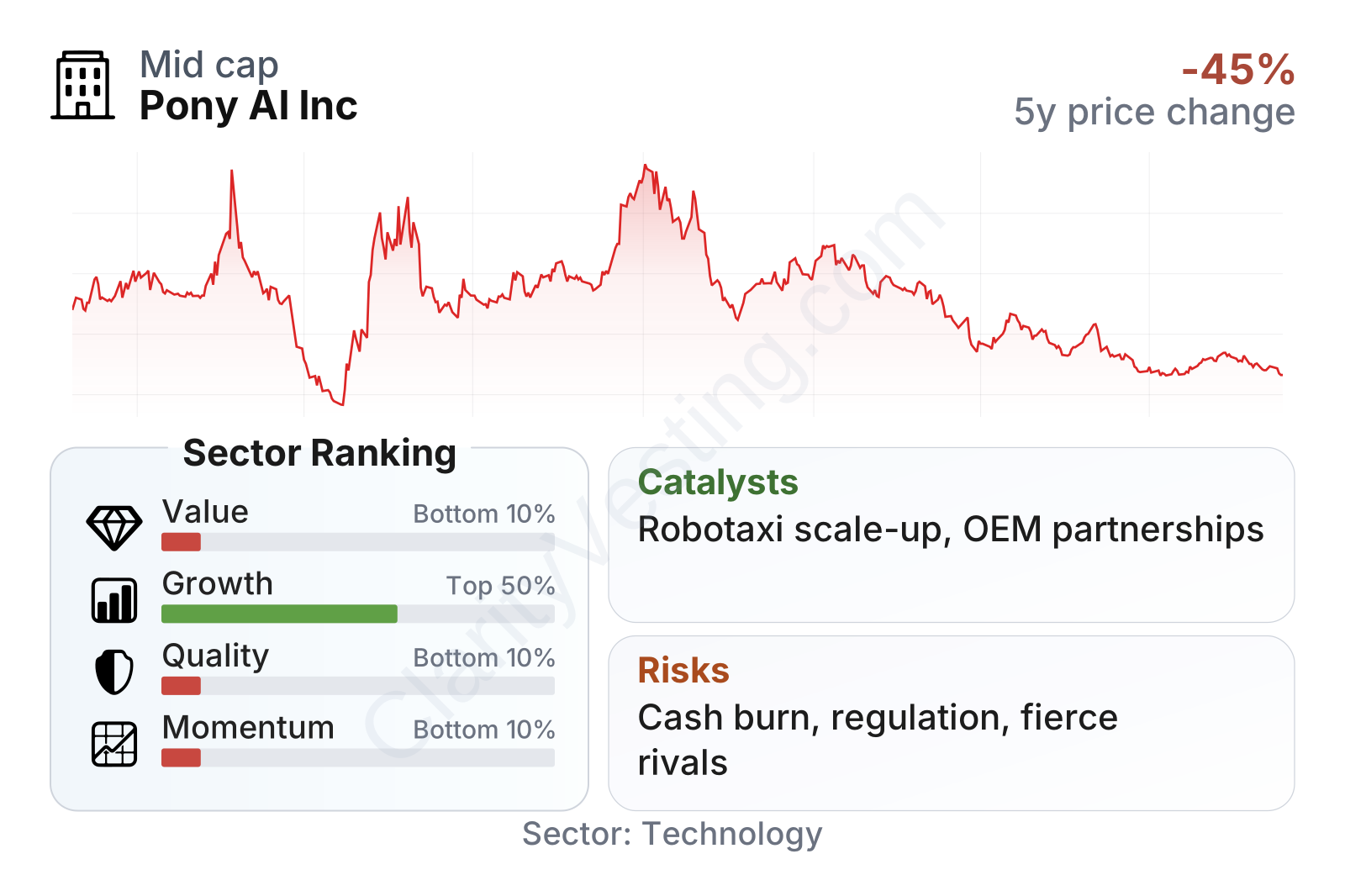
Pony AI currently sits in a mixed position. Growth measures are relatively strong versus the sector, helped by rapid revenue expansion from a small base. By contrast, value, quality, and momentum metrics are weak. Profitability remains deeply negative, free cash flow is still materially below zero, and recent stock performance has lagged the broader technology group. The balance sheet is a brighter point, with very low leverage for a company at this stage.
Growth
Pony AI operates in one of the more ambitious areas of the technology market: autonomous driving. Over the long run, this sector could benefit from demand for lower transportation labor costs, around-the-clock fleet utilization, logistics automation, and software-based vehicle services. If self-driving systems become reliable and accepted at scale, the addressable market could be very large across passenger rides, freight, and automotive licensing.
The company’s strategy is logical for that opportunity. Instead of relying on a single path, Pony AI has built partnerships across automakers, transportation operators, and supply-chain participants. That matters because autonomous driving usually needs a combination of software, vehicle manufacturing support, regulatory approvals, mapping, and fleet operations. A partnership-based model can help a smaller company gain access to vehicles and real-world deployment channels without building every piece alone.
Recent revenue trends show how uneven but powerful early commercialization can be. After a decline at the end of 2025, year-over-year growth accelerated sharply in early 2026 and remained strong in the following quarter, with the latest annual growth rate around 69%, far above the sector median near 16%. That does not mean growth is smooth, but it does show real commercial traction rather than purely experimental activity.
Cash generation is the main growth constraint. Trailing free cash flow remained strongly negative and worsened over the displayed period, reflecting the high cost of developing and deploying autonomous systems. For Pony AI, future growth is likely to depend on whether revenue can keep rising faster than engineering and operating expenses.
Recent company announcements have centered on expanding autonomous driving operations, partnerships, and commercialization programs. The most important catalyst is not a single headline but the possibility that robotaxi and truck deployments move from pilot scale toward repeatable, higher-volume operations. If that transition happens, Pony AI’s revenue base could broaden materially because each additional approved city, fleet relationship, or vehicle platform can increase utilization of technology already developed.
Risks
This article is for informational purposes only and does not constitute financial advice. Some content is AI-generated. See Disclaimer


