Stock Analysis · Playtika Holding Corp (PLTK)
Overview
Playtika Holding Corp is a mobile gaming company focused on free-to-play games, especially social casino titles and casual puzzle games. Its business model is simple: players download games for free, and a smaller portion of users spend money inside the apps on virtual items, extra play, or game features. The company also earns some advertising revenue, but in-app purchases remain the core of the business.
Playtika operates a portfolio of established titles rather than relying on a single hit. Its best-known games include Slotomania, Bingo Blitz, Caesars Slots, WSOP, and puzzle titles such as Best Fiends. This mix matters because social casino games tend to generate strong spending from loyal users, while casual games can widen the audience and support future user growth.
Based on recent company filings, revenue is still concentrated in mobile game purchases, with the largest categories coming from social casino and direct-to-consumer spending channels. The mix can shift by quarter, but the business is broadly organized as follows:
- Social casino games: approximately 65% to 75% of revenue. This includes slot, bingo, poker, and casino-themed games where users buy virtual currency or gameplay benefits.
- Casual and other mobile games: approximately 20% to 30% of revenue. This includes puzzle and lifestyle-style games such as Best Fiends and other non-casino titles.
- Advertising and other revenue: usually a low-single-share part of revenue, generally under 10%. This includes in-game ads and smaller ancillary income streams.
- Direct-to-consumer web stores: not a separate product category, but an increasingly important sales channel because purchases made outside app stores can reduce platform fees and improve margins.
One notable feature of Playtika’s economics is that gross profit has stayed very high for several years, which is typical for digital gaming. However, the path from gross profit to net income has become less stable because spending on user acquisition, operating costs, and other charges has had a bigger effect on final profitability.
The financial flow shows a business that still converts a large share of revenue into gross profit, but operating discipline weakened in 2025. Revenue moved higher, yet selling and administrative costs climbed much faster, which pushed operating results from positive territory into a loss despite the company’s still-strong gross margin structure.
Key Figures
| Metric | Value | Sector ⓘ |
|---|---|---|
| Date | Sep 12, 2026 | |
| Context | ||
| Sector | Communication Services | |
| Industry | Electronic Gaming & Multimedia | |
| Market Cap ⓘ | $1.07B | |
| Beta ⓘ | 1.06 | |
Value (Cheapness) | ||
| P/E Ratio ⓘ | N/A | 18.61 |
| FCF Yield ⓘ | 39.07% | 13.68% |
| EBIT / EV ⓘ | -3.79% | 4.54% |
| PEG ⓘ | 1.52 | |
Growth (Business expansion) | ||
| Revenue Growth ⓘ | 5.00% | 5.40% |
| RPS Growth (5Y CAGR) ⓘ | 3.89% | 4.62% |
| EPS Growth (5Y CAGR) ⓘ | -29.02% | -18.01% |
| Margin Growth (5Y Trend) ⓘ | -25.28% | 1.10% |
| FCF Growth (5Y CAGR) ⓘ | 4.12% | 5.88% |
Quality (Business durability) | ||
| ROIC (Latest) ⓘ | -5.43% | 8.38% |
| ROIC (5Y Median) ⓘ | 16.17% | 8.32% |
| Net Debt / EBIT (Latest) ⓘ | N/A | 1.99 |
| Net Debt / EBIT (5Y Median) ⓘ | 3.21 | 2.94 |
| Operating Margin (Latest) ⓘ | -4.20% | 14.89% |
| Operating Margin (5Y Median) ⓘ | 18.29% | 12.96% |
| Debt to Equity (Latest) ⓘ | -627.68% | 59.59% |
| Profit Margin (Latest) ⓘ | -9.89% | 8.77% |
| Free Cash Flow (Latest) ⓘ | $417.22M | |
Momentum (Price trend) | ||
| 3Y Return ⓘ | -66.66% | +46.64% |
| 12M Return (excl. last month) ⓘ | -14.36% | +2.16% |
| 6M Return ⓘ | -21.57% | +5.05% |
| Price vs. 200-Day MA ⓘ | -21.43% | +2.88% |
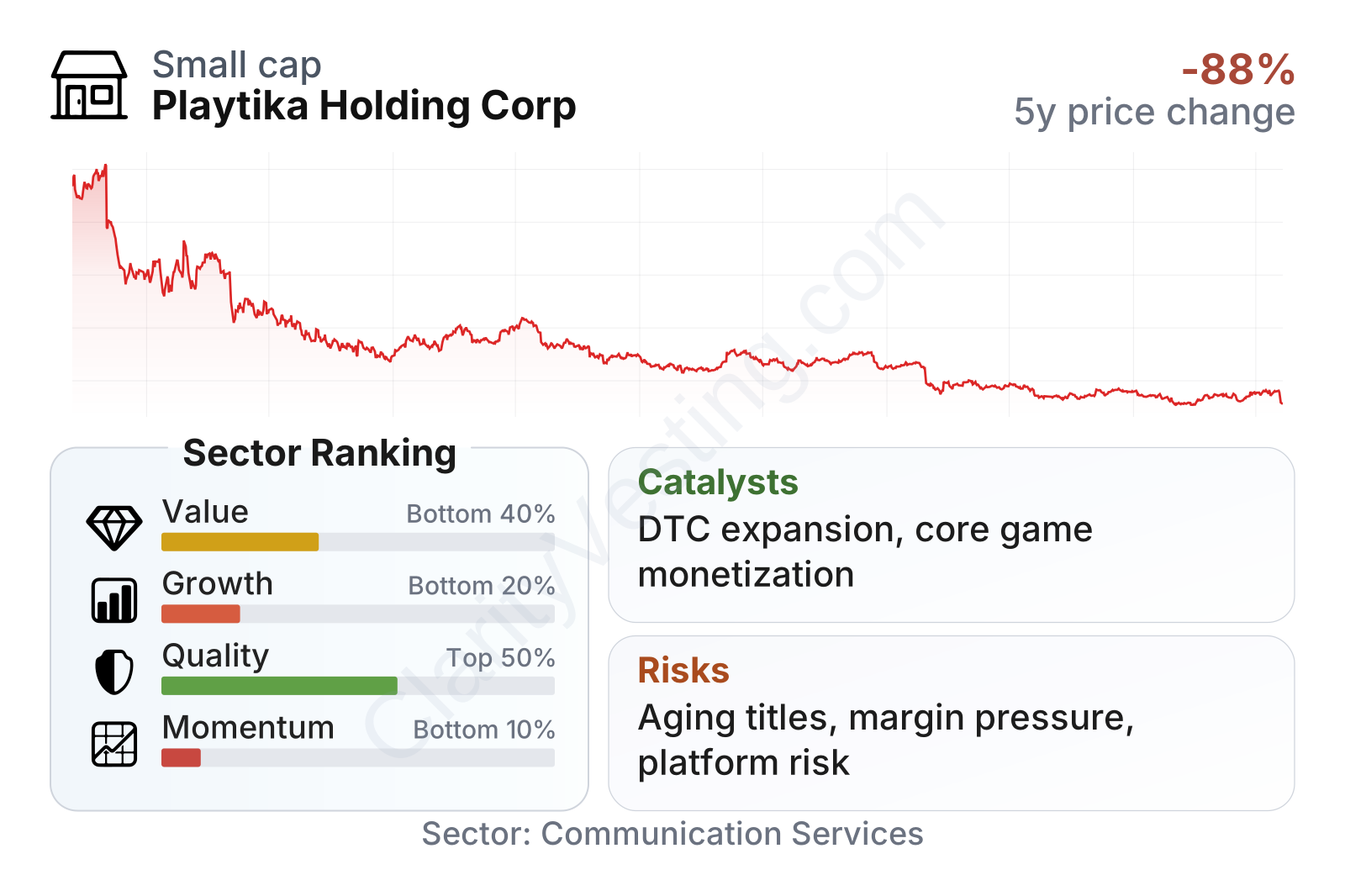
Playtika is now a relatively small public company within the broader communication services sector, and its recent market behavior has been weak. The stock has fallen sharply over the last several years, and momentum measures rank near the bottom of the sector. On the other hand, cash generation remains a notable strength: free cash flow yield stands far above the sector median, which suggests the market is placing a low valuation on the company’s cash-producing ability. The mixed picture is important: value metrics look more favorable than growth or momentum metrics, while quality appears average overall because historically solid returns are being offset by weaker current profitability.
Growth
Playtika operates in mobile gaming, which remains a large and durable entertainment market, but it is no longer an easy-growth industry. The sector still benefits from global smartphone usage, digital distribution, and recurring spending by engaged users. At the same time, mature game portfolios often face slower organic expansion, rising marketing costs, and fierce competition for player attention. That means long-term growth depends less on the general market expanding and more on whether Playtika can refresh its content, extend the life of its existing franchises, and launch or acquire new titles efficiently.
The recent revenue trend is better than the longer-term reputation of the stock might suggest. After a period of soft or negative year-over-year comparisons, revenue growth turned positive again and has recently held around the mid-single-digit range. That is not fast growth for a gaming company, but it does indicate that the business has stabilized after a difficult stretch.
A sensible part of Playtika’s strategy is its focus on live operations, data-driven monetization, and long-running games with loyal communities. This model can be attractive because a successful title does not need to be brand new to remain valuable; it needs to keep players engaged and spending over time. The company has also been expanding its direct-to-consumer capabilities, which can improve economics by shifting some purchases away from app-store payment systems.
Another encouraging point is cash generation. Even with earnings pressure, Playtika has continued to produce substantial free cash flow, and the latest trailing figures are stronger than they were a few years ago. That gives the company financial flexibility for debt reduction, selective acquisitions, shareholder returns, or further investment in game operations.
The free cash flow trend suggests that the underlying business remains more resilient than bottom-line earnings alone would imply. In practical terms, this means the company’s games are still bringing in meaningful cash even though accounting profits have become more volatile.
As for catalysts, the clearest ones are internal rather than industry-wide. Better monetization in core social casino games, stronger execution in direct web sales, successful updates in casual titles, and disciplined marketing spend could all have an outsized impact. Public company updates in 2026 have also kept attention on efficiency initiatives and portfolio optimization, which matter because even modest revenue growth can have a larger effect if costs are controlled better than they were in 2025.
Risks
This article is for informational purposes only and does not constitute financial advice. Some content is AI-generated. See Disclaimer


