Stock Analysis · Pinterest Inc (PINS)
Overview
Pinterest operates a visual discovery platform where people search, save, and organize ideas for projects, shopping, fashion, home design, food, travel, and other interests. Instead of focusing mainly on social interaction, Pinterest is built around intent: users often arrive looking for inspiration or planning a purchase. That makes the platform especially attractive to advertisers trying to reach people earlier in the buying process.
The business is still relatively simple from a revenue standpoint. Pinterest generates nearly all of its revenue from advertising shown across its platform and apps. In its filings, the company presents revenue primarily by geography rather than by product line, so the clearest breakdown available is regional.
- United States and Canada advertising: about 79% of revenue in 2025. This is the company’s most mature market and the largest source of monetization.
- Europe advertising: about 12% of revenue in 2025. This includes ad sales across major European markets where user monetization still trails North America.
- Rest of World advertising: about 9% of revenue in 2025. This includes Latin America and other international regions with large user potential but lower revenue per user.
Pinterest’s economic model benefits from high gross margins typical of digital platforms. Over the last several years, revenue has expanded steadily while product development spending remained substantial, showing that management continues to prioritize platform improvement, ad technology, and shopping features. Profitability has been less smooth than revenue because the company has invested heavily and has also been affected by non-operating items, but the underlying model remains cash generative.
One notable pattern is that revenue and gross profit have risen consistently since 2021, while research and development has also climbed materially. That suggests Pinterest is using its improving scale to fund product and monetization upgrades rather than simply maximizing short-term earnings.
Key Figures
| Metric | Value | Sector ⓘ |
|---|---|---|
| Date | Sep 12, 2026 | |
| Context | ||
| Sector | Communication Services | |
| Industry | Internet Content & Information | |
| Market Cap ⓘ | $10.67B | |
| Beta ⓘ | 0.89 | |
Value (Cheapness) | ||
| P/E Ratio ⓘ | 56.03 | 18.61 |
| FCF Yield ⓘ | 14.92% | 13.68% |
| EBIT / EV ⓘ | 3.05% | 4.54% |
| PEG ⓘ | 0.26 | |
Growth (Business expansion) | ||
| Revenue Growth ⓘ | 18.20% | 5.40% |
| RPS Growth (5Y CAGR) ⓘ | 16.59% | 4.62% |
| EPS Growth (5Y CAGR) ⓘ | -24.34% | -18.01% |
| Margin Growth (5Y Trend) ⓘ | -2.25% | 1.10% |
| FCF Growth (5Y CAGR) ⓘ | 13.90% | 5.88% |
Quality (Business durability) | ||
| ROIC (Latest) ⓘ | 8.53% | 8.38% |
| ROIC (5Y Median) ⓘ | 8.78% | 8.32% |
| Net Debt / EBIT (Latest) ⓘ | 1.99 | 1.99 |
| Net Debt / EBIT (5Y Median) ⓘ | -3.31 | 2.94 |
| Operating Margin (Latest) ⓘ | 9.48% | 14.89% |
| Operating Margin (5Y Median) ⓘ | 7.89% | 12.96% |
| Debt to Equity (Latest) ⓘ | 41.35% | 59.59% |
| Profit Margin (Latest) ⓘ | 5.46% | 8.77% |
| Free Cash Flow (Latest) ⓘ | $1.59B | |
Momentum (Price trend) | ||
| 3Y Return ⓘ | -31.65% | +46.64% |
| 12M Return (excl. last month) ⓘ | -34.21% | +2.16% |
| 6M Return ⓘ | +5.31% | +5.05% |
| Price vs. 200-Day MA ⓘ | -12.63% | +2.88% |
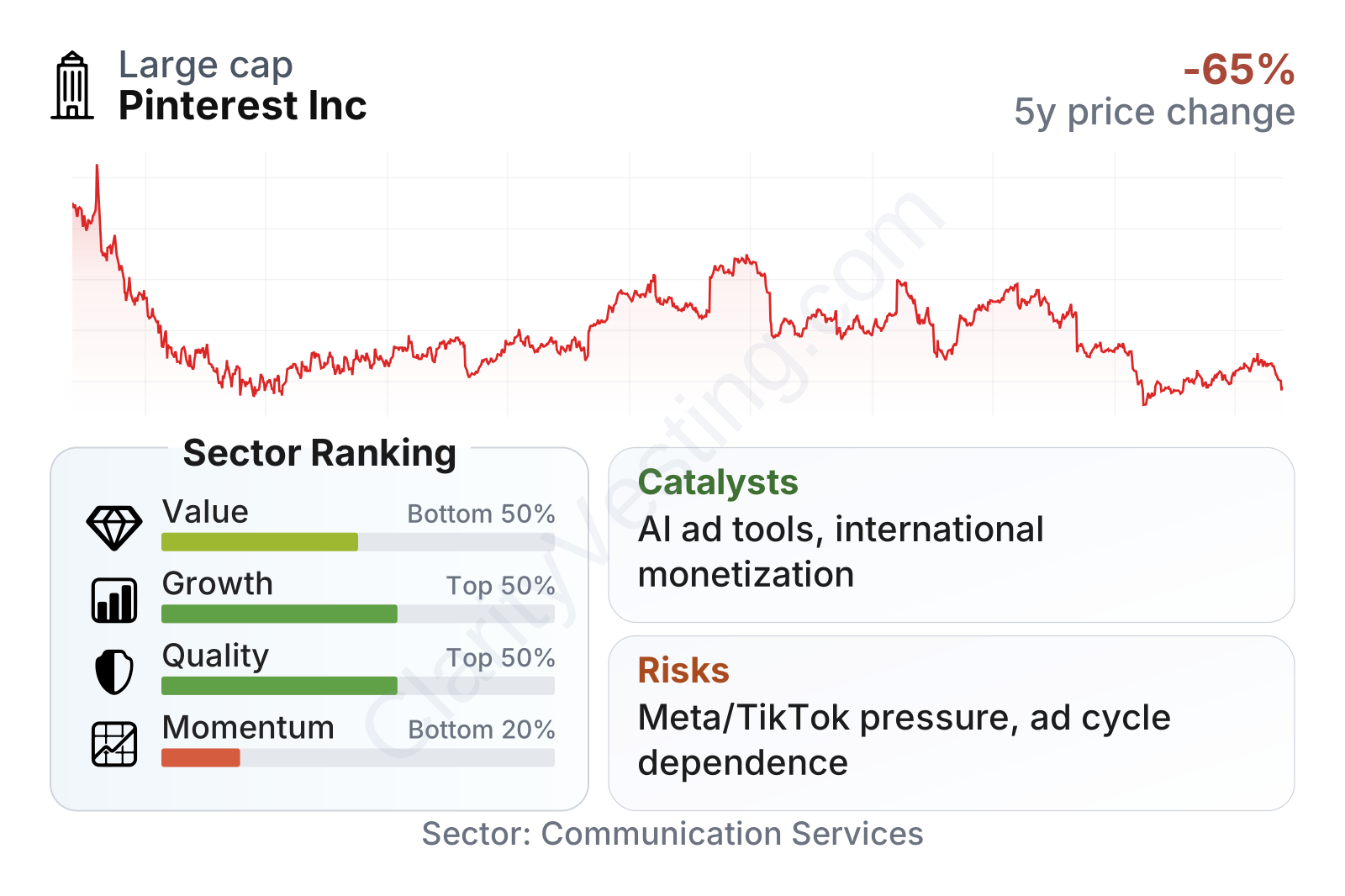
Pinterest sits in the mid-sized range within the public internet sector and shows a mixed profile. Growth metrics are clearly stronger than the sector median, helped by revenue growth around the high teens and a solid five-year expansion in revenue per share and free cash flow. Quality looks more balanced: returns on invested capital are close to sector norms, leverage remains moderate, but operating profitability is still below many peers. Value metrics look less attractive, with earnings-based valuation noticeably above the sector median. Share price performance has also been volatile, with weak longer-term momentum despite a partial rebound over the last six months.
Growth
Pinterest operates in digital advertising, online discovery, and social commerce, all of which remain important long-term growth areas. Advertising budgets continue to shift toward measurable digital platforms, while e-commerce and product search increasingly overlap. Pinterest is positioned between those two trends because users often arrive with commercial intent: they are not just scrolling, they are planning, comparing, and saving ideas tied to future purchases.
The company’s strategy for future growth is coherent. Management has focused on three levers: increasing user engagement, improving ad performance for marketers, and making the platform more shoppable. Product investments such as better visual search, recommendation systems, and direct links between content and merchant catalogs are meant to convert inspiration into transaction-oriented activity. That is strategically sensible because Pinterest does not need to dominate general social networking; it needs to deepen its niche where discovery and shopping meet.
Revenue growth slowed sharply after the pandemic period but has reaccelerated and recently returned to the high-teens range. That is comfortably above the sector median and suggests that Pinterest has moved past the more stagnant phase seen in 2022 and early 2023. For a long-term reader, the important point is not just that growth resumed, but that it has stayed relatively consistent across recent quarters instead of depending on a one-time jump.
Cash generation has also improved meaningfully. Trailing free cash flow has climbed from under $1 billion a few years ago to roughly $1.6 billion recently, which indicates that revenue growth is translating into real financial flexibility. For a platform business, that matters because it gives management room to invest in AI tools, international monetization, and commerce features without relying heavily on outside financing.
A major catalyst is the continued rollout of AI-driven advertising and discovery tools. Pinterest has been working to improve relevance for both users and advertisers, which can raise engagement and conversion at the same time. Another important opportunity is international monetization. The company already has a broad global audience, but revenue remains heavily concentrated in North America, so there is still a meaningful gap between user scale and revenue capture outside its top market. If Pinterest continues lifting monetization abroad, growth could become less dependent on the U.S. and Canada business.
Recent company updates have also emphasized third-party ad demand, shopping integrations, and performance advertising improvements. Those areas are important because they make Pinterest more useful to a wider set of marketers, especially small and mid-sized businesses that want clearer returns on ad spending.
Risks
This article is for informational purposes only and does not constitute financial advice. Some content is AI-generated. See Disclaimer