Stock Analysis · Pegasystems Inc (PEGA)
Overview
Pegasystems is an enterprise software company that helps large organizations automate business processes, manage customer interactions, and build workflow applications. Its platform is used in areas such as customer service, sales automation, case management, decisioning, and business process orchestration. In simpler terms, it sells software that helps banks, insurers, governments, telecom groups, and other large institutions handle complex internal tasks and customer-facing operations with less manual work.
The company’s business has been shifting away from older perpetual software licenses and toward cloud subscriptions and term-based arrangements. That matters because subscription revenue is usually more recurring and easier to forecast, even if the transition can temporarily distort reported growth and margins from one period to another.
Based on recent company filings, Pegasystems generates revenue from three main sources:
- Subscription services and support: approximately 65% to 75% of revenue. This includes Pega Cloud, term license subscriptions, maintenance, and support tied to the software platform.
- Consulting: approximately 20% to 30% of revenue. This covers implementation, program delivery, advisory work, and helping customers deploy and optimize Pega applications.
- Perpetual licenses: approximately 5% to 10% of revenue. This is the older model where customers pay upfront for software rights; it remains part of the mix but is no longer the strategic center of the business.
This revenue mix makes Pegasystems more of a recurring-revenue software company than it was a few years ago. It also helps explain why cash generation has improved as the company has matured through the transition.
The business model shows a healthy gross profit structure and a clear turnaround in earnings over the last few years. Revenue has climbed steadily, while operating income and net income moved from losses in 2021 and 2022 to meaningful profitability by 2025. Research and development remains a major expense, which is typical for a software company that must keep its platform competitive.
Key Figures
| Metric | Value | Sector ⓘ |
|---|---|---|
| Date | Sep 12, 2026 | |
| Context | ||
| Sector | Technology | |
| Industry | Software - Application | |
| Market Cap ⓘ | $5.87B | |
| Beta ⓘ | 0.89 | |
Value (Cheapness) | ||
| P/E Ratio ⓘ | 20.30 | 29.51 |
| FCF Yield ⓘ | 8.56% | 4.25% |
| EBIT / EV ⓘ | 3.35% | 2.85% |
| PEG ⓘ | 2.99 | |
Growth (Business expansion) | ||
| Revenue Growth ⓘ | 9.40% | 15.40% |
| RPS Growth (5Y CAGR) ⓘ | 6.14% | 8.56% |
| EPS Growth (5Y CAGR) ⓘ | -4.80% | -11.88% |
| Margin Growth (5Y Trend) ⓘ | 26.38% | 0.46% |
| FCF Growth (5Y CAGR) ⓘ | 103.41% | 9.80% |
Quality (Business durability) | ||
| ROIC (Latest) ⓘ | 48.50% | 9.44% |
| ROIC (5Y Median) ⓘ | 9.22% | 8.30% |
| Net Debt / EBIT (Latest) ⓘ | -0.70 | 0.54 |
| Net Debt / EBIT (5Y Median) ⓘ | 1.42 | 0.44 |
| Operating Margin (Latest) ⓘ | 10.55% | 9.58% |
| Operating Margin (5Y Median) ⓘ | 7.14% | 8.25% |
| Debt to Equity (Latest) ⓘ | 10.17% | 33.33% |
| Profit Margin (Latest) ⓘ | 18.66% | 7.14% |
| Free Cash Flow (Latest) ⓘ | $502.47M | |
Momentum (Price trend) | ||
| 3Y Return ⓘ | +64.58% | +45.48% |
| 12M Return (excl. last month) ⓘ | -38.31% | +23.48% |
| 6M Return ⓘ | -14.36% | +20.93% |
| Price vs. 200-Day MA ⓘ | -11.76% | +7.43% |
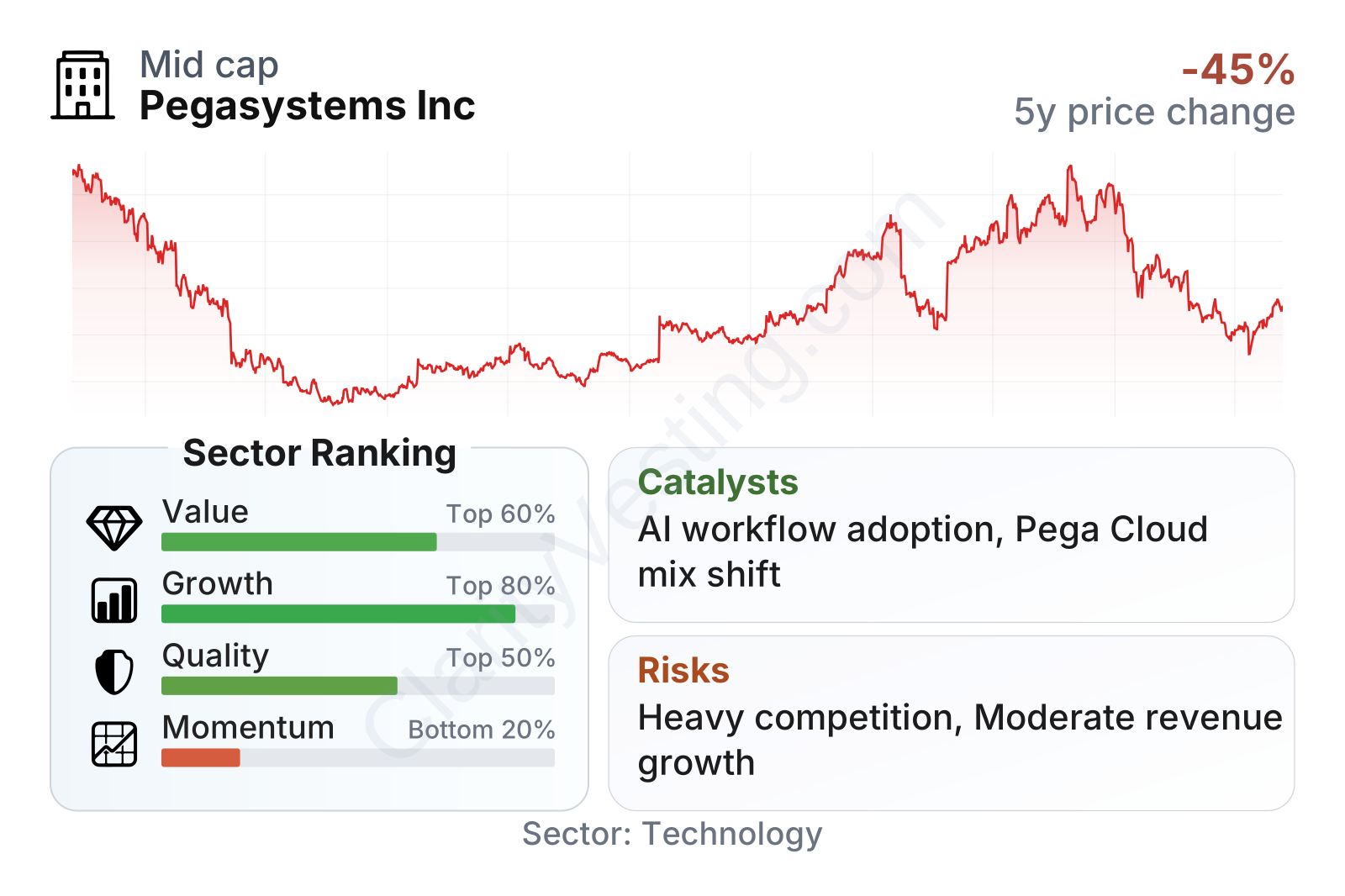
Pegasystems is a mid-sized software company with a stock that has been volatile over the past several years. The current profile is unusual: valuation and cash-flow metrics look stronger than much of the software sector, quality indicators are solid, but recent share-price momentum is weak. Growth is positive, though not especially fast compared with the broader application software group. The balance sheet is much cleaner than it used to be, and profitability has improved sharply.
Growth
Pegasystems operates in a sector with durable long-term demand. Large companies continue to spend on automation, customer engagement software, workflow modernization, and more recently artificial intelligence features that can improve productivity. Those trends are not short-lived. Many enterprises still run fragmented legacy systems, and replacing or upgrading them is a long process that can benefit vendors offering platforms able to unify workflows and decision-making.
Pegasystems’ strategy appears coherent for that environment. The company has focused on expanding cloud delivery, deepening recurring revenue, and positioning its platform around enterprise workflow automation and AI-driven decisioning. Its customer base tends to be large organizations with complex processes, which can create long contracts, high switching costs, and room for expansion once the software is embedded.
Revenue growth has not been smooth quarter to quarter, which is common when a company is moving from license-heavy sales to subscription arrangements. Still, the broader pattern has been upward, with several strong quarters in the last two years and annual revenue reaching a new high in 2025. The latest year-over-year pace is positive but below the sector median, so Pegasystems currently looks more like a steady transformer than a hypergrowth software name.
Free cash flow has strengthened dramatically since 2022 and recently reached roughly half a billion dollars on a trailing twelve-month basis. That is one of the most important improvements in the investment case. It suggests that the company’s subscription transition is now producing tangible financial benefits rather than just promising them. Strong cash generation also gives management more flexibility for product investment, debt reduction, and balance-sheet resilience.
A meaningful catalyst is the broad corporate push to apply AI to business operations. Pegasystems has been integrating generative AI and workflow automation into its platform, especially in customer service, process design, and decisioning. For companies that want AI tied to governed enterprise workflows rather than stand-alone tools, that positioning could be attractive. Another catalyst is continued migration of existing customers toward Pega Cloud and term subscriptions, which can increase visibility and expand recurring revenue over time.
Risks
This article is for informational purposes only and does not constitute financial advice. Some content is AI-generated. See Disclaimer


