Stock Analysis · PDF Solutions Inc (PDFS)
Overview
PDF Solutions Inc develops software, data analytics, and engineering services used by semiconductor companies to improve how chips are designed, manufactured, tested, and brought to high-volume production. In simple terms, the company helps chipmakers find problems earlier, raise factory efficiency, and improve yields, which means getting more working chips out of each wafer. Its products are used across the semiconductor ecosystem, including integrated device manufacturers, foundries, fabless companies, outsourced assembly and test providers, and equipment makers.
The business is centered on its Exensio platform, which combines manufacturing data, analytics, connectivity, and process control tools. PDF Solutions also has a smaller but still important operation tied to electrical test hardware, embedded instruments, and services. Based on recent company reporting, revenue can be understood in broad groups as follows:
- Analytics and software-related revenue: approximately 75% to 80% of total revenue. This includes Exensio software, data platforms, licenses, subscriptions, cloud-related offerings, and analytics solutions used to monitor yield, quality, and factory performance.
- Integrated yield ramp, hardware, and services: approximately 20% to 25% of total revenue. This includes hardware systems, electrical characterization tools, consulting, implementation, and engineering support tied to production ramp and test operations.
The overall business mix has been moving toward software and recurring analytics revenue, which generally matters because those activities can be more scalable and less cyclical than hardware-heavy sales. The company has also expanded through targeted acquisitions and partnerships to strengthen its position in connected semiconductor manufacturing.
Over the last several years, revenue has increased meaningfully while gross profit has also climbed, showing that the company has been adding business without losing its basic economic structure. At the same time, operating expenses have risen almost as fast, especially in research and development and selling costs, which helps explain why profit conversion has remained uneven.
Key Figures
| Metric | Value | Sector ⓘ |
|---|---|---|
| Date | Sep 12, 2026 | |
| Context | ||
| Sector | Technology | |
| Industry | Software - Application | |
| Market Cap ⓘ | $1.99B | |
| Beta ⓘ | 1.63 | |
Value (Cheapness) | ||
| P/E Ratio ⓘ | 188.64 | 29.51 |
| FCF Yield ⓘ | -0.10% | 4.25% |
| EBIT / EV ⓘ | 0.85% | 2.85% |
| PEG ⓘ | 4.19 | |
Growth (Business expansion) | ||
| Revenue Growth ⓘ | 18.90% | 15.40% |
| RPS Growth (5Y CAGR) ⓘ | 16.83% | 8.56% |
| EPS Growth (5Y CAGR) ⓘ | -6.87% | -11.88% |
| Margin Growth (5Y Trend) ⓘ | N/A | 0.46% |
| FCF Growth (5Y CAGR) ⓘ | N/A | 9.80% |
Quality (Business durability) | ||
| ROIC (Latest) ⓘ | 8.53% | 9.44% |
| ROIC (5Y Median) ⓘ | -0.04% | 8.30% |
| Net Debt / EBIT (Latest) ⓘ | 2.44 | 0.54 |
| Net Debt / EBIT (5Y Median) ⓘ | N/A | 0.44 |
| Operating Margin (Latest) ⓘ | 7.24% | 9.58% |
| Operating Margin (5Y Median) ⓘ | -0.09% | 8.25% |
| Debt to Equity (Latest) ⓘ | 19.21% | 33.33% |
| Profit Margin (Latest) ⓘ | 4.27% | 7.14% |
| Free Cash Flow (Latest) ⓘ | -$2.04M | |
Momentum (Price trend) | ||
| 3Y Return ⓘ | +49.19% | +45.48% |
| 12M Return (excl. last month) ⓘ | +155.02% | +23.48% |
| 6M Return ⓘ | +49.42% | +20.93% |
| Price vs. 200-Day MA ⓘ | +14.73% | +7.43% |
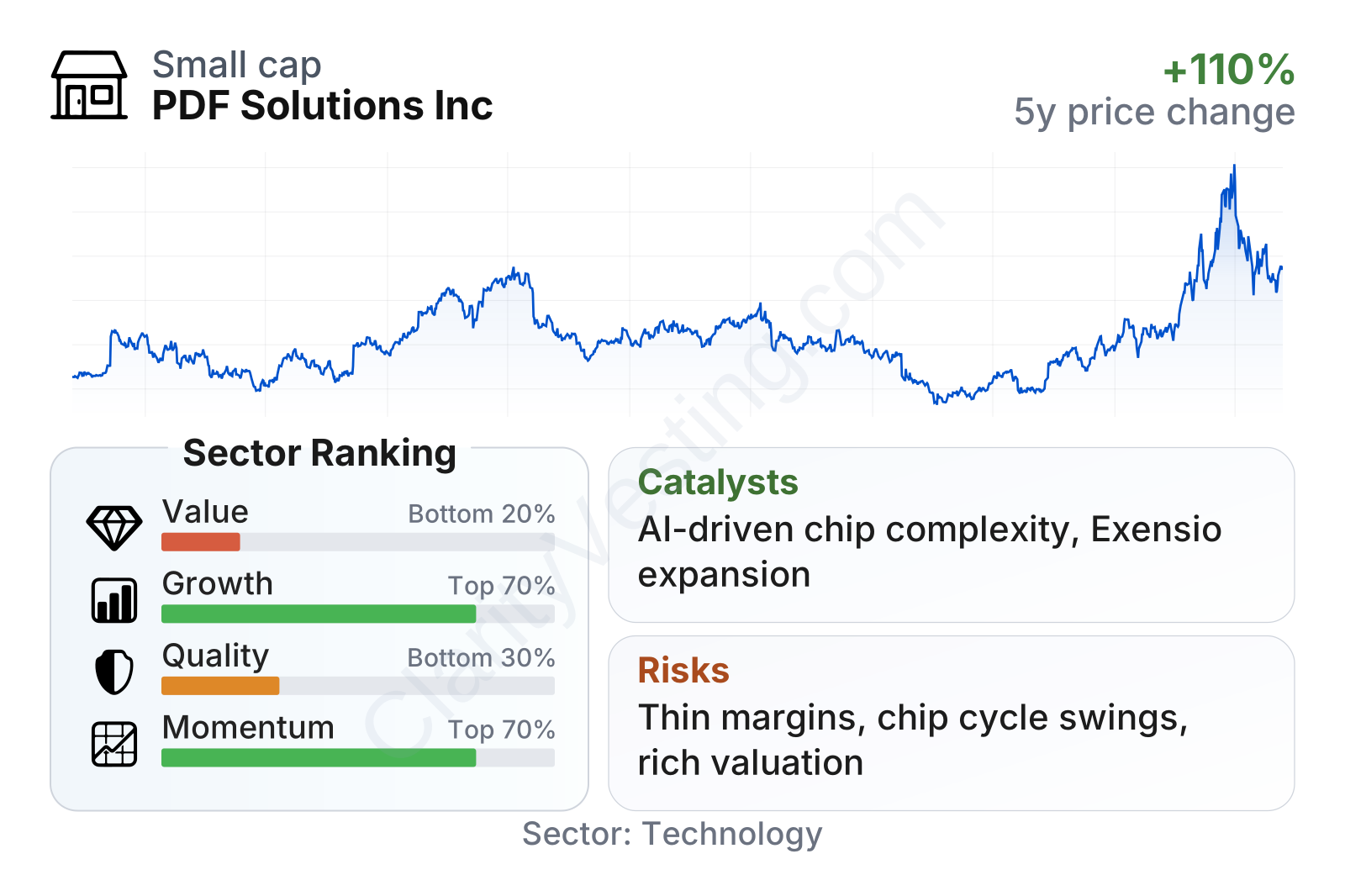
PDF Solutions is a mid-sized technology company with a stock that has been notably volatile, reflected in a beta well above 1. Recent market momentum has been strong, but the underlying factor profile is mixed. Growth metrics look better than much of the software application sector, while quality metrics are weaker and value metrics rank poorly because earnings and cash generation remain thin relative to the current share price. That combination usually points to a company the market is rewarding for future potential rather than current financial efficiency.
Growth
PDF Solutions operates in a part of the semiconductor industry that is supported by several long-term trends: rising chip complexity, more advanced packaging, growing use of artificial intelligence workloads, and a stronger need for data-driven factory control. As chips become harder and more expensive to manufacture, the value of improving yield and reducing defects increases. That creates a favorable backdrop for companies that provide analytics and process intelligence rather than commodity components.
The company’s strategy is broadly consistent with that direction. It has been building a more connected platform that can ingest large volumes of manufacturing data and turn that information into decisions for engineers and plant operators. This gives PDF Solutions exposure not only to new chip demand, but also to the industry’s push toward smarter, more automated production. The recurring nature of software and analytics revenue is especially important because it can create a steadier base than project-driven hardware sales alone.
Revenue growth has cooled from the very high rates seen earlier in the cycle, but it has remained positive and recently stayed in the high-teens to mid-20% range on a year-over-year basis. That is still ahead of the sector median on the latest figures and suggests the company continues to win business even after a period when semiconductor spending became more selective.
The main financial tension in the growth profile is cash conversion. Revenue has risen strongly over a multi-year period, but free cash flow has turned negative over the trailing twelve months after being positive in earlier years. That pattern suggests the company is still spending heavily to support expansion, acquisitions, product development, or working capital needs. For a long-term view, the key question is whether those investments lead to a more durable stream of recurring, higher-margin revenue.
Recent corporate developments also matter. In public filings and investor communications, management has emphasized demand tied to advanced manufacturing analytics, process control, and the integration of acquired capabilities. If the company continues turning these pieces into a broader platform offering, that could expand its role inside customer production flows and raise switching costs over time.
Risks
This article is for informational purposes only and does not constitute financial advice. Some content is AI-generated. See Disclaimer