Stock Analysis · Pagerduty Inc (PD)
Overview
PagerDuty is a software company that helps businesses detect, prioritize, and respond to urgent technology and operational issues. In simple terms, when an app crashes, a payment system slows down, a cloud service fails, or an internal process needs immediate attention, PagerDuty helps route the alert to the right person and coordinate the response. Its platform is used by technology teams, customer service groups, security teams, and operations staff that need to manage incidents quickly and reduce downtime.
The business is built mainly on subscription software sold through recurring contracts. PagerDuty’s filings describe revenue in two primary categories, with subscription revenue overwhelmingly dominant.
- Subscription revenue: approximately 93% to 95% of total revenue in recent fiscal years. This includes access to PagerDuty’s cloud platform for incident response, digital operations, automation, customer service operations, and related enterprise features.
- Professional services and other revenue: approximately 5% to 7%. This typically includes implementation, training, consulting, and related support services tied to customer deployments.
That mix matters because a high share of subscription revenue usually means better visibility into future sales. It also means the company depends heavily on keeping customers satisfied and expanding usage over time. PagerDuty’s financial structure has been improving: revenue has continued to rise, gross profit remains strong, and operating income recently turned positive, helped by tighter control of research, sales, and administrative spending.
The business model shows a classic software pattern: a relatively small direct cost to deliver the service, high gross profit, and large spending on product development and sales. The notable recent shift is that those operating costs have grown more slowly than revenue, allowing PagerDuty to move from sizable operating losses a few years ago to positive operating income more recently.
Key Figures
| Metric | Value | Sector ⓘ |
|---|---|---|
| Date | Sep 12, 2026 | |
| Context | ||
| Sector | Technology | |
| Industry | Software - Application | |
| Market Cap ⓘ | $1.08B | |
| Beta ⓘ | 0.96 | |
Value (Cheapness) | ||
| P/E Ratio ⓘ | 6.77 | 29.51 |
| FCF Yield ⓘ | 11.71% | 4.25% |
| EBIT / EV ⓘ | 4.38% | 2.85% |
| PEG ⓘ | N/A | |
Growth (Business expansion) | ||
| Revenue Growth ⓘ | 0.80% | 15.40% |
| RPS Growth (5Y CAGR) ⓘ | 12.31% | 8.56% |
| EPS Growth (5Y CAGR) ⓘ | 72.66% | -11.88% |
| Margin Growth (5Y Trend) ⓘ | N/A | 0.46% |
| FCF Growth (5Y CAGR) ⓘ | N/A | 9.80% |
Quality (Business durability) | ||
| ROIC (Latest) ⓘ | 31.57% | 9.44% |
| ROIC (5Y Median) ⓘ | -7.26% | 8.30% |
| Net Debt / EBIT (Latest) ⓘ | 3.99 | 0.54 |
| Net Debt / EBIT (5Y Median) ⓘ | N/A | 0.44 |
| Operating Margin (Latest) ⓘ | 9.07% | 9.58% |
| Operating Margin (5Y Median) ⓘ | -16.94% | 8.25% |
| Debt to Equity (Latest) ⓘ | 177.97% | 33.33% |
| Profit Margin (Latest) ⓘ | 37.50% | 7.14% |
| Free Cash Flow (Latest) ⓘ | $126.62M | |
Momentum (Price trend) | ||
| 3Y Return ⓘ | -40.52% | +45.48% |
| 12M Return (excl. last month) ⓘ | -26.23% | +23.48% |
| 6M Return ⓘ | +93.81% | +20.93% |
| Price vs. 200-Day MA ⓘ | +46.96% | +7.43% |
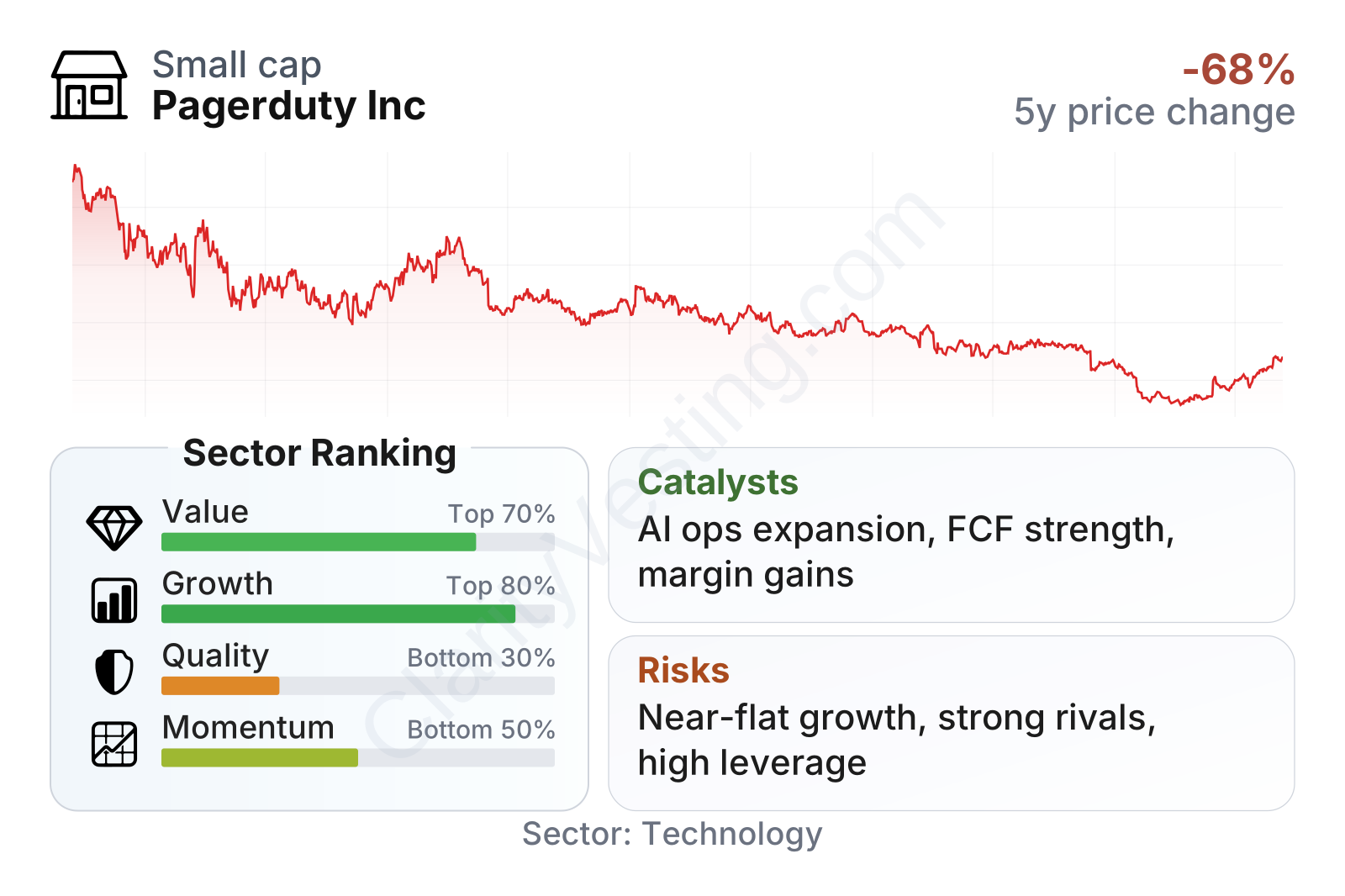
PagerDuty is a small-cap software company with share-price volatility that is close to the broader market rather than extremely speculative behavior. The most striking contrast in the current profile is this: growth has slowed sharply, but valuation metrics look inexpensive relative to much of the software sector, and cash generation has become much stronger. Quality indicators are mixed, with very strong recent returns on capital and profit margin, but weaker balance-sheet leverage measures than many peers.
Growth
PagerDuty operates in a sector with durable long-term demand. As more businesses run digital services around the clock, the cost of outages, delays, and security disruptions keeps rising. That supports continued spending on incident response, operational automation, observability, and AI-assisted workflows. In that sense, the company is in a relevant and growing part of enterprise software.
Its strategic direction also makes sense. PagerDuty has been expanding beyond basic on-call alerting into a broader operations platform that connects incident management, automation, customer-facing response, and AI features. This is important because simple alerting is easier to commoditize, while broader workflow integration can make the platform more embedded in day-to-day operations.
The main challenge is that growth has decelerated significantly. Annual revenue growth was above 30% a few years ago, then stepped down steadily into the high single digits, and more recently to around 1%. That is far below the median growth rate for the broader software sector. For long-term analysis, this changes the narrative: PagerDuty is no longer being judged primarily as a fast-growth software name, but more as a maturing platform trying to balance expansion with profitability.
Cash generation is a more encouraging part of the picture. Free cash flow has improved from negative territory to more than $100 million on a trailing basis. That suggests the company’s operating discipline is real, not just an accounting improvement. Over a longer period, revenue per share growth has still been solid, and earnings have improved sharply from loss-making levels.
A meaningful catalyst is the company’s push around AI-driven operations and automation. Businesses increasingly want software that not only sends alerts, but also helps filter noise, identify root causes, automate repetitive responses, and speed up resolution. If PagerDuty can deepen product adoption in these areas, it may be able to raise customer spending without needing the same pace of new customer additions. Recent company communications have also emphasized operational efficiency and product innovation, which together create a clearer path toward profitable growth than the company had several years ago.
Risks
This article is for informational purposes only and does not constitute financial advice. Some content is AI-generated. See Disclaimer


