Stock Analysis · PCCW Limited (PCWLF)
Overview
PCCW Limited is a Hong Kong-based communications and technology group with activities that span telecom services, broadband, mobile, enterprise solutions, media, and regional fiber infrastructure. Its best-known operating assets include HKT, one of Hong Kong’s leading telecommunications platforms, and Viu, a streaming and digital media business with an Asian footprint. In practical terms, PCCW serves households that need broadband and mobile plans, businesses that need connectivity and IT services, and viewers who use pay-TV or streaming products.
The group’s revenue base is diversified, but telecom-related activities remain the economic core. Based on PCCW’s recent annual reporting structure and segment disclosures, the main sources of revenue are approximately:
- Telecommunications services in Hong Kong and related operations: about 75% to 85%. This includes mobile services, fiber broadband, local telephony, international telecom, and enterprise solutions delivered mainly through HKT.
- Media and entertainment: about 10% to 15%. This includes Now TV, free TV activities, and Viu’s video streaming and digital media operations.
- Other businesses, including regional solutions and infrastructure-related activities: about 5% to 10%. This covers smaller adjacent operations and corporate-level items not captured in the main operating blocks.
That mix matters for long-term analysis because PCCW is not a pure high-growth streaming company and not just a traditional phone operator either. It is closer to a mature telecom platform with some digital growth options layered on top. Over the last several years, revenue has edged upward, while operating income has stayed relatively resilient. However, financing costs have absorbed a large part of those operating gains, which helps explain why headline profit has looked much weaker than the underlying business activity.
The business flow shows a pattern of stable revenue and operating profit, but a much thinner bottom line after interest and tax. That gap is central to understanding PCCW: the operating engine is still functioning, yet debt costs have materially reduced the profit left for shareholders.
Key Figures
Metric Value Sector ⓘ Date Sep 12, 2026 Context Sector Communication Services Industry Telecom Services Market Cap ⓘ $5.35B Beta ⓘ 0.38 P/E Ratio ⓘ N/A 18.61 FCF Yield ⓘ 202.42% 13.68% EBIT / EV ⓘ N/A 4.54% PEG ⓘ N/A Revenue Growth ⓘ 6.80% 5.40% RPS Growth (5Y CAGR) ⓘ 3.20% 4.62% EPS Growth (5Y CAGR) ⓘ N/A -18.01% Margin Growth (5Y Trend) ⓘ 0.41% 1.10% FCF Growth (5Y CAGR) ⓘ 44.32% 5.88% ROIC (Latest) ⓘ N/A 8.38% ROIC (5Y Median) ⓘ 6.36% 8.32% Net Debt / EBIT (Latest) ⓘ 6.37 1.99 Net Debt / EBIT (5Y Median) ⓘ 10.31 2.94 Operating Margin (Latest) ⓘ 13.49% 14.89% Operating Margin (5Y Median) ⓘ 13.54% 12.96% Debt to Equity (Latest) ⓘ -1731.45% 59.59% Profit Margin (Latest) ⓘ 0.50% 8.77% Free Cash Flow (Latest) ⓘ $10.82B 3Y Return ⓘ +96.47% +46.64% 12M Return (excl. last month) ⓘ +14.19% +2.16% 6M Return ⓘ -2.95% +5.05% Price vs. 200-Day MA ⓘ -0.33% +2.88%
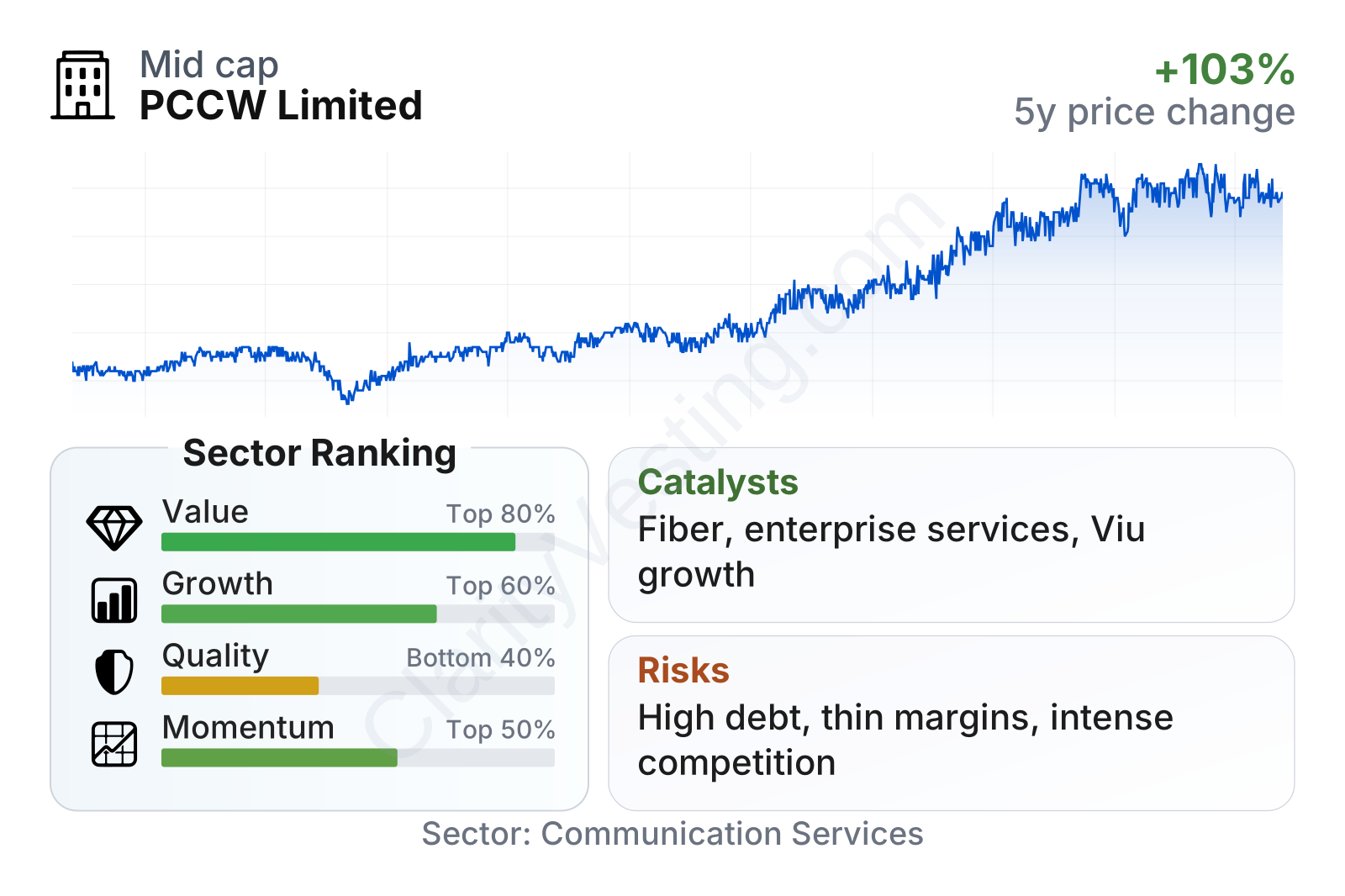
PCCW is a mid-sized communications company with unusually low share-price volatility, reflected by a beta well below 1. On a factor basis, the company screens relatively well on value and around the middle of the sector on growth and momentum, while quality is weaker because leverage is high and profit conversion is thin. Revenue growth has recently been slightly above the sector median, and free cash flow has been notably stronger than many peers, but that strength has not translated into equally strong net profitability.
Growth
PCCW operates in parts of the communications sector that are structurally mixed. Traditional fixed-line and mature telecom services tend to grow slowly, but demand for fiber connectivity, mobile data, enterprise digitalization, and video streaming remains supported by long-term consumption trends. In that sense, PCCW is exposed to both defensive and growth-oriented segments. That combination can be useful: telecom cash flow can fund investment in newer services, while digital platforms can add upside if execution improves.
Recent revenue growth has been positive and slightly ahead of the sector median. Over a longer period, growth has been more moderate, which fits the profile of a mature operator rather than a fast-expanding platform company. The more encouraging point is that operating margins have held up reasonably well over time, suggesting the company has retained pricing discipline and cost control in its core operations.
Cash generation is one of the more constructive parts of the picture. Free cash flow has improved meaningfully over the past several years, and the recent level stands out favorably against much of the sector. For a telecom group, that is important because network businesses require ongoing investment. Stronger cash generation can support debt service, dividends at the subsidiary level, and selective expansion in higher-growth areas such as streaming, enterprise solutions, and digital infrastructure.
PCCW’s growth strategy also makes industrial sense. Hong Kong remains a dense, high-value telecom market where premium broadband and mobile offerings can be monetized. Enterprise customers increasingly need cybersecurity, cloud connectivity, and managed services, areas where established telecom operators often have an advantage because they already own customer relationships and network assets. At the same time, Viu gives PCCW exposure to online video consumption across Asia, a market with long-term audience growth potential if content costs and monetization are handled carefully.
A meaningful catalyst is the continued buildout of digital infrastructure and demand for data-heavy services across the region. Another is the possibility that stronger operating cash flow gradually improves the group’s financial flexibility. If the company can keep revenue growing in the mid-single-digit range while limiting financing pressure, the gap between operating performance and bottom-line earnings could narrow.
Risks
This article is for informational purposes only and does not constitute financial advice. Some content is AI-generated. See Disclaimer


