Stock Analysis · OPENLANE Inc (OPLN)
Overview
OPENLANE Inc operates a digital marketplace for wholesale used vehicles. In simple terms, it helps professional vehicle sellers and buyers—such as franchised dealers, independent dealers, fleet operators, rental car companies, finance companies, and commercial consignors—buy and sell cars online. The business is mainly business-to-business rather than consumer-facing. The company also offers related services that make transactions easier, including financing, transportation, inspections, title services, and technology tools used in remarketing vehicles.
The company’s revenue base is centered on wholesale vehicle remarketing and related services. Based on its recent annual reporting structure, the largest sources of revenue are:
- Marketplace and auction fees: approximately 65% to 75% of revenue. This includes fees from facilitating wholesale used-vehicle sales through digital auctions and related transaction services.
- Service revenue: approximately 15% to 25% of revenue. This generally includes transportation, inspections, title and administrative services, and other value-added activities tied to vehicle transactions.
- Finance and ancillary revenue: approximately 5% to 10% of revenue. This includes financing products and other supporting revenue streams connected to dealers and vehicle remarketing.
What makes OPENLANE easy to understand is that it is not simply selling cars from its own inventory at retail. Its role is closer to a transaction platform and service provider for the professional used-car ecosystem. That model can be attractive because it can benefit from vehicle turnover, dealer adoption of digital tools, and demand for more efficient inventory sourcing.
The business mix has also been moving in a healthier direction. Revenue has climbed over the last several years, while operating income recovered strongly after a weak 2023. The latest annual picture suggests better cost control and a stronger conversion of revenue into profit than earlier in the cycle.
The long-term flow of the business shows improving scale: revenue has risen from roughly $1.5 billion to nearly $1.9 billion over four years, and operating income expanded sharply in the latest period. Selling and administrative costs have grown much more slowly than revenue, which points to improving operating leverage when volumes are favorable.
Key Figures
| Metric | Value | Sector ⓘ |
|---|---|---|
| Date | Sep 12, 2026 | |
| Context | ||
| Sector | Consumer Cyclical | |
| Industry | Auto & Truck Dealerships | |
| Market Cap ⓘ | $4.24B | |
| Beta ⓘ | 1.26 | |
Value (Cheapness) | ||
| P/E Ratio ⓘ | N/A | 17.10 |
| FCF Yield ⓘ | 8.18% | 8.53% |
| EBIT / EV ⓘ | 6.93% | 6.46% |
| PEG ⓘ | 1.22 | |
Growth (Business expansion) | ||
| Revenue Growth ⓘ | 15.10% | 5.75% |
| RPS Growth (5Y CAGR) ⓘ | 10.94% | 9.14% |
| EPS Growth (5Y CAGR) ⓘ | 38.46% | -18.21% |
| Margin Growth (5Y Trend) ⓘ | 6.90% | -0.23% |
| FCF Growth (5Y CAGR) ⓘ | -0.87% | 4.91% |
Quality (Business durability) | ||
| ROIC (Latest) ⓘ | 18.44% | 12.61% |
| ROIC (5Y Median) ⓘ | N/A | 10.72% |
| Net Debt / EBIT (Latest) ⓘ | 1.22 | 2.10 |
| Net Debt / EBIT (5Y Median) ⓘ | 4.42 | 2.32 |
| Operating Margin (Latest) ⓘ | 15.69% | 9.25% |
| Operating Margin (5Y Median) ⓘ | 9.65% | 9.64% |
| Debt to Equity (Latest) ⓘ | 37.26% | 75.78% |
| Profit Margin (Latest) ⓘ | 9.67% | 5.33% |
| Free Cash Flow (Latest) ⓘ | $347.40M | |
Momentum (Price trend) | ||
| 3Y Return ⓘ | +127.76% | +14.53% |
| 12M Return (excl. last month) ⓘ | +23.36% | +3.08% |
| 6M Return ⓘ | +27.92% | +0.55% |
| Price vs. 200-Day MA ⓘ | +7.31% | -0.54% |
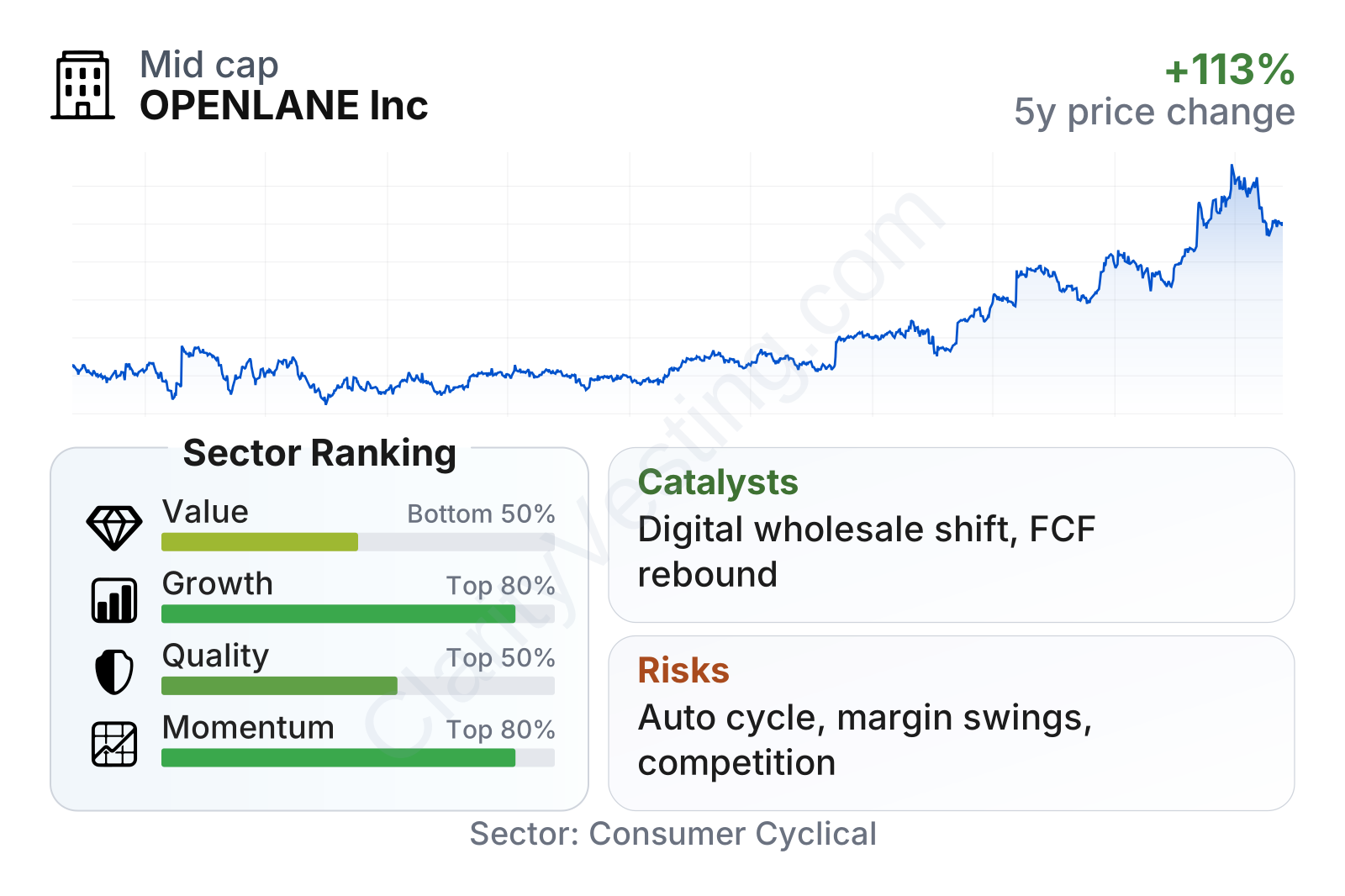
OPENLANE currently sits in the mid-cap range, with share-price volatility somewhat above the broader market. The latest factor profile looks solid overall: value and quality appear around the better half of the sector, growth ranks much higher, and momentum is particularly strong. Profitability metrics are notably ahead of the sector median, while leverage looks moderate at present. The main mixed point in the table is cash flow growth over a five-year view, which has been less consistent than revenue and earnings growth.
The stock-price history reflects a business that went through a difficult period and then regained market confidence. Shares were weak through parts of 2022 and 2023, but the move since 2024 has been much stronger. That recovery lines up with better margins, renewed revenue growth, and improving free cash flow.
Growth
The sector backdrop is favorable over the long run because used-car remarketing is a large, recurring market, and the wholesale side is increasingly moving toward digital workflows. Dealers want faster inventory turnover, broader sourcing options, and lower transaction friction. Fleet operators, rental companies, and finance-related sellers also benefit from efficient remarketing channels. That creates room for digital platforms with established buyer and seller networks.
OPENLANE’s strategy appears coherent for that environment. The company has spent years building an online wholesale marketplace and surrounding it with services that make the platform harder to replace. A dealer that uses OPENLANE for sourcing, financing, transport, and title support may be more likely to stay within the ecosystem. This can deepen relationships and raise revenue per transaction without requiring the company to take full retail-style inventory risk.
Recent revenue growth has been encouraging. Year-over-year expansion moved back into a healthy range and, in the latest periods, has been running well above the sector median. The pattern is not perfectly smooth, but the broader direction since late 2023 has been positive, with several consecutive quarters of growth and a notable acceleration in some periods.
Cash generation is another important part of the growth picture. Free cash flow moved from deeply negative territory in 2023 to strongly positive levels more recently, reaching several hundred million dollars on a trailing basis. That kind of turnaround matters because it suggests the recent improvement is not limited to accounting earnings; it is also showing up in cash that can support debt reduction, technology investment, acquisitions, or shareholder returns.
A meaningful catalyst is continued digital adoption in wholesale auto auctions. The more vehicle sales shift online, the more valuable network scale becomes. Another catalyst is execution on higher-margin services around each transaction. If OPENLANE can keep expanding services per unit while holding operating costs in check, revenue growth may translate into profits faster than before. Recent company updates have also pointed to continued focus on platform efficiency, dealer engagement, and commercial relationships, all of which support the growth case.
Risks
This article is for informational purposes only and does not constitute financial advice. Some content is AI-generated. See Disclaimer


