Stock Analysis · Okta Inc (OKTA)
Overview
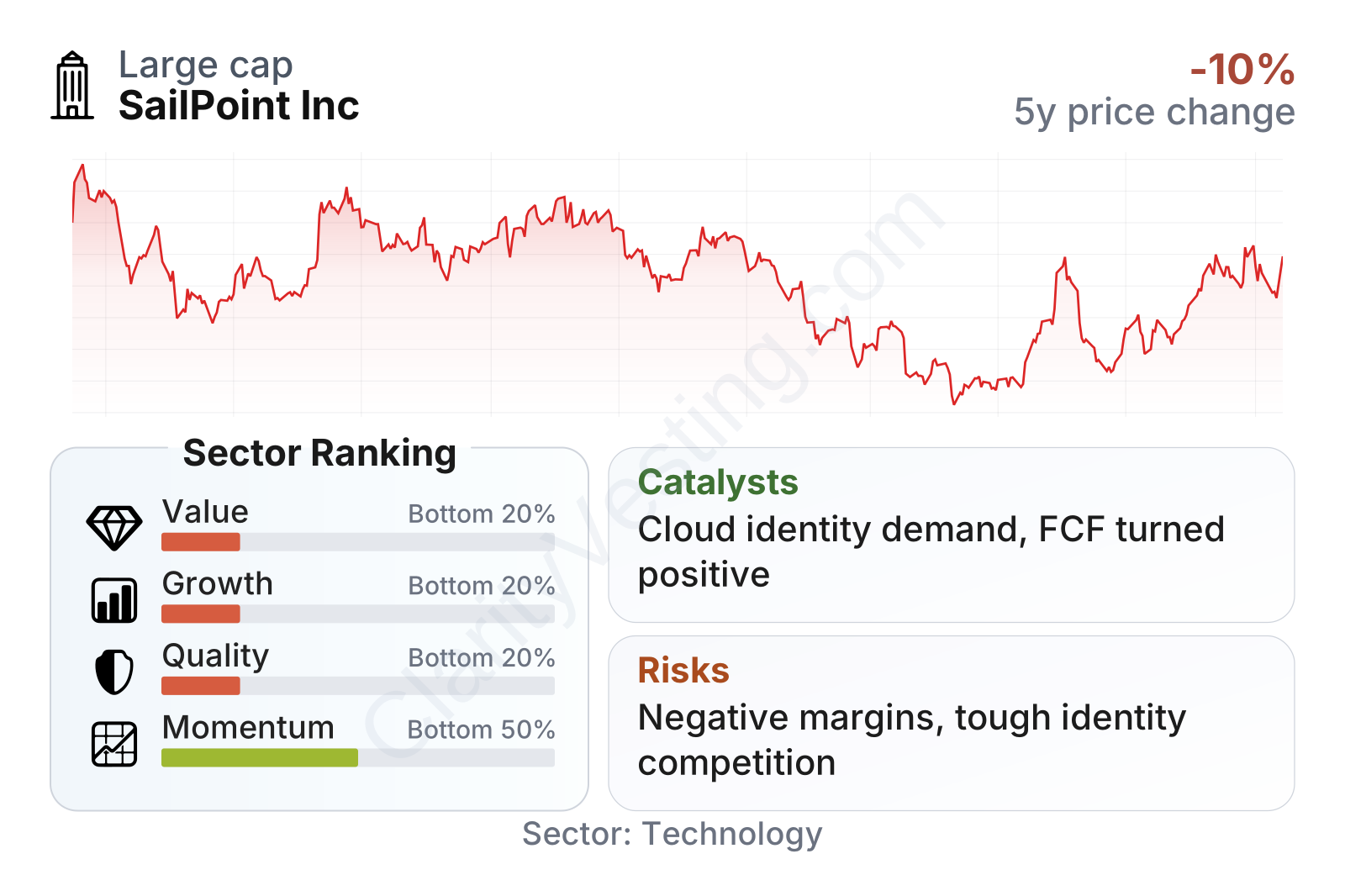
Okta is a cloud software company focused on identity and access management. In simple terms, it helps organizations make sure the right people can securely log in to the right applications, devices, and data. Its products are used by employees, contractors, partners, and customers, which makes Okta part of the core security layer inside many businesses. As companies use more cloud applications and as cyberattacks increasingly target user accounts, identity has become a central part of IT and security spending.
Okta generates almost all of its revenue from subscriptions to its software platform, with a much smaller contribution from professional services. Based on its latest annual filing for fiscal 2026, the revenue mix is approximately:
- Subscription revenue: about 95% — recurring fees for access to Okta’s workforce identity products and customer identity products, along with related platform capabilities.
- Professional services and other: about 5% — implementation, training, and related support work tied to deployments.
Within subscriptions, the business is commonly discussed through two main product families:
- Workforce Identity Cloud — tools such as single sign-on, multi-factor authentication, lifecycle management, and privileged access for employees and contractors.
- Customer Identity Cloud — identity tools that let businesses manage login, registration, and account security for their own end users and customers.
Another useful way to understand Okta is by its customer profile. The company serves both smaller businesses and large enterprises, but large organizations matter a great deal because they tend to use more modules, integrate identity into more systems, and stay on the platform for long periods. The business model is therefore built around recurring contracts, expansion within existing accounts, and very high gross margins typical of software delivered over the cloud.
The financial flow over the last few years also shows a meaningful shift: revenue has continued to rise, gross profit has expanded strongly, and operating losses have turned into operating profit. Just as important, research and development spending has stayed substantial while selling and administrative costs have become more controlled, which helps explain why profitability has improved.
Key Figures
| Metric | Value | Sector ⓘ |
|---|---|---|
| Date | Sep 12, 2026 | |
| Context | ||
| Sector | Technology | |
| Industry | Software - Infrastructure | |
| Market Cap ⓘ | $29.91B | |
| Beta ⓘ | 0.79 | |
Value (Cheapness) | ||
| P/E Ratio ⓘ | 103.08 | 29.51 |
| FCF Yield ⓘ | 3.25% | 4.25% |
| EBIT / EV ⓘ | 1.20% | 2.85% |
| PEG ⓘ | 1.41 | |
Growth (Business expansion) | ||
| Revenue Growth ⓘ | 10.60% | 15.40% |
| RPS Growth (5Y CAGR) ⓘ | 16.69% | 8.56% |
| EPS Growth (5Y CAGR) ⓘ | N/A | -11.88% |
| Margin Growth (5Y Trend) ⓘ | N/A | 0.46% |
| FCF Growth (5Y CAGR) ⓘ | 79.59% | 9.80% |
Quality (Business durability) | ||
| ROIC (Latest) ⓘ | 3.20% | 9.44% |
| ROIC (5Y Median) ⓘ | -3.49% | 8.30% |
| Net Debt / EBIT (Latest) ⓘ | -1.30 | 0.54 |
| Net Debt / EBIT (5Y Median) ⓘ | N/A | 0.44 |
| Operating Margin (Latest) ⓘ | 8.98% | 9.58% |
| Operating Margin (5Y Median) ⓘ | -14.54% | 8.25% |
| Debt to Equity (Latest) ⓘ | 0.76% | 33.33% |
| Profit Margin (Latest) ⓘ | 9.63% | 7.14% |
| Free Cash Flow (Latest) ⓘ | $972.00M | |
Momentum (Price trend) | ||
| 3Y Return ⓘ | +90.09% | +45.48% |
| 12M Return (excl. last month) ⓘ | +64.89% | +23.48% |
| 6M Return ⓘ | +110.89% | +20.93% |
| Price vs. 200-Day MA ⓘ | +60.64% | +7.43% |
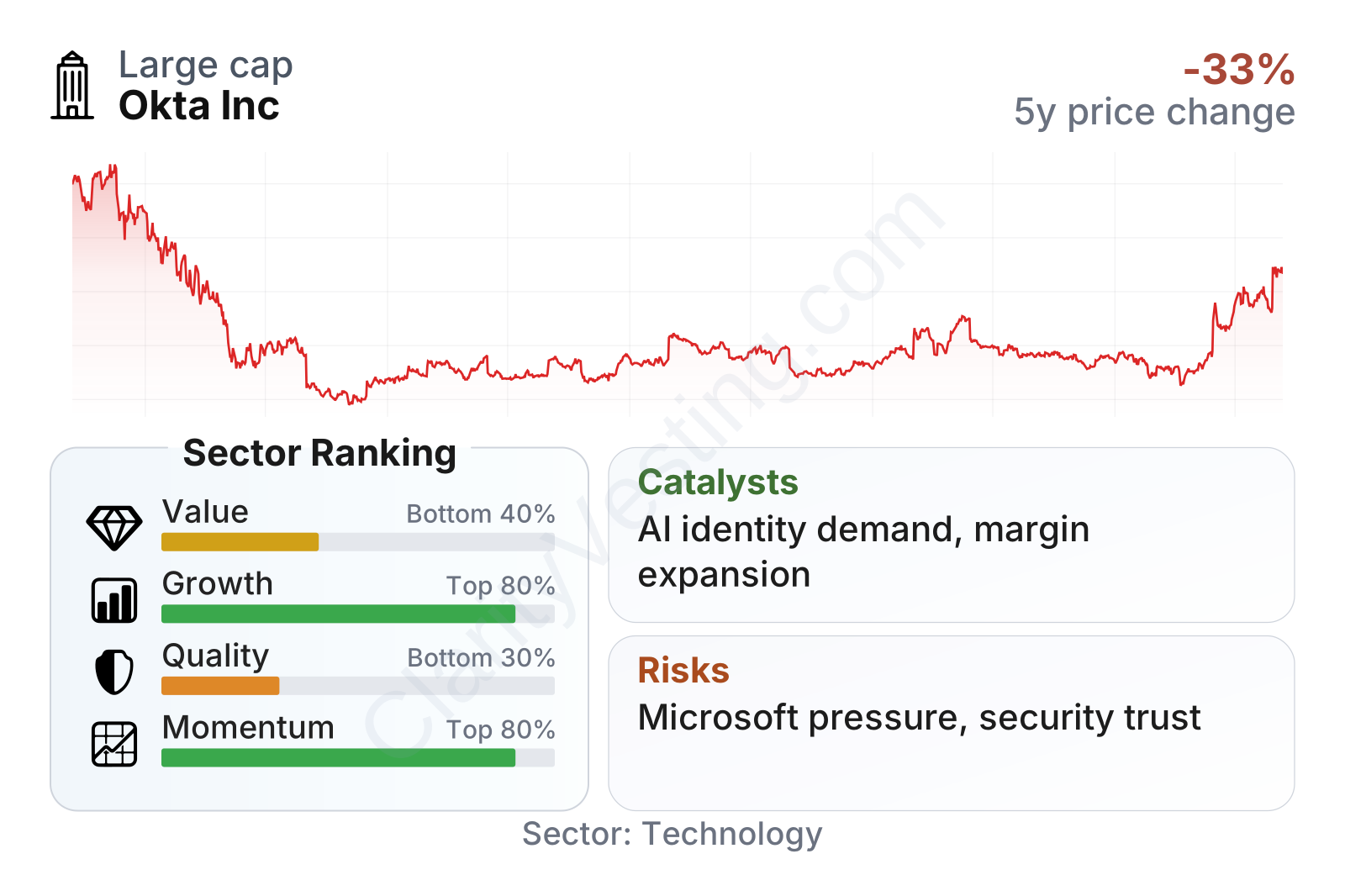
Okta is now a large software company with a market value around the large-cap range and a beta below 1, which suggests the stock has recently moved less violently than many technology names. The factor profile is mixed. Growth and share-price momentum rank in the stronger part of the sector, while value and quality rank lower. That combination fits a company that has made real progress in profitability and cash generation, but still trades at a premium and has not yet matched the best-in-class returns on capital seen elsewhere in software.
The stock history also shows how sentiment has changed. Okta went through a severe reset from its 2021 highs, spent much of the next two years rebuilding confidence, and has recovered meaningfully more recently. That pattern matters for long-term analysis because it shows the market is no longer valuing Okta purely on fast growth; it is paying more attention to margin improvement, cash flow, and execution discipline.
Growth
Okta operates in a sector with durable long-term demand. Identity security sits at the intersection of cybersecurity, cloud computing, remote work, zero-trust architecture, and artificial intelligence-driven security needs. As companies adopt more apps and as users connect from more places, managing identity becomes more complex and more essential. This is not a niche technology problem anymore; it is a foundational business requirement.
That said, Okta’s growth rate has matured. Revenue growth has slowed from the very high levels seen earlier in its public life to about 11% recently, which is below the median for its software peer group. The slowdown does not necessarily mean the business is weak. It more likely reflects a larger revenue base, a more cautious enterprise spending environment, and a company that is shifting from “grow at all costs” toward more balanced execution.
The encouraging part is that longer-term expansion remains solid. Over five years, revenue per share growth has been well above the sector median, and margin trends have improved sharply. Okta is no longer only a growth platform; it is increasingly showing traits of a scaled software company that can convert revenue into cash.
Free cash flow is one of the clearest signs of that transition. Trailing free cash flow has risen from modest levels a few years ago to close to $1 billion, an unusually important milestone for a company that was recently unprofitable on a GAAP basis. Strong cash generation gives management more flexibility for product investment, acquisitions, and balance-sheet strength.
Okta’s strategy for future growth is logical. It is trying to deepen its position as an independent identity platform across both workforce and customer use cases. That matters because many organizations prefer identity tools that work across mixed environments rather than being tied to one broader software ecosystem. Growth can come from selling more modules into existing customers, landing larger enterprise accounts, and benefiting from tighter security requirements around authentication, privileged access, and machine identities.
A recent opportunity worth noting is the broader push by enterprises to modernize identity stacks as AI agents, automated workflows, and non-human identities become more common. Every new digital identity creates another access point to secure. Okta has been emphasizing platform breadth, governance, and secure access, which positions it to capture part of that demand if execution remains consistent.
Risks
This article is for informational purposes only and does not constitute financial advice. Some content is AI-generated. See Disclaimer