Stock Analysis · O-I Glass Inc (OI)
Overview
O-I Glass is a large manufacturer of glass containers used mainly for food and beverages. The company sells bottles and jars to producers of beer, wine, spirits, non-alcoholic drinks, sauces, condiments, and packaged foods. Its business is industrial rather than consumer-facing: most people know the brands filling the bottles, while O-I supplies the container itself. The group operates across North America, Europe, Latin America, and Asia Pacific, with production assets that are difficult and expensive to replicate.
Revenue is generated primarily by selling glass containers, with smaller contributions from related services and other activities. Based on company disclosures, the business is best understood through a mix of end markets and geographic segments.
- Beer and other alcoholic beverage containers: approximately 45% to 55% of revenue. This includes bottles for beer, wine, and spirits, which are among the company’s most important end uses.
- Food containers: approximately 20% to 30% of revenue. This includes jars and bottles for sauces, baby food, preserves, and other packaged food products.
- Non-alcoholic beverage containers: approximately 10% to 20% of revenue. This covers bottles for soft drinks, juices, tea, and other beverages.
- Other packaging and services: typically a small share of revenue. This can include pharmaceutical or specialty packaging in certain markets, as well as tooling and other related activities.
Geographically, Europe and the Americas account for the overwhelming majority of sales, while Asia Pacific is much smaller. In practical terms, O-I is a global glass packaging specialist whose fortunes depend on container demand, plant utilization, pricing discipline, and energy and raw material costs.
The broad financial flow shows a business with multi-billion-dollar revenue but relatively narrow room for error. Gross profit held up better than revenue through 2025, yet operating income and net income weakened sharply as interest expense stayed high and profitability compressed.
Key Figures
| Metric | Value | Sector ⓘ |
|---|---|---|
| Date | Sep 12, 2026 | |
| Context | ||
| Sector | Consumer Cyclical | |
| Industry | Packaging & Containers | |
| Market Cap ⓘ | $1.00B | |
| Beta ⓘ | 0.66 | |
Value (Cheapness) | ||
| P/E Ratio ⓘ | N/A | 17.10 |
| FCF Yield ⓘ | -1.40% | 8.53% |
| EBIT / EV ⓘ | 4.57% | 6.46% |
| PEG ⓘ | 0.35 | |
Growth (Business expansion) | ||
| Revenue Growth ⓘ | -2.20% | 5.75% |
| RPS Growth (5Y CAGR) ⓘ | 1.36% | 9.14% |
| EPS Growth (5Y CAGR) ⓘ | -55.09% | -18.21% |
| Margin Growth (5Y Trend) ⓘ | -4.08% | -0.23% |
| FCF Growth (5Y CAGR) ⓘ | -12.68% | 4.91% |
Quality (Business durability) | ||
| ROIC (Latest) ⓘ | 2.96% | 12.61% |
| ROIC (5Y Median) ⓘ | 5.31% | 10.72% |
| Net Debt / EBIT (Latest) ⓘ | 17.94 | 2.10 |
| Net Debt / EBIT (5Y Median) ⓘ | 7.48 | 2.32 |
| Operating Margin (Latest) ⓘ | 4.07% | 9.25% |
| Operating Margin (5Y Median) ⓘ | 8.62% | 9.64% |
| Debt to Equity (Latest) ⓘ | 1301.83% | 75.78% |
| Profit Margin (Latest) ⓘ | -18.16% | 5.33% |
| Free Cash Flow (Latest) ⓘ | -$14.00M | |
Momentum (Price trend) | ||
| 3Y Return ⓘ | -64.80% | +14.53% |
| 12M Return (excl. last month) ⓘ | -48.90% | +3.08% |
| 6M Return ⓘ | -40.53% | +0.55% |
| Price vs. 200-Day MA ⓘ | -40.64% | -0.54% |
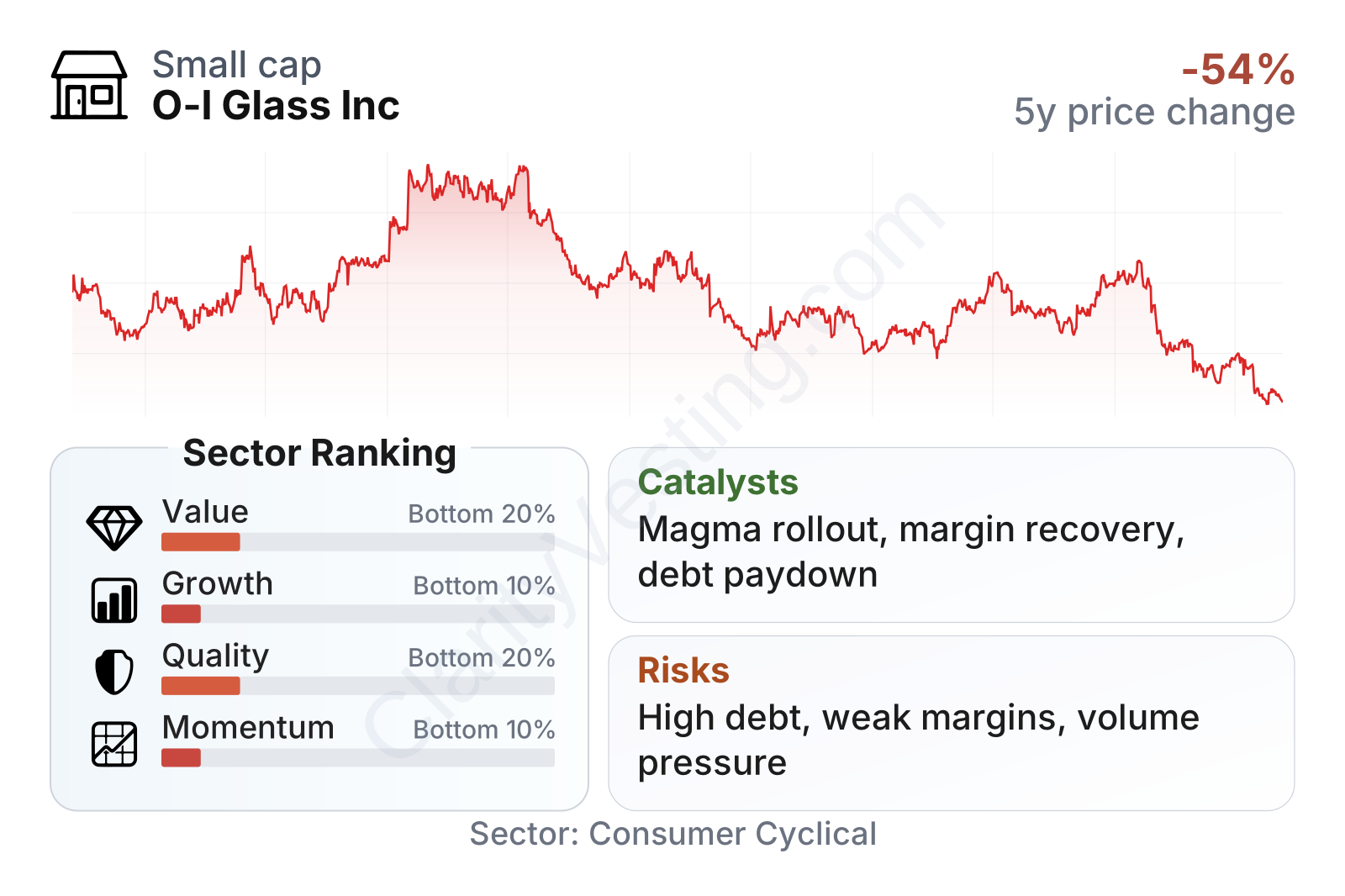
O-I Glass is a small-cap company with a stock that has been volatile and weak over the last several years. The table points to a business that currently ranks in the lower end of its sector on value, growth, quality, and momentum. That does not automatically mean the shares are expensive on every measure; it means the market is looking at a company with strained fundamentals, negative recent free cash flow on a trailing basis, and profitability metrics that sit well below sector norms.
One point that stands out is balance-sheet pressure. Net debt relative to EBIT is far above normal sector levels, while returns on invested capital and margins have deteriorated. The relatively low beta suggests the stock has not moved as wildly as some cyclical names on a day-to-day basis, but the longer-term share-price trend has still been poor.
Growth
Glass packaging is part of a mature industry, not a high-growth one. Long-term demand tends to track beverage and food consumption, premiumization in categories such as beer, wine, and spirits, and customer preference for packaging that is recyclable and inert. That gives the sector a sensible long-run role, especially as brand owners and regulators place more emphasis on circular packaging and recycled content. Still, this is usually a steady-demand industry rather than one driven by rapid expansion.
O-I’s strategy for future growth is more about improving the economics of the business than chasing dramatic volume gains. Recent company communication has emphasized portfolio optimization, plant productivity, cost control, debt reduction, and the adoption of more modern manufacturing technology. The most important strategic initiative is the company’s push around its MAGMA technology platform, designed to make glass production more flexible and potentially less capital-intensive for certain applications. If deployed successfully at scale, that could improve customer service, lower changeover costs, and raise returns over time.
Revenue growth, however, has recently moved in the wrong direction. After solid expansion in 2022 and much of 2023, the company shifted into repeated year-over-year declines that continued into 2026. That pattern suggests O-I is currently working through softer demand, lower shipment volumes, or mix and pricing pressure rather than participating in a strong industry upswing.
Cash generation gives a mixed picture. Free cash flow was deeply negative in 2023, then improved substantially in 2024 and turned modestly positive more recently, before the latest trailing figure in the metrics table moved back into negative territory. In other words, there are signs of operational stabilization, but not yet a durable cash profile that clearly supports a stronger growth narrative.
A meaningful catalyst would be evidence that shipments have bottomed, margins are recovering, and debt reduction resumes at a faster pace. Additional progress on technological modernization could also matter, especially if it leads to better asset utilization or opens doors with customers looking for more flexible and sustainable glass production.
Recent company updates in 2026 have largely revolved around operating performance, restructuring efforts, and capital allocation discipline rather than a transformational acquisition or major new market entry. That makes the near-term opportunity more operational than headline-driven.
Risks
This article is for informational purposes only and does not constitute financial advice. Some content is AI-generated. See Disclaimer


