Stock Analysis · Spark New Zealand Ltd (NZTCF)
Overview
Spark New Zealand is one of New Zealand’s largest telecommunications and digital services companies. It provides mobile phone plans, broadband internet, cloud and information technology services, cybersecurity, data centers, entertainment-related offerings, and network services for businesses, government agencies, and households. In simple terms, Spark is the kind of company that helps people stay connected at home, on mobile devices, and at work, while also supporting more advanced digital infrastructure for large organizations.
The business is still anchored by traditional telecom services, but management has spent several years trying to expand into higher-value digital activities such as managed IT, cloud, and cybersecurity. That mix matters for long-term analysis because telecom access services usually generate dependable cash flow, while digital services can offer a better path to future growth if executed well.
Based on the company’s reporting structure and recent annual disclosures, Spark’s revenue is mainly driven by the following areas:
- Mobile services and products: approximately 35% to 40% of revenue. This includes consumer and business mobile plans, handset sales, and wireless connectivity.
- Broadband and home connectivity: approximately 20% to 25%. This includes fixed broadband, voice, and related household connectivity services.
- Enterprise, government, and digital services: approximately 25% to 30%. This includes cloud, managed services, cybersecurity, procurement, IT integration, and communications solutions for larger customers.
- Wholesale and other services: approximately 10% to 15%. This includes network access sold to other providers and various support or legacy activities.
Over the last several years, revenue has been broadly stable rather than strongly expanding, which is common for mature telecom operators. The more notable change has been pressure on earnings after a stronger 2023 period, showing that the business remains sensitive to costs, competition, and capital intensity even when top-line movement is limited.
The broad financial flow shows a company with multibillion-dollar annual revenue and still meaningful operating profit, but also a clear decline from the stronger 2023 result. More recently, revenue has stayed near the same range while operating income and net income have been less steady, suggesting margin pressure matters more than pure sales growth.
Key Figures
| Metric | Value | Sector ⓘ |
|---|---|---|
| Date | Sep 14, 2026 | |
| Context | ||
| Sector | Communication Services | |
| Industry | Telecom Services | |
| Market Cap ⓘ | $2.44B | |
| Beta ⓘ | 0.16 | |
Value (Cheapness) | ||
| P/E Ratio ⓘ | 8.60 | 18.61 |
| FCF Yield ⓘ | 41.24% | 13.68% |
| EBIT / EV ⓘ | N/A | 4.54% |
| PEG ⓘ | 13.07 | |
Growth (Business expansion) | ||
| Revenue Growth ⓘ | -1.20% | 5.40% |
| RPS Growth (5Y CAGR) ⓘ | -1.09% | 4.62% |
| EPS Growth (5Y CAGR) ⓘ | -1.64% | -18.01% |
| Margin Growth (5Y Trend) ⓘ | -6.55% | 1.10% |
| FCF Growth (5Y CAGR) ⓘ | 12.76% | 5.88% |
Quality (Business durability) | ||
| ROIC (Latest) ⓘ | N/A | 8.38% |
| ROIC (5Y Median) ⓘ | 11.94% | 8.32% |
| Net Debt / EBIT (Latest) ⓘ | 0.96 | 1.99 |
| Net Debt / EBIT (5Y Median) ⓘ | 3.82 | 2.94 |
| Operating Margin (Latest) ⓘ | 23.14% | 14.89% |
| Operating Margin (5Y Median) ⓘ | 16.01% | 12.96% |
| Debt to Equity (Latest) ⓘ | 117.55% | 59.59% |
| Profit Margin (Latest) ⓘ | 12.64% | 8.77% |
| Free Cash Flow (Latest) ⓘ | $1.01B | |
Momentum (Price trend) | ||
| 3Y Return ⓘ | -30.62% | +46.64% |
| 12M Return (excl. last month) ⓘ | -16.96% | +2.16% |
| 6M Return ⓘ | +9.40% | +5.05% |
| Price vs. 200-Day MA ⓘ | +11.76% | +2.88% |
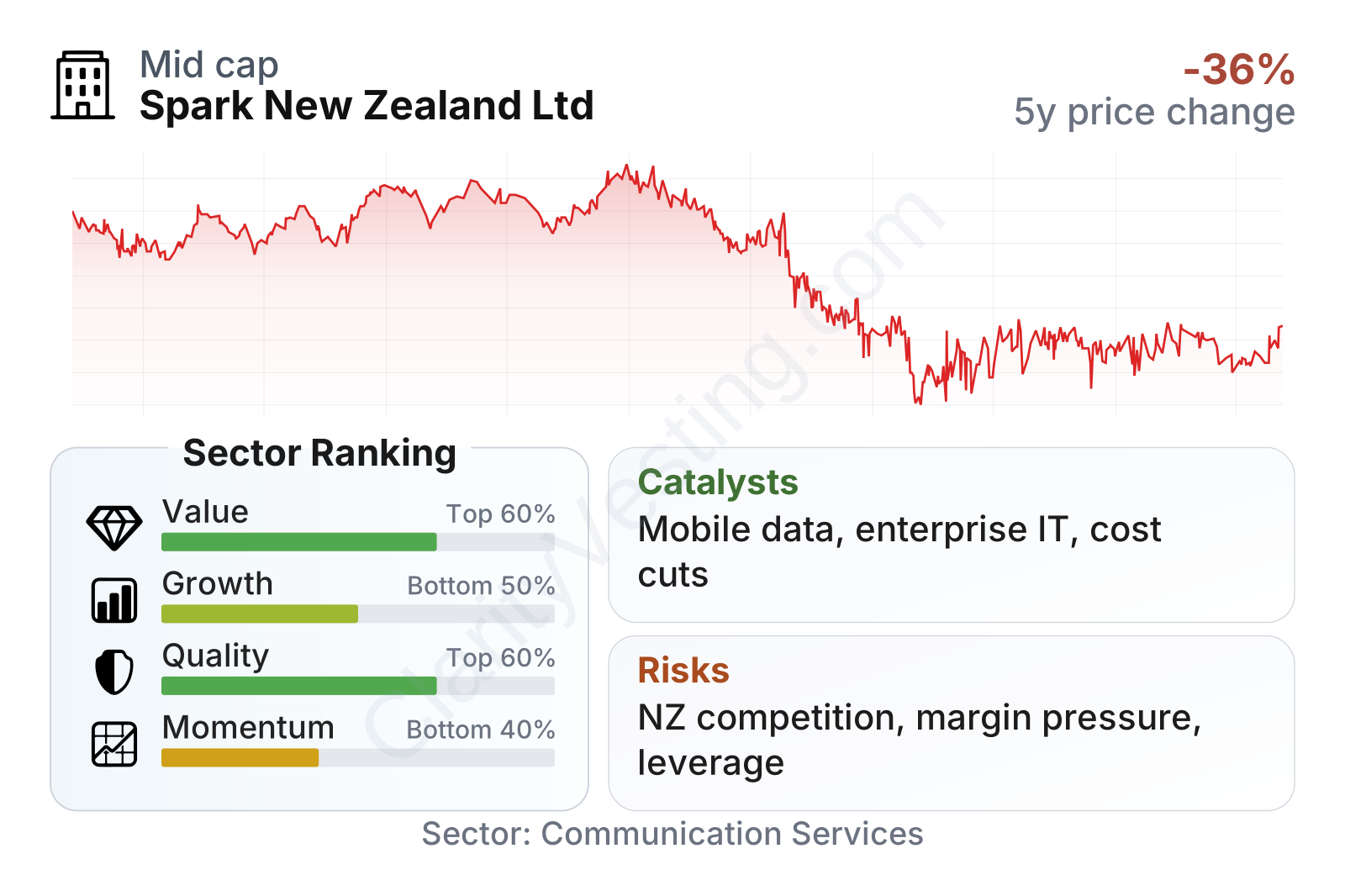
Spark currently looks mixed on fundamentals. On valuation, it screens cheaper than much of the telecom and broader communication services group, with a low earnings multiple and an unusually high free cash flow yield. On business quality, operating margin and profit margin are above sector medians, and net debt relative to EBIT is lower than the sector median, which supports balance-sheet resilience. The weaker area is growth: revenue has been slightly negative year over year, five-year revenue per share has drifted lower, and margin trends over five years have softened. Share price performance also trails the sector over longer periods, although shorter-term trading has improved somewhat.
The company is also relatively low-volatility, reflected in a beta far below 1.0. That does not remove business risk, but it does fit the profile of a mature infrastructure-backed operator rather than a highly speculative communications name.
Growth
Telecom is not a fast-growing sector in a mature market like New Zealand, but it remains essential. Demand for mobile data, fiber broadband, cloud adoption, cybersecurity, and digital transformation continues to expand over time. That gives Spark a reasonable structural backdrop even if headline revenue growth remains modest. In other words, the sector itself is stable with selective growth pockets rather than broadly explosive.
Spark’s strategy makes the most sense where it overlaps essential connectivity with digital services. A company that already has customer relationships, network assets, billing systems, and enterprise contracts can use that position to cross-sell higher-value technology services. This is especially relevant in business and government segments, where customers often prefer fewer providers and integrated solutions.
Recent revenue momentum has been subdued, and the broader pattern points to a business that is defending its base more than rapidly expanding it. That is not unusual for an incumbent telecom operator, but it means future progress likely depends more on mix improvement, disciplined pricing, and operating execution than on a major jump in subscriber growth.
Free cash flow is an important piece of the Spark case. Even with earnings pressure, cash generation remains a central strength, and the longer-term free cash flow trend has been better than the company’s revenue trend. For a telecom company, that matters because steady cash creation can support network investment, debt management, and capital returns while giving management room to reposition the business.
A meaningful catalyst is the continued shift toward mobile data usage, enterprise digital services, and cybersecurity needs. If Spark can keep building those areas without sacrificing too much profitability in its core connectivity business, the company could gradually improve the quality of its revenue mix. Another possible catalyst is operational simplification: when telecom groups reduce complexity and focus spending on the most productive assets, margins can improve even without much revenue growth.
Recent company updates have also highlighted cost actions, network focus, and efforts to sharpen capital allocation. For a mature operator, this kind of discipline can be as important as top-line growth because even small improvements in efficiency can have a visible effect on profit and cash flow.
Risks
This article is for informational purposes only and does not constitute financial advice. Some content is AI-generated. See Disclaimer


