Stock Analysis · New York Times Company (NYT)
Overview
The New York Times Company is a media business centered on digital journalism and subscription products. Its best-known brand is The New York Times, but the company also operates products such as The Athletic, Wirecutter, NYT Cooking, and NYT Games. Over the last several years, the business has moved away from the old newspaper model and toward a broader subscription platform built around news, sports, puzzles, recipes, and product recommendations.
Its revenue mix is now led by subscription income rather than advertising, which is important because subscriptions are usually more predictable. Based on recent annual reporting, the main sources of revenue are approximately:
- Digital subscriptions and related digital reader revenue: about 45% to 50%. This includes paid access to news, Games, Cooking, The Athletic, and multi-product bundles.
- Print subscriptions and single-copy sales: about 20% to 25%. This is the traditional newspaper business, which remains meaningful but is no longer the main engine.
- Advertising: about 20% to 25%. This includes digital advertising and print advertising, with digital representing the larger share of ad revenue.
- Affiliate, licensing, and other revenue: about 5% to 10%. This includes Wirecutter commerce-related activity, licensing, commercial printing, and other smaller lines.
The most notable feature of the business model is that it is becoming more diversified inside subscriptions. Instead of depending only on general news readers, the company is trying to keep people engaged across several daily-use products. That strategy can improve retention because a subscriber using Games, Cooking, and news together is harder to lose than someone paying only for one product.
The long-term shift has also been visible in the company’s economics. Revenue, gross profit, operating income, and net income have all moved upward over the last several years, while interest expense has stayed very low. That points to a business that is scaling without relying on heavy borrowing.
Key Figures
| Metric | Value | Sector ⓘ |
|---|---|---|
| Date | Sep 12, 2026 | |
| Context | ||
| Sector | Communication Services | |
| Industry | Publishing | |
| Market Cap ⓘ | $10.79B | |
| Beta ⓘ | 0.91 | |
Value (Cheapness) | ||
| P/E Ratio ⓘ | 27.87 | 18.61 |
| FCF Yield ⓘ | 5.78% | 13.68% |
| EBIT / EV ⓘ | 4.93% | 4.54% |
| PEG ⓘ | 3.79 | |
Growth (Business expansion) | ||
| Revenue Growth ⓘ | 11.30% | 5.40% |
| RPS Growth (5Y CAGR) ⓘ | 8.60% | 4.62% |
| EPS Growth (5Y CAGR) ⓘ | 1.60% | -18.01% |
| Margin Growth (5Y Trend) ⓘ | 1.98% | 1.10% |
| FCF Growth (5Y CAGR) ⓘ | 23.79% | 5.88% |
Quality (Business durability) | ||
| ROIC (Latest) ⓘ | 19.49% | 8.38% |
| ROIC (5Y Median) ⓘ | 15.40% | 8.32% |
| Net Debt / EBIT (Latest) ⓘ | -0.47 | 1.99 |
| Net Debt / EBIT (5Y Median) ⓘ | -0.69 | 2.94 |
| Operating Margin (Latest) ⓘ | 16.78% | 14.89% |
| Operating Margin (5Y Median) ⓘ | 14.04% | 12.96% |
| Debt to Equity (Latest) ⓘ | N/A | 59.59% |
| Profit Margin (Latest) ⓘ | 13.31% | 8.77% |
| Free Cash Flow (Latest) ⓘ | $623.02M | |
Momentum (Price trend) | ||
| 3Y Return ⓘ | +57.39% | +46.64% |
| 12M Return (excl. last month) ⓘ | +11.54% | +2.16% |
| 6M Return ⓘ | -13.82% | +5.05% |
| Price vs. 200-Day MA ⓘ | -8.75% | +2.88% |
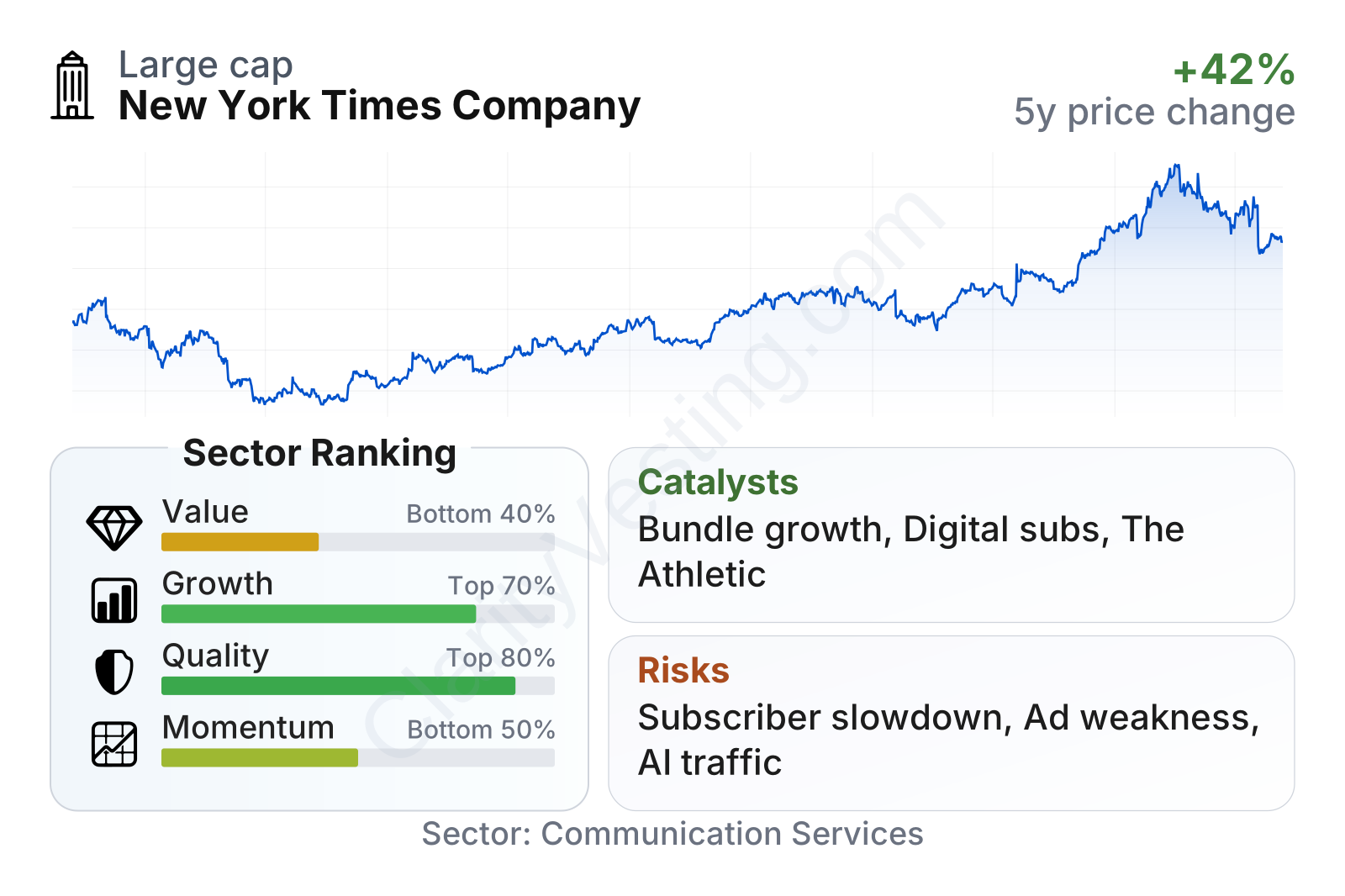
The company sits in the large-cap range for its niche and has a beta below 1, which suggests the stock has historically been somewhat less volatile than the broader market. The metric table shows an interesting mix: growth and quality rank relatively well versus the sector, while value looks weaker. In practical terms, this means the business has been producing solid operating results and strong returns on capital, but the market is already assigning a premium to those strengths.
Growth
The New York Times Company operates in a part of media that still has room to grow: digital subscriptions for trusted content and specialized consumer products. Traditional print publishing is a mature area, but the company is no longer simply a print publisher. It is increasingly a digital subscription platform, and that puts it in a more favorable segment than many legacy newspaper peers that still depend heavily on print circulation or local advertising.
The strategy makes sense for future growth because it is based on habits rather than one-time visits. News can bring readers in, but puzzles, recipes, sports coverage, and bundled access help increase frequency of use. That matters because recurring engagement supports pricing power, subscriber retention, and cross-selling. The company has repeatedly emphasized its goal of growing total subscribers and encouraging more users to take bundles rather than single products.
Recent growth has been steady rather than explosive, but it has remained healthy. Year-over-year revenue growth has generally stayed above the sector median, and the latest pace is still in the low double digits. Over a five-year span, revenue per share growth has also outpaced the typical company in the sector, which suggests the business expansion is not just a short-lived rebound.
Cash generation is another strong point. Free cash flow has increased sharply over the past few years, rising from under $200 million in early 2022 to above $500 million by early 2026. That is a meaningful sign because it shows the company is turning its subscription scale into cash that can support product development, acquisitions, and shareholder returns without stretching the balance sheet.
A major catalyst is the continued conversion of occasional readers into paying digital users, especially through bundles. Another is product expansion beyond core news. Games and Cooking have become everyday-use products, while The Athletic gives the company a stronger position in sports. Management has also been investing in product design, recommendations, and technology intended to increase engagement and reduce churn. If those efforts continue to work, the company can keep raising average revenue per user over time rather than relying only on adding new subscribers.
Recent company updates have also pointed to ongoing progress in digital subscriptions, bundle adoption, and operating profitability. None of these developments guarantee rapid acceleration, but they support the idea that the business is still in a multi-year transition toward a larger and more resilient digital model.
Risks
This article is for informational purposes only and does not constitute financial advice. Some content is AI-generated. See Disclaimer