Stock Analysis · Nayax Ltd (NYAX)
Overview
Nayax Ltd is a fintech and commerce technology company focused on unattended and semi-attended retail. In simple terms, it helps operators of vending machines, coffee machines, laundromats, amusement devices, EV charging points, kiosks, and similar self-service locations accept payments, manage operations, and build customer loyalty. Its offering combines payment hardware, cloud software, telemetry, and consumer engagement tools into one platform.
This matters because many small merchants and machine operators still run fragmented systems. Nayax’s pitch is that one connected platform can handle card and digital wallet payments, machine monitoring, pricing, refunds, loyalty programs, and back-office management. That gives the company exposure to both payment volume and recurring software-like revenue.
Based on company filings, its revenue mix is built around three main streams:
- Sale of products: approximately 50% to 55% of revenue in recent periods. This mainly includes payment devices, readers, and other hardware installed on vending and unattended retail machines.
- SaaS and service revenue: approximately 25% to 30%. This includes telemetry, management software, loyalty tools, operational services, and recurring subscriptions tied to connected machines.
- Processing revenue: approximately 20% to 25%. This comes from payment transaction processing and related acquiring activities when consumers use cards or digital payment methods on machines connected to Nayax.
That structure is important for long-term analysis. Hardware sales can accelerate adoption, but the more durable part of the business is the installed base that later generates recurring software and processing income. Over time, the platform becomes more valuable as more machines, merchants, and consumers use it.
The business has also expanded geographically, with activity across Europe, North America, and other regions, which reduces dependence on a single local market. Its customer base is broad and fragmented, which can be a strength because no single customer appears to dominate the business model.
The financial profile has improved sharply over the last few years. Revenue has scaled from roughly $119 million in 2021 to more than $430 million in 2025, while operating income moved from losses to a meaningful profit. Gross profit has also risen faster than total operating expenses, suggesting the business is gaining scale even while it continues to spend on sales and product development.
Key Figures
| Metric | Value | Sector ⓘ |
|---|---|---|
| Date | Sep 12, 2026 | |
| Context | ||
| Sector | Technology | |
| Industry | Software - Infrastructure | |
| Market Cap ⓘ | $1.76B | |
| Beta ⓘ | -0.20 | |
Value (Cheapness) | ||
| P/E Ratio ⓘ | 224.76 | 29.51 |
| FCF Yield ⓘ | 1.64% | 4.25% |
| EBIT / EV ⓘ | 1.34% | 2.85% |
| PEG ⓘ | N/A | |
Growth (Business expansion) | ||
| Revenue Growth ⓘ | 28.20% | 15.40% |
| RPS Growth (5Y CAGR) ⓘ | 30.69% | 8.56% |
| EPS Growth (5Y CAGR) ⓘ | N/A | -11.88% |
| Margin Growth (5Y Trend) ⓘ | N/A | 0.46% |
| FCF Growth (5Y CAGR) ⓘ | N/A | 9.80% |
Quality (Business durability) | ||
| ROIC (Latest) ⓘ | 6.36% | 9.44% |
| ROIC (5Y Median) ⓘ | -2.29% | 8.30% |
| Net Debt / EBIT (Latest) ⓘ | 2.24 | 0.54 |
| Net Debt / EBIT (5Y Median) ⓘ | N/A | 0.44 |
| Operating Margin (Latest) ⓘ | 5.45% | 9.58% |
| Operating Margin (5Y Median) ⓘ | -4.40% | 8.25% |
| Debt to Equity (Latest) ⓘ | 146.07% | 33.33% |
| Profit Margin (Latest) ⓘ | 1.74% | 7.14% |
| Free Cash Flow (Latest) ⓘ | $28.99M | |
Momentum (Price trend) | ||
| 3Y Return ⓘ | +120.05% | +45.48% |
| 12M Return (excl. last month) ⓘ | +13.75% | +23.48% |
| 6M Return ⓘ | -18.54% | +20.93% |
| Price vs. 200-Day MA ⓘ | -19.94% | +7.43% |
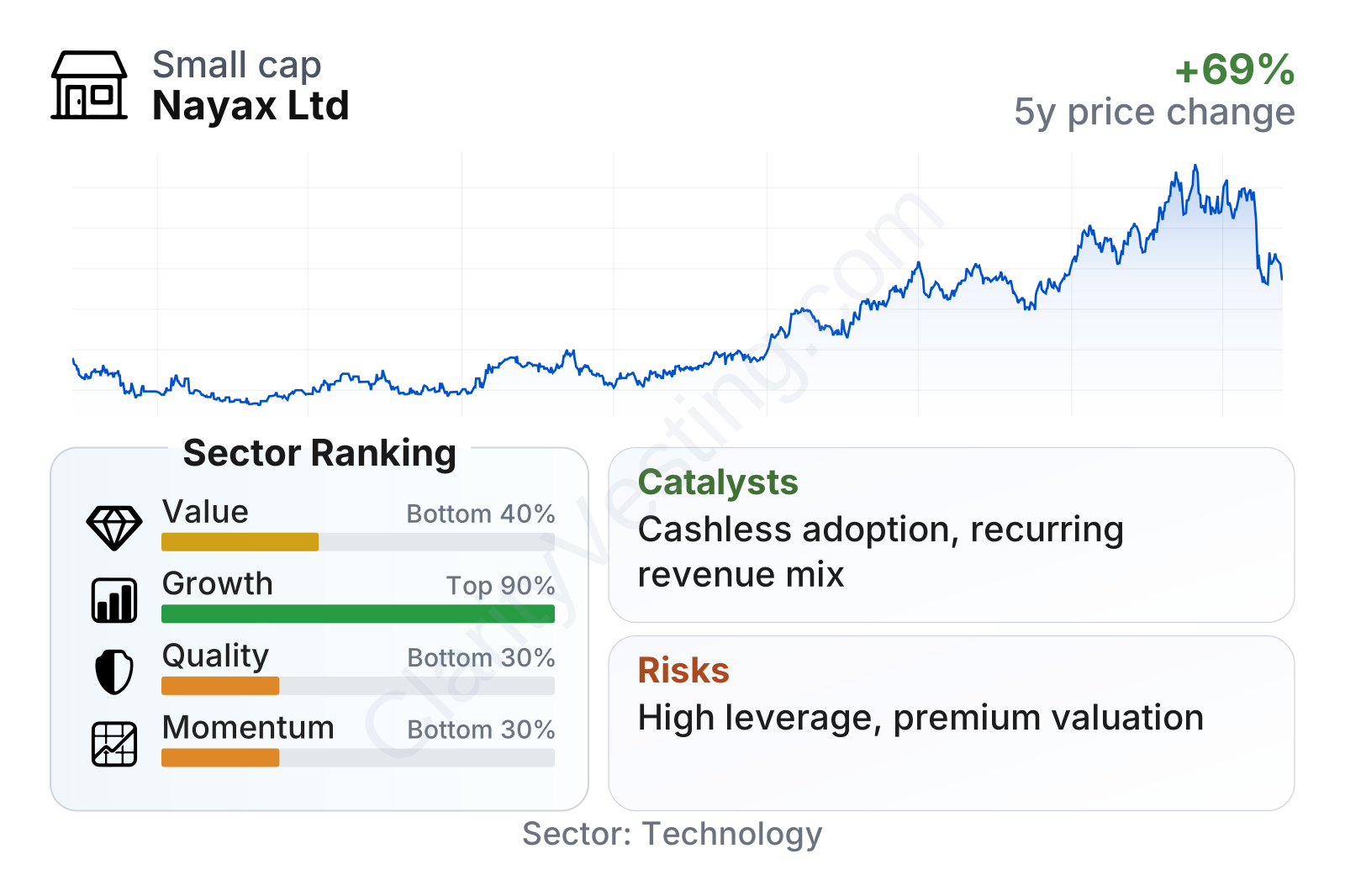
Nayax is now a mid-sized company by market value, with unusually strong growth metrics compared with much of the technology sector. Revenue growth remains well above the sector median, and five-year revenue per share growth is especially strong. Profitability has improved substantially, but quality metrics are still mixed because the longer-term record includes several years of losses and weak margins before the recent turnaround. Valuation metrics sit in the weaker part of the sector, which means the market is already recognizing much of the company’s recent progress.
Growth
Nayax operates in a market with solid structural tailwinds. Cashless payments continue to replace coins and bills, while operators of self-service machines increasingly want real-time monitoring, remote pricing, loyalty features, and simpler payment acceptance. This is not a short-lived theme. It is tied to the broader digitalization of commerce and the spread of unattended retail in places such as offices, transit hubs, residential buildings, fuel stations, and public venues.
The company’s strategy appears coherent for that environment. Instead of offering just a card reader, Nayax bundles payments, connectivity, software, and merchant tools. That can make switching more difficult once a machine fleet is installed and connected to the platform. It also creates multiple monetization layers: first the device sale, then recurring subscription and service revenue, and finally payment processing income as usage rises.
Revenue growth has remained strong for an extended period. The yearly growth rate has cooled from the very high levels seen earlier in the expansion phase, but it is still running around the high-20% to low-30% range recently, which remains strong for a company of this size. That consistency suggests growth is not coming from a single one-off event.
Another encouraging change is cash generation. Free cash flow was clearly negative a few years ago, then turned positive and has continued improving. That is a major milestone because it shows the business is beginning to fund more of its own expansion rather than relying as heavily on outside capital.
Several potential catalysts support the next stage of growth. First, more unattended locations around the world are moving to card and mobile payments. Second, as Nayax adds machines to its network, recurring revenue can rise even if hardware growth becomes less dramatic. Third, the company has been building broader commerce capabilities through product expansion and acquisitions, which could deepen merchant relationships if integration goes well.
Recent company updates have also pointed to continued expansion in connected devices, payment volume, and enterprise relationships. For a business like Nayax, these operating indicators matter because they can signal future recurring revenue before it is fully visible in earnings.
Risks
This article is for informational purposes only and does not constitute financial advice. Some content is AI-generated. See Disclaimer