Stock Analysis · NVR Inc (NVR)
Overview
NVR Inc is a U.S. homebuilder best known for its Ryan Homes, NVHomes, and Heartland Homes brands. The company builds and sells single-family homes, townhomes, and condominium buildings, mainly in the Eastern and Midwestern United States. It also provides mortgage-related services to many of its homebuyers through its in-house financing operations. NVR’s business is built around a relatively asset-light model in homebuilding: instead of owning large amounts of land for long periods, it often controls lots through option agreements. That approach can reduce capital tied up in land and can help the company stay flexible when housing demand changes.
Revenue comes from two main segments.
- Homebuilding: about 94% to 96% of revenue. This is the core activity. It includes selling newly built homes and, in some cases, the underlying land. Revenue depends mainly on the number of settlements, average selling prices, and the mix of communities and products offered.
- Mortgage banking: about 4% to 6% of revenue. This segment provides mortgage loans, title services, and related settlement services to homebuyers, largely supporting the homebuilding operation. While smaller in revenue terms, it can still be meaningful for profitability and customer experience.
NVR is a large company within residential construction, but it remains focused on a single broad theme: supplying newly built homes in markets where housing demand has historically benefited from population growth, household formation, and limited resale inventory.
The business has converted a solid share of revenue into operating profit over time, which is notable in a cyclical industry. Revenue reached a high point in 2024, eased slightly in 2025, and profitability remained strong even as conditions became less favorable.
Key Figures
| Metric | Value | Sector ⓘ |
|---|---|---|
| Date | Sep 12, 2026 | |
| Context | ||
| Sector | Consumer Cyclical | |
| Industry | Residential Construction | |
| Market Cap ⓘ | $16.31B | |
| Beta ⓘ | 0.91 | |
Value (Cheapness) | ||
| P/E Ratio ⓘ | 16.08 | 17.10 |
| FCF Yield ⓘ | 6.42% | 8.53% |
| EBIT / EV ⓘ | 9.70% | 6.46% |
| PEG ⓘ | 4.97 | |
Growth (Business expansion) | ||
| Revenue Growth ⓘ | -10.90% | 5.75% |
| RPS Growth (5Y CAGR) ⓘ | 9.71% | 9.14% |
| EPS Growth (5Y CAGR) ⓘ | -28.58% | -18.21% |
| Margin Growth (5Y Trend) ⓘ | -0.98% | -0.23% |
| FCF Growth (5Y CAGR) ⓘ | -2.72% | 4.91% |
Quality (Business durability) | ||
| ROIC (Latest) ⓘ | 26.80% | 12.61% |
| ROIC (5Y Median) ⓘ | 32.77% | 10.72% |
| Net Debt / EBIT (Latest) ⓘ | -0.41 | 2.10 |
| Net Debt / EBIT (5Y Median) ⓘ | -0.66 | 2.32 |
| Operating Margin (Latest) ⓘ | 16.90% | 9.25% |
| Operating Margin (5Y Median) ⓘ | 20.33% | 9.64% |
| Debt to Equity (Latest) ⓘ | 30.98% | 75.78% |
| Profit Margin (Latest) ⓘ | 11.85% | 5.33% |
| Free Cash Flow (Latest) ⓘ | $1.05B | |
Momentum (Price trend) | ||
| 3Y Return ⓘ | -0.13% | +14.53% |
| 12M Return (excl. last month) ⓘ | -20.95% | +3.08% |
| 6M Return ⓘ | -4.32% | +0.55% |
| Price vs. 200-Day MA ⓘ | -9.23% | -0.54% |
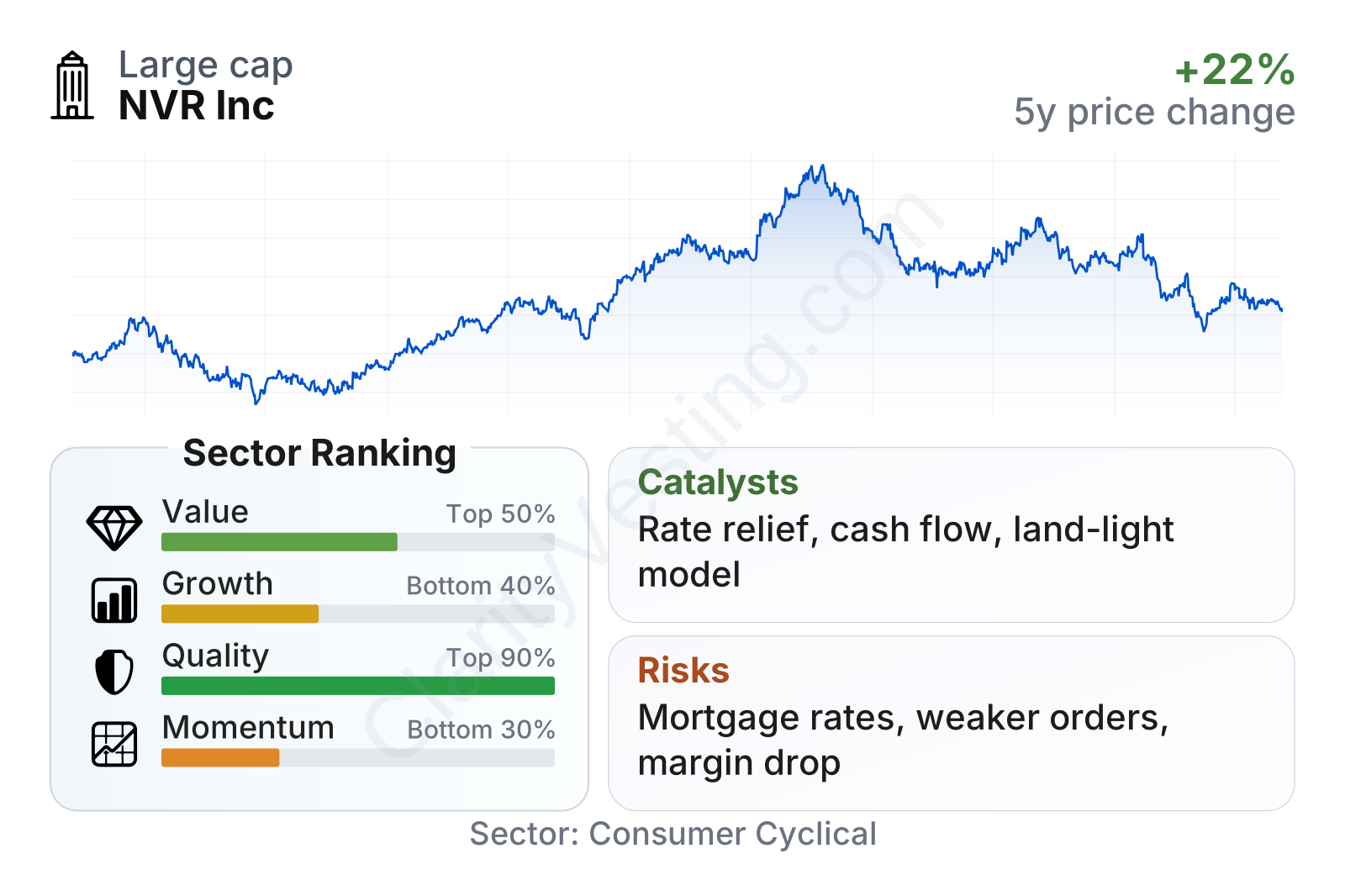
NVR stands out more for quality than for near-term growth or recent stock momentum. Profitability and capital efficiency are well above much of the sector, with return on invested capital around the high-20% range recently and a much stronger long-term record than the typical peer. The balance sheet also looks conservative, with debt-to-equity near 31% and net debt remaining below zero relative to EBIT, meaning cash exceeds debt on that measure. By contrast, recent growth metrics have softened, and market performance has lagged the broader consumer cyclical group over the last several months.
The share price history shows that the stock climbed strongly through 2023 and 2024 before giving back part of those gains into 2025 and early 2026. That pattern fits a company facing a tougher housing environment after a period of exceptional profitability.
Growth
Residential construction is a cyclical sector, but the long-term demand backdrop in the United States remains supported by structural factors such as population growth, household formation, and a long-running shortage of homes in many markets. For NVR, the key question is not whether housing demand exists at all, but whether mortgage rates, affordability, and consumer confidence allow that demand to turn into signed contracts and completed sales.
NVR’s strategy still makes sense for future growth because it is designed to protect returns through the cycle. Its lot-option model reduces the need to carry large land inventories, which can limit downside when the market weakens. The company also benefits from operating multiple brands that target different price points and geographies. In addition, the mortgage banking arm can make the buying process smoother and may help the company support sales through financing solutions.
Recent revenue growth has turned negative after stronger periods in 2022 and parts of 2024. The latest readings show a meaningful slowdown, with year-over-year declines becoming steeper into 2026. That suggests NVR is dealing with weaker orders, slower community absorption, affordability pressure, or some combination of those factors. This does not erase the longer-term growth record, but it does show that the company is currently in the difficult part of the housing cycle.
Free cash flow remains positive and substantial, staying around the low-billion-dollar range in recent years even with some fluctuation. That matters because it shows the business is still generating real cash rather than relying on accounting profits alone. Strong cash generation gives NVR room to continue repurchasing shares, invest in communities selectively, and stay financially resilient during a softer demand period.
A major catalyst for the next phase would be any sustained improvement in mortgage affordability. Lower interest rates, better availability of resale inventory, or a broader recovery in consumer confidence could all support housing demand. A second catalyst is NVR’s ability to keep earning above-average margins while some competitors face greater balance-sheet pressure. If weaker builders pull back on land and new communities, larger disciplined operators can be in a stronger position when demand normalizes.
Risks
This article is for informational purposes only and does not constitute financial advice. Some content is AI-generated. See Disclaimer