Stock Analysis · Nordic Semiconductor ASA (NRSDY)
Overview
Nordic Semiconductor ASA is a fabless chip designer focused on low-power wireless connectivity. In simple terms, it makes the small communication chips and related software that help devices connect with each other while using very little battery power. Its products are commonly used in smart home devices, wearable health products, industrial sensors, retail tags, asset trackers, and other connected equipment that are part of the broader Internet of Things, or IoT.
The company’s business is centered on selling wireless chips, modules, and development tools. Nordic is especially well known for Bluetooth Low Energy, where it has built a strong position over many years. It has also expanded into cellular IoT, Wi‑Fi, power management, and cloud-related software services that make connected devices easier to deploy and manage.
Based on company reporting and product focus, revenue is largely driven by semiconductor products, with the mix approximately concentrated as follows:
- Bluetooth Low Energy and related short-range solutions: the largest contributor, likely a clear majority of revenue.
- Cellular IoT solutions: a smaller but strategic growth area, including LTE-M and NB-IoT products.
- Other products and services: including Wi‑Fi, power management ICs, modules, development kits, and software or cloud services, still a relatively modest share.
What stands out is that Nordic is not trying to compete across every part of the semiconductor market. It is focused on a narrower mission: enabling battery-powered connected devices. That specialization has helped it build a recognizable niche in a very large industry.
The business profile shows how much emphasis Nordic places on engineering. Research and development has remained a major use of resources over time, which fits a company competing through product capability rather than manufacturing scale. Revenue and profit were much stronger in 2021 and 2022, weakened sharply in 2023 and 2024 during an inventory correction, and improved again in 2025, suggesting the company is in recovery rather than in a fully stabilized earnings phase.
Key Figures
| Metric | Value | Sector ⓘ |
|---|---|---|
| Date | Jul 18, 2026 | |
| Context | ||
| Sector | Technology | |
| Industry | Semiconductors | |
| Market Cap ⓘ | $3.55B | |
| Beta ⓘ | 0.99 | |
Value (Cheapness) | ||
| P/E Ratio ⓘ | 138.31 | 31.76 |
| FCF Yield ⓘ | 0.58% | 4.18% |
| EBIT / EV ⓘ | 0.78% | 2.56% |
| PEG ⓘ | 1.23 | |
Growth (Business expansion) | ||
| Revenue Growth ⓘ | 24.10% | 13.50% |
| RPS Growth (5Y CAGR) ⓘ | 1.80% | 8.57% |
| EPS Growth (5Y CAGR) ⓘ | -53.27% | -21.87% |
| Margin Growth (5Y Trend) ⓘ | -12.10% | 0.41% |
| FCF Growth (5Y CAGR) ⓘ | -2.35% | 9.76% |
Quality (Business durability) | ||
| ROIC (Latest) ⓘ | N/A | 8.54% |
| ROIC (5Y Median) ⓘ | 2.87% | 8.12% |
| Net Debt / EBIT (Latest) ⓘ | -4.67 | 0.38 |
| Net Debt / EBIT (5Y Median) ⓘ | -6.04 | 0.38 |
| Operating Margin (Latest) ⓘ | 3.43% | 9.58% |
| Operating Margin (5Y Median) ⓘ | 2.65% | 8.25% |
| Debt to Equity (Latest) ⓘ | 24.48% | 33.52% |
| Profit Margin (Latest) ⓘ | 3.67% | 6.96% |
| Free Cash Flow (Latest) ⓘ | $20.54M | |
Momentum (Price trend) | ||
| 3Y Return ⓘ | +44.16% | +30.91% |
| 12M Return (excl. last month) ⓘ | +53.44% | +28.90% |
| 6M Return ⓘ | +26.77% | +5.38% |
| Price vs. 200-Day MA ⓘ | +1.04% | +7.61% |
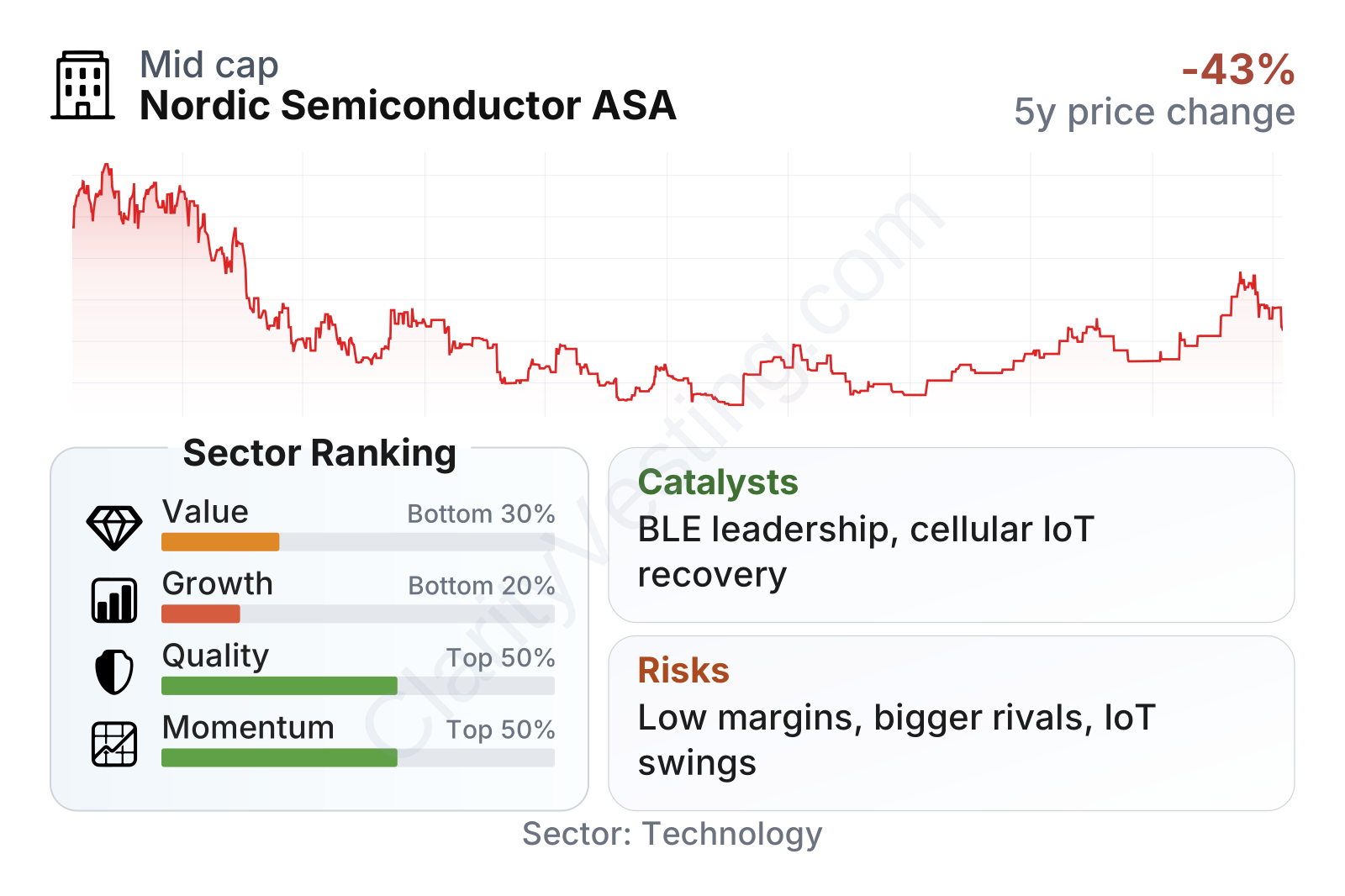
Nordic is a mid-sized semiconductor company with a market value around $3.5 billion and share-price volatility that is close to the broader market. The stock’s recent momentum has been strong, with gains over the last several months and over the trailing year standing well above the sector median. That said, the underlying fundamental picture is more mixed.
On growth, the latest year-over-year revenue increase is clearly above the sector median, showing that the rebound in demand is real. However, longer-term records such as five-year revenue per share growth, earnings growth, and margin trend still rank weakly against the sector. On quality, the balance sheet looks healthier than many peers because leverage remains modest and net cash characteristics are visible, but profitability is still below typical semiconductor levels. On valuation, the multiples remain elevated, which means the market is already recognizing a substantial part of the recent recovery.
Growth
Nordic operates in a sector with favorable long-term drivers. The number of connected devices continues to expand across consumer electronics, healthcare, logistics, and industry. Many of these products need exactly what Nordic specializes in: low-power wireless communication, long battery life, compact design, and software support that reduces development complexity. That gives the company exposure to a structural growth market rather than a one-product cycle.
Its strategy also makes sense for future expansion. Nordic has built around Bluetooth, then added cellular IoT, Wi‑Fi, and power management to offer more complete platforms. This matters because customers increasingly want fewer vendors and easier system integration. A chip company that can combine connectivity, software tools, security, cloud support, and power efficiency can become more embedded in customer designs, which can raise switching costs over time.
The recent revenue trend points to a recovery after a difficult period. Sales growth turned deeply negative during the industry inventory correction, then rebounded strongly and is now back in positive territory at a level above the sector median. That pattern suggests Nordic benefited from customers working through excess stock and restarting orders, especially in the low-power wireless market.
Cash generation tells a similar recovery story, but with more caution. Free cash flow swung from healthy positive levels to negative territory during the downturn and has since recovered back above zero. The latest level is positive, which is encouraging, but still well below earlier peaks. For a long-term view, that means the business has regained financial flexibility, though not yet with the consistency that would signal a fully mature rebound.
One of the clearest catalysts is product broadening. Nordic has been expanding beyond its traditional Bluetooth base with newer wireless categories and device-to-cloud capabilities. If customers adopt these broader platforms, Nordic could capture more content per device rather than simply shipping one component. Another potential tailwind is the gradual normalization of semiconductor demand after the sharp correction that affected many IoT-focused suppliers.
Recent company updates have also highlighted design wins and platform launches tied to wireless IoT applications. Those developments matter because semiconductor revenue often follows product qualification with a delay; a design win today can lead to recurring unit shipments over multiple years once a customer moves into production.
Risks
Nordic’s biggest risk is that it operates in a highly competitive semiconductor market while remaining smaller than several of its rivals. The company has technical strengths in low-power wireless design, but it does not have the manufacturing scale, product breadth, or pricing power of the largest chip vendors. That can make margins more vulnerable during downturns or pricing pressure.
A second risk is customer and end-market cyclicality. Many of Nordic’s products go into consumer and industrial IoT devices, and these categories can be hit by inventory swings, delayed launches, and uneven demand. The sharp revenue decline in 2023 and 2024 showed how quickly profits can compress when customers pause orders.
Balance-sheet risk looks relatively contained. Debt to equity is around 24%, below the sector median, and the broader leverage picture remains conservative. That gives Nordic some resilience while demand fluctuates. The main financial concern is therefore less about excessive debt and more about earnings volatility and the ability to convert recovery in sales into durable profit.
Profitability has improved from the low point, but margins remain below sector norms. The company’s profit margin is back in positive territory after turning negative during the downturn, yet it is still only about half the sector median. This is an important point: Nordic has shown that profitability can recover, but the business still needs better operating leverage to prove that growth can translate into stronger returns.
In terms of competitive advantages, Nordic does have meaningful strengths. It is widely recognized in Bluetooth Low Energy, has deep expertise in ultra-low-power design, and offers a developer-friendly ecosystem with software tools and support. Those attributes are valuable because engineers often prefer proven platforms that reduce development risk. Still, Nordic is not the overall leader in semiconductors, and even within wireless connectivity it competes against much larger names.
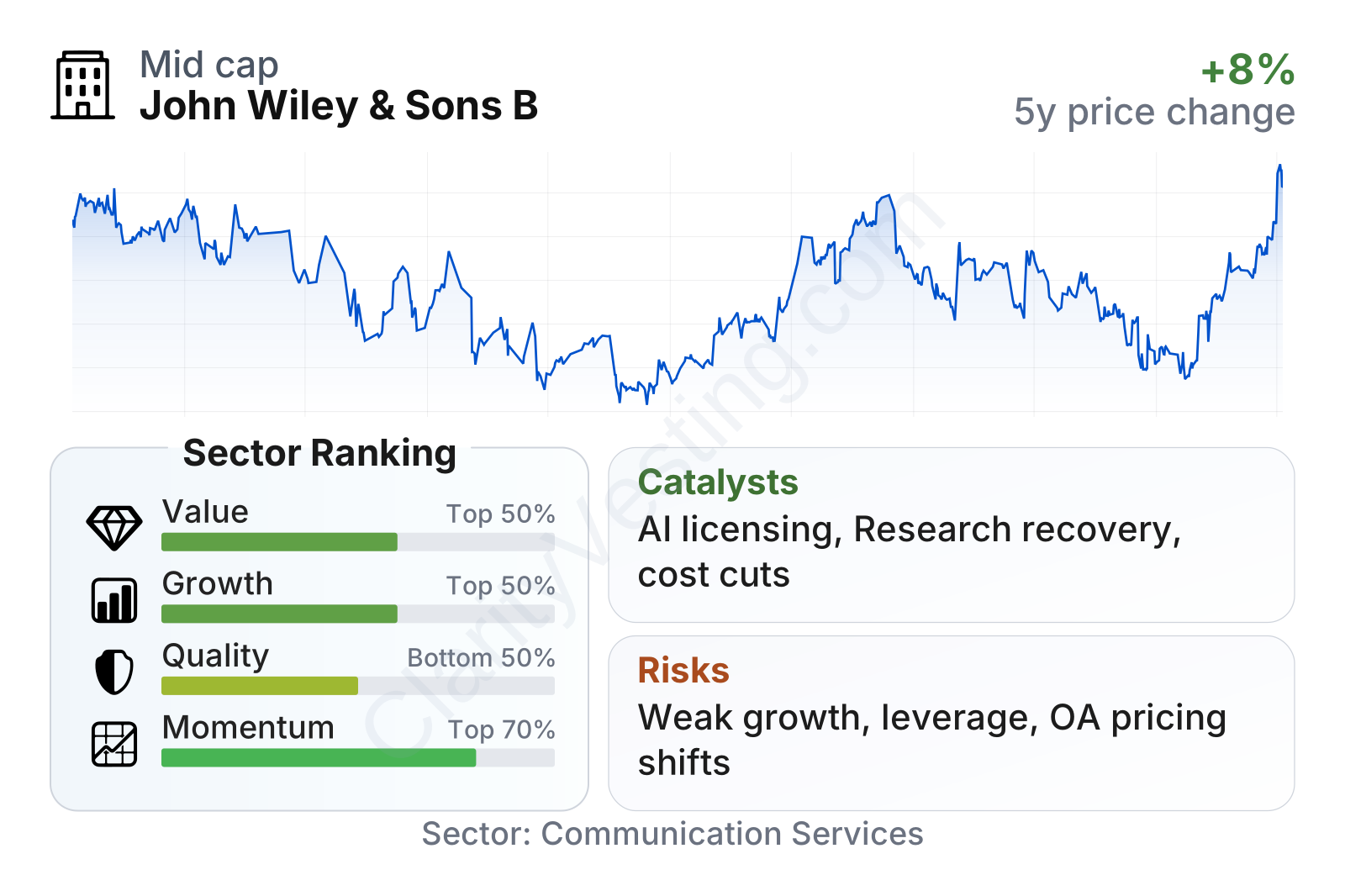
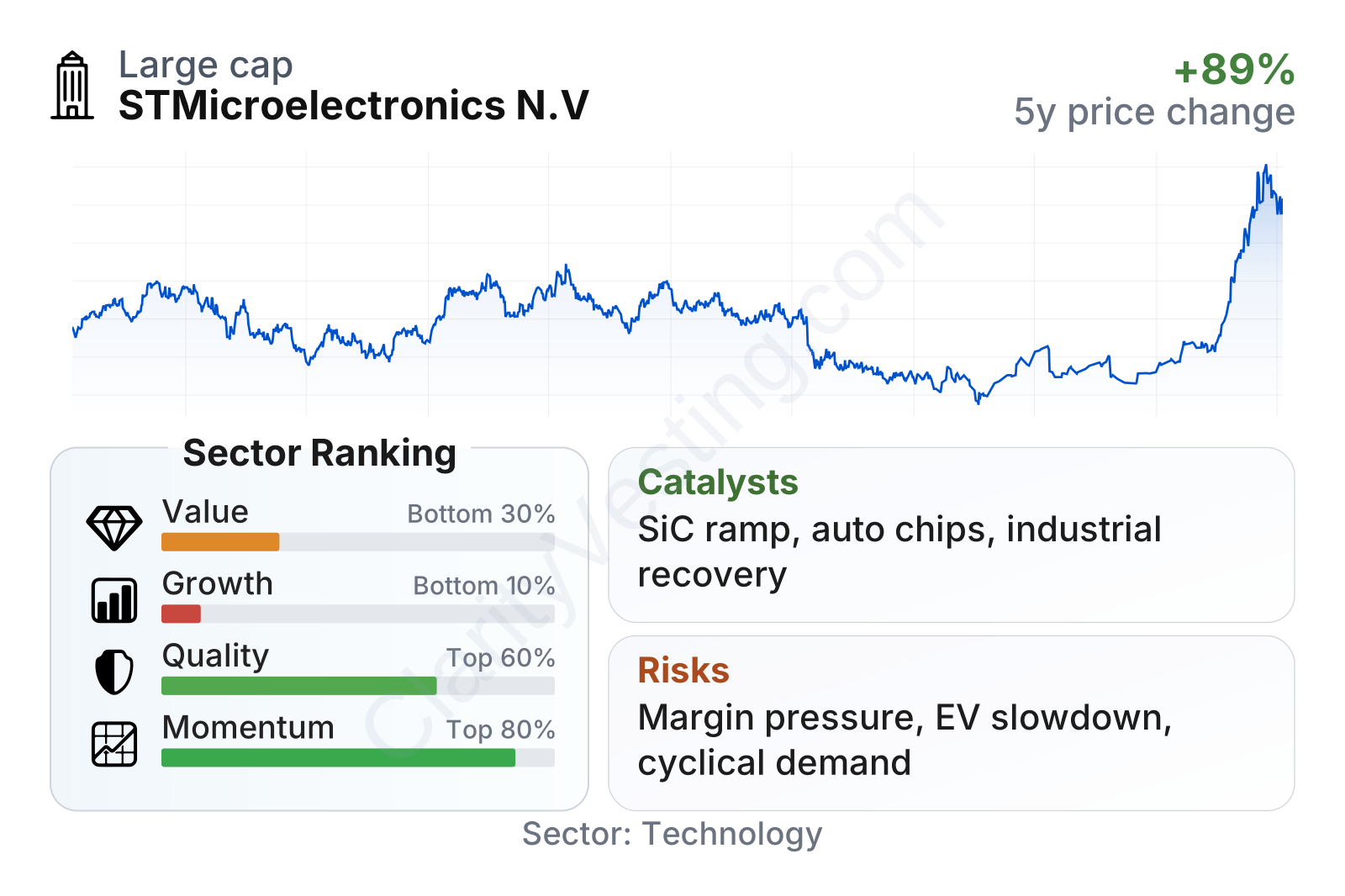
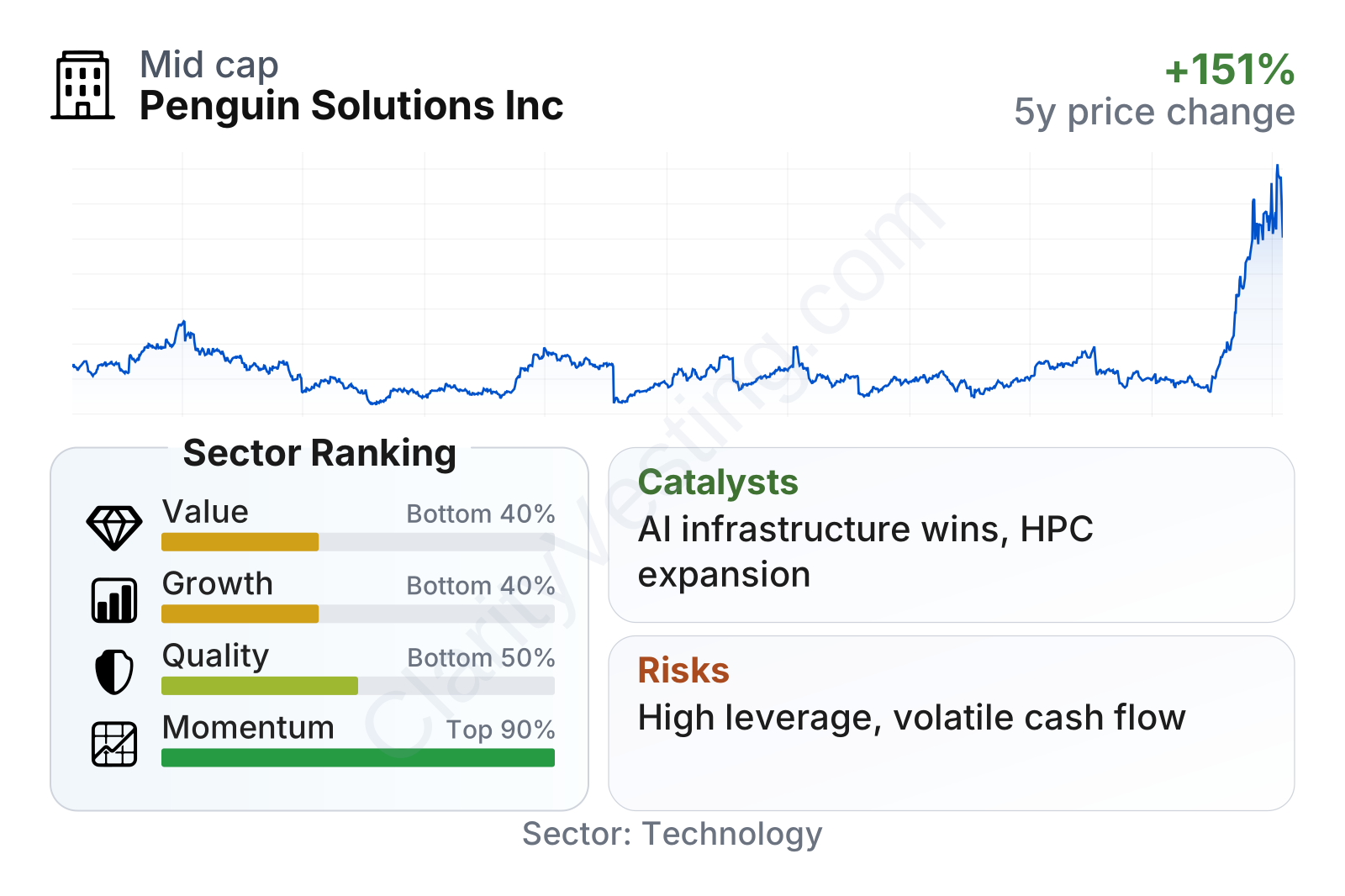
Main competitors include Texas Instruments, Silicon Labs, Qualcomm, NXP Semiconductors, STMicroelectronics, Infineon, and other connectivity chip suppliers. Compared with these firms, Nordic is more specialized and often more focused on low-power wireless niches, but it is also narrower in scale and product diversity. That specialization can be an advantage in selected applications, yet it also means Nordic has less room for error if one product cycle disappoints.
No major public controversy stands out as a defining reputational issue in recent company materials. The more relevant risk from recent developments is execution: after a difficult industry correction, the company now has to show that demand recovery, broader product offerings, and R&D spending can produce sustained margin improvement rather than only a temporary rebound.
Valuation
The valuation looks demanding relative to both Nordic’s own recent earnings profile and the broader semiconductor sector. The current P/E ratio is far above the sector median, even after easing from extreme levels. That kind of multiple usually reflects expectations that profits will continue recovering meaningfully over the next few years.
Other valuation measures point in the same direction. Free cash flow yield is low, EBIT relative to enterprise value is also low versus the sector, and the company ranks in the lower part of the sector on value metrics overall. In plain language, the market is assigning a generous price to a business that is only partway through its profit recovery.
That does not automatically make the stock disconnected from fundamentals. The company has a credible place in attractive end markets, a solid balance sheet, and recent revenue momentum that is stronger than many peers. But the current price appears to leave limited room for disappointment. A premium can be justified only if Nordic continues to convert its demand recovery into better margins, steadier cash generation, and broader customer adoption of its expanded platform portfolio.
Conclusion
Nordic Semiconductor stands out as a focused player in one of the more attractive corners of the chip industry: low-power wireless connectivity for IoT devices. The business has a clear niche, recognized engineering capability, and exposure to long-term trends such as connected sensors, smart devices, and battery-efficient communications. Recent operating trends suggest the company has moved past the worst of the inventory correction, with sales growth and cash flow recovering from depressed levels.
At the same time, the company is not yet showing the kind of profitability profile that would place it among the strongest semiconductor operators. Margins remain below sector standards, longer-term growth metrics are still weak, and competition from larger chipmakers remains a real constraint. The balance sheet provides stability, but the next phase matters most: proving that the recovery can become durable and more profitable.
The overall picture is constructive on business quality and market positioning, but more demanding on valuation. Nordic looks like a specialized company with real strategic relevance in IoT connectivity, yet the stock price already reflects considerable optimism about the rebound. That leaves the company looking more like a promising recovery business with meaningful execution requirements than a clearly underappreciated semiconductor name.
Sources:
- Nordic Semiconductor Investor Relations — Annual Report 2025
- Nordic Semiconductor Investor Relations — Q1 2026 Interim Report
- Nordic Semiconductor Investor Relations — Company Presentation and Product Information
- Nordic Semiconductor Investor Relations — Press Releases on Product Launches and Design Wins
- SEC EDGAR — Nordic Semiconductor ASA filings and submitted reports
- Wikipedia — Nordic Semiconductor
This article is for informational purposes only and does not constitute financial advice. Some content is AI-generated. See Disclaimer