Stock Analysis · Micron Technology Inc (MU)
Overview
Micron Technology is a semiconductor company focused on memory and storage chips. These components are essential in devices that need to process, store, and move data, including smartphones, PCs, servers, cars, industrial systems, and increasingly artificial intelligence infrastructure. In simple terms, Micron sells the digital “memory” that lets electronic systems work faster and handle larger amounts of information.
Its business is centered on three main product families:
- DRAM: memory used as the working space for computers, servers, graphics systems, and many AI workloads. This is usually Micron’s largest revenue source.
- NAND: flash storage used in solid-state drives, mobile devices, and embedded applications.
- High-Bandwidth Memory and other memory solutions: advanced products designed for AI accelerators and high-performance computing, plus managed storage solutions sold into data center, automotive, industrial, and consumer markets.
Based on Micron’s recent annual disclosures, revenue is still dominated by DRAM, with NAND as the second pillar. A reasonable breakdown is:
- DRAM: approximately 70% to 75% of revenue
- NAND: approximately 25% to 30% of revenue
Micron also reports revenue by end market. The mix changes over time, but data center and mobile have become especially important, while PC, automotive, industrial, and consumer remain meaningful contributors. This matters because Micron is not tied to one single device category; it supplies memory across many parts of the digital economy.
One notable pattern in recent years is how sharply Micron’s results can swing. Revenue fell heavily during the 2023 downturn, then recovered strongly through 2024 and 2025 as pricing improved and demand for AI-related memory accelerated. At the same time, research and development spending stayed high, showing that the company kept investing through the cycle rather than simply cutting back.
The business flow highlights a very cyclical model: profitability can compress dramatically when memory prices fall, then rebound quickly when supply and demand tighten. More recently, gross profit and operating income have recovered much faster than operating expenses, which suggests that improving pricing and richer product mix are doing much of the work.
Key Figures
| Metric | Value | Sector ⓘ |
|---|---|---|
| Date | Sep 12, 2026 | |
| Context | ||
| Sector | Technology | |
| Industry | Semiconductors | |
| Market Cap ⓘ | $1.10T | |
| Beta ⓘ | 2.22 | |
Value (Cheapness) | ||
| P/E Ratio ⓘ | 23.26 | 29.51 |
| FCF Yield ⓘ | 4.46% | 4.25% |
| EBIT / EV ⓘ | 5.47% | 2.85% |
| PEG ⓘ | 0.15 | |
Growth (Business expansion) | ||
| Revenue Growth ⓘ | 345.70% | 15.40% |
| RPS Growth (5Y CAGR) ⓘ | 8.16% | 8.56% |
| EPS Growth (5Y CAGR) ⓘ | 49.69% | -11.88% |
| Margin Growth (5Y Trend) ⓘ | 2.60% | 0.46% |
| FCF Growth (5Y CAGR) ⓘ | -9.05% | 9.80% |
Quality (Business durability) | ||
| ROIC (Latest) ⓘ | 63.95% | 9.44% |
| ROIC (5Y Median) ⓘ | 13.29% | 8.30% |
| Net Debt / EBIT (Latest) ⓘ | -0.31 | 0.54 |
| Net Debt / EBIT (5Y Median) ⓘ | 0.24 | 0.44 |
| Operating Margin (Latest) ⓘ | 65.69% | 9.58% |
| Operating Margin (5Y Median) ⓘ | 24.53% | 8.25% |
| Debt to Equity (Latest) ⓘ | 6.33% | 33.33% |
| Profit Margin (Latest) ⓘ | 55.91% | 7.14% |
| Free Cash Flow (Latest) ⓘ | $49.26B | |
Momentum (Price trend) | ||
| 3Y Return ⓘ | +1302.59% | +45.48% |
| 12M Return (excl. last month) ⓘ | +614.48% | +23.48% |
| 6M Return ⓘ | +140.74% | +20.93% |
| Price vs. 200-Day MA ⓘ | +56.81% | +7.43% |
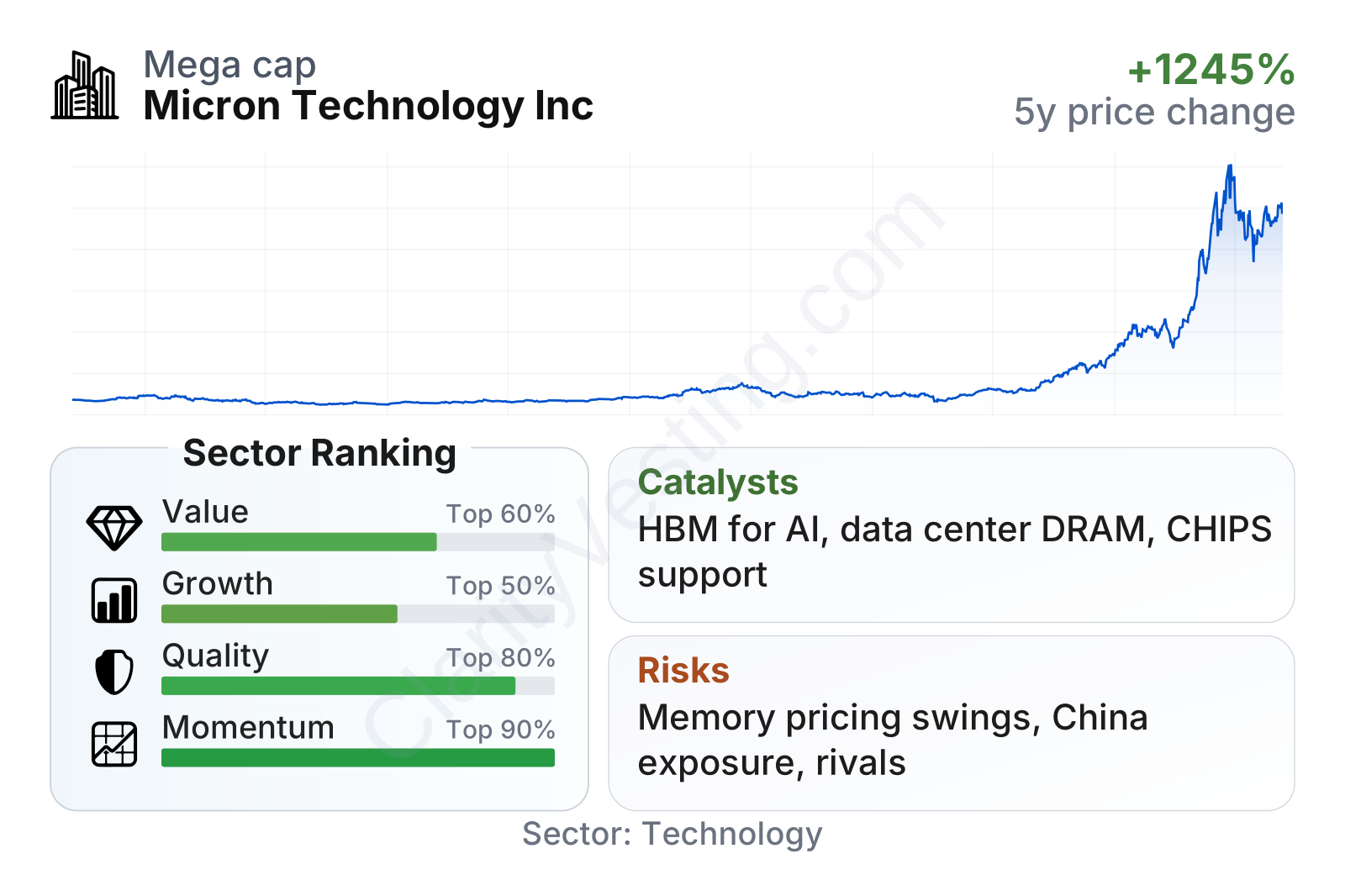
Micron currently stands out more on quality and market momentum than on classic deep-value metrics. Profitability, returns on capital, and balance sheet strength look well above typical sector levels, while revenue growth has rebounded sharply from the last downturn. The main point to keep in mind is that these strong readings come after a major recovery phase, so they reflect a business that has moved from trough conditions to a much stronger part of the cycle.
Growth
Micron operates in a sector with long-term structural growth. The amount of memory needed per device keeps rising because software is becoming more demanding, cloud computing keeps expanding, vehicles are adding more electronics, and AI systems require much larger and faster memory pools than older computing workloads. Even when the industry goes through painful short-term downturns, the long-term direction for memory demand has historically been upward.
Micron’s strategy fits that environment. The company is pushing into higher-value products, especially advanced DRAM and High-Bandwidth Memory for AI servers and accelerators. This is important because AI does not just increase chip demand in general; it specifically increases demand for premium memory with stricter performance requirements. That gives Micron an opportunity to grow not only volumes, but also mix and margins if execution remains strong.
The revenue trend shows how dramatic the recovery has been. Micron moved from steep declines during the memory slump to very strong year-over-year growth, far above the sector median. That kind of rebound is typical of a cyclical semiconductor company, but the scale of the acceleration also suggests the company is benefiting from more than a normal recovery, particularly from AI-related demand and tighter industry supply conditions.
Cash generation has also improved meaningfully after weakening during the downturn. The rebound in free cash flow is a useful sign because memory manufacturing requires heavy capital spending. A company can report better earnings for a short period, but stronger cash flow gives a clearer indication that the recovery is translating into financial flexibility.
Recent company updates have reinforced the idea that AI is becoming a major opportunity. Micron has highlighted demand for HBM products used alongside AI accelerators, and this part of the market has become one of the most visible growth drivers in the memory industry. In addition, U.S. policy support for semiconductor manufacturing and domestic supply chain resilience may help Micron’s long-term production footprint, although the timing and full financial impact depend on execution and project delivery.
Risks
This article is for informational purposes only and does not constitute financial advice. Some content is AI-generated. See Disclaimer


