Stock Analysis · Vail Resorts Inc (MTN)
Overview
Vail Resorts is one of the largest mountain resort operators in the world. The company owns and operates destination and regional ski resorts across the United States, Canada, Europe, and Australia. Its best-known assets include Vail Mountain, Breckenridge, Park City, Whistler Blackcomb, and Stowe. Beyond lift access, it also runs ski schools, lodging, dining, retail, equipment rental, and summer mountain activities.
The business is built around a mix of recurring pass revenue and on-site spending. That matters because season passes, especially the Epic Pass, bring in cash before the ski season starts and help smooth some of the weather and demand swings that are common in resort businesses. Over time, Vail has tried to turn skiing from a one-resort purchase into a network membership model.
Based on recent annual filings, revenue is mainly split across three operating areas, with mountain operations by far the largest contributor.
- Mountain operations: roughly 80% to 85% of revenue. This includes lift tickets, season passes, ski school, dining, rentals, and other on-mountain services.
- Lodging: roughly 7% to 10% of revenue. This includes hotel and property management activity tied to resort destinations.
- Real estate: usually a small and variable share, often low single digits, depending on project timing.
Within mountain operations, pass sales are especially important because they lock in customer commitment early, while lift tickets, food, rentals, and ski school add higher-spending revenue once guests arrive. The broader pattern in recent years shows revenue growing from the post-pandemic rebound, while costs and interest expense have also risen, leaving earnings more uneven than sales.
Revenue has climbed meaningfully since 2021, and gross profit has also expanded, which shows the scale of the resort network. At the same time, operating costs and interest expense have taken a larger bite, so the business is producing more sales than a few years ago without translating all of that growth into equally strong bottom-line progress.
Key Figures
| Metric | Value | Sector ⓘ |
|---|---|---|
| Date | Sep 12, 2026 | |
| Context | ||
| Sector | Consumer Cyclical | |
| Industry | Resorts & Casinos | |
| Market Cap ⓘ | $4.99B | |
| Beta ⓘ | 0.70 | |
Value (Cheapness) | ||
| P/E Ratio ⓘ | 28.71 | 17.10 |
| FCF Yield ⓘ | 4.76% | 8.53% |
| EBIT / EV ⓘ | 5.72% | 6.46% |
| PEG ⓘ | 3.33 | |
Growth (Business expansion) | ||
| Revenue Growth ⓘ | -7.00% | 5.75% |
| RPS Growth (5Y CAGR) ⓘ | 14.24% | 9.14% |
| EPS Growth (5Y CAGR) ⓘ | 2.80% | -18.21% |
| Margin Growth (5Y Trend) ⓘ | 4.88% | -0.23% |
| FCF Growth (5Y CAGR) ⓘ | -6.04% | 4.91% |
Quality (Business durability) | ||
| ROIC (Latest) ⓘ | 8.91% | 12.61% |
| ROIC (5Y Median) ⓘ | 10.01% | 10.72% |
| Net Debt / EBIT (Latest) ⓘ | 6.60 | 2.10 |
| Net Debt / EBIT (5Y Median) ⓘ | 5.23 | 2.32 |
| Operating Margin (Latest) ⓘ | 15.44% | 9.25% |
| Operating Margin (5Y Median) ⓘ | 18.20% | 9.64% |
| Debt to Equity (Latest) ⓘ | 590.42% | 75.78% |
| Profit Margin (Latest) ⓘ | 5.54% | 5.33% |
| Free Cash Flow (Latest) ⓘ | $237.53M | |
Momentum (Price trend) | ||
| 3Y Return ⓘ | -34.25% | +14.53% |
| 12M Return (excl. last month) ⓘ | +4.80% | +3.08% |
| 6M Return ⓘ | +6.95% | +0.55% |
| Price vs. 200-Day MA ⓘ | +3.67% | -0.54% |
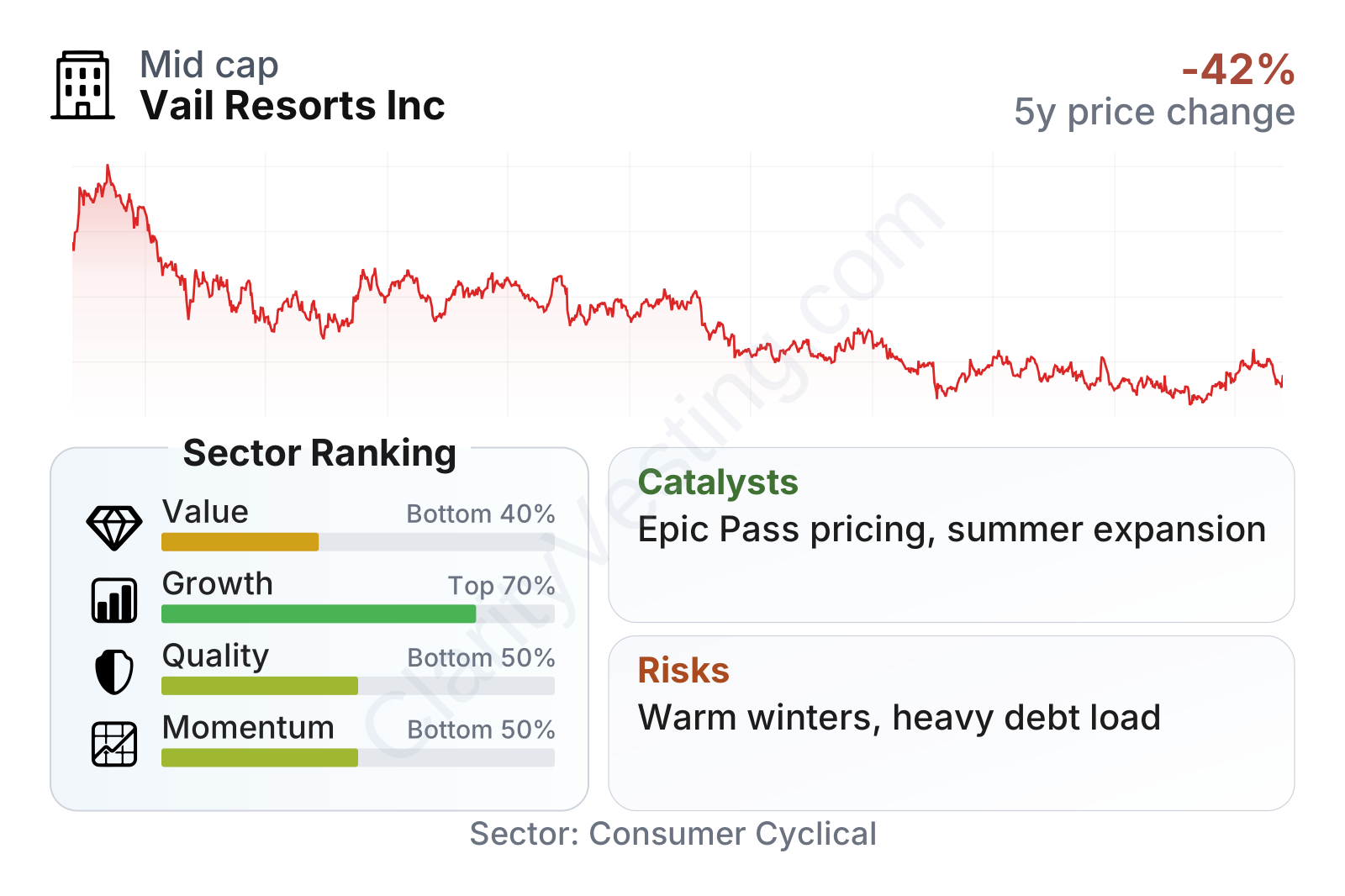
Vail Resorts currently sits at about a $5.2 billion market value and shows a below-market volatility profile, which fits a business tied to established leisure assets rather than a fast-changing technology cycle. The metric table paints a mixed picture. Profitability at the operating level is stronger than much of the sector, and long-term revenue-per-share growth has been solid. However, debt levels are high, recent revenue growth has turned negative, free cash flow has softened from earlier peaks, and the stock still trades at richer earnings multiples than many consumer cyclical peers.
Growth
Ski resorts are not a high-growth industry in the way software or digital advertising can be, but Vail operates in a niche with limited top-tier supply. Premium mountain destinations are hard to replicate because of geography, permits, infrastructure needs, and environmental constraints. That creates a market where growth often comes less from new entrants and more from consolidation, pricing power, guest spending, and pass ecosystem expansion.
Vail’s strategy for growth remains fairly logical. The company has spent years building the Epic Pass into a multi-resort platform, giving customers access across regions and countries. That network effect can support customer retention and encourage travelers to stay within the company’s system. It also gives Vail more room to drive revenue through lessons, dining, rentals, lodging, and summer activities rather than depending only on day-ticket sales.
The near-term growth picture is softer than the five-year trend. Revenue growth has slowed materially and recently moved into negative territory year over year, which suggests the company is now facing a tougher comparison period, weaker visit trends, or both. Still, over a longer period, revenue per share has grown at a pace ahead of the sector median, which shows that the asset base and pass model have created real expansion even if the latest year has been less favorable.
Cash generation is still positive, but it has come down from the stronger levels seen a few years ago. That matters because this is a capital-intensive business: resorts need lifts, snowmaking, maintenance, labor, and guest-facing upgrades. A business like Vail does not need explosive revenue growth to create value, but it does need dependable free cash flow and disciplined reinvestment. The recent decline suggests that growth is becoming more expensive or less efficient than before.
One of the more important catalysts is continued adoption and pricing of season passes. A successful pass-selling cycle can improve visibility well before winter begins. Another is the company’s push into year-round use of resort assets, including summer mountain activities, which can make expensive infrastructure productive beyond ski season. Portfolio optimization and selective acquisitions can also help, since the industry remains fragmented outside the top destinations.
Recent company updates have also kept attention on capital projects, guest experience upgrades, and pass strategy. Those are not dramatic one-time events, but for a resort operator they are meaningful because they influence customer loyalty, capacity, pricing, and long-term returns on fixed assets.
Risks
This article is for informational purposes only and does not constitute financial advice. Some content is AI-generated. See Disclaimer


