Stock Analysis · Mr Price Group Ltd (MRPLY)
Overview
Mr Price Group Ltd is a South African value-focused retailer best known for selling affordable apparel, footwear, sportswear, homeware, and related merchandise. The group operates through a portfolio of retail chains, with its core strength in fashion and lifestyle products aimed at middle- and lower-income consumers looking for trend-led goods at accessible prices. Over time, the company has broadened its reach beyond clothing into home products, sports retail, and telecom-related services, helping it build a wider consumer ecosystem.
The business model is relatively easy to understand: Mr Price buys merchandise, sells it through stores and digital channels, and relies on high stock turnover, disciplined sourcing, and strong brand recognition in value retail. In a market where household budgets are often under pressure, that positioning can be powerful because customers may trade down from more expensive brands without leaving the category altogether.
Revenue is mainly generated from merchandise sales across its retail banners. Based on the group’s reporting structure and recent annual disclosures, the largest contributors appear to be:
- Apparel – approximately 65% to 70% of sales, led by the core Mr Price brand and related fashion concepts.
- Homeware – approximately 15% to 20%, primarily through Mr Price Home and home lifestyle categories.
- Sport – approximately 10% to 15%, helped by the group’s sports retail operations.
- Financial services and other – a smaller share, likely in the low single digits, including telecom and account-related income.
That mix matters because it shows the company is still anchored by apparel, but no longer depends on one product category alone. The broadening of the portfolio gives it more ways to capture consumer spending across everyday needs and discretionary purchases.
The flow of the business also shows a useful pattern: revenue has continued to rise over recent years, gross profit has expanded with it, and net income has remained solid even as operating costs moved higher. That suggests a retailer still generating healthy earnings from scale, although cost control remains a key issue to watch.
Key Figures
| Metric | Value | Sector ⓘ |
|---|---|---|
| Date | Sep 12, 2026 | |
| Context | ||
| Sector | Consumer Cyclical | |
| Industry | Apparel Retail | |
| Market Cap ⓘ | $2.54B | |
| Beta ⓘ | 0.46 | |
Value (Cheapness) | ||
| P/E Ratio ⓘ | 11.24 | 17.10 |
| FCF Yield ⓘ | 578.36% | 8.53% |
| EBIT / EV ⓘ | N/A | 6.46% |
| PEG ⓘ | N/A | |
Growth (Business expansion) | ||
| Revenue Growth ⓘ | 3.30% | 5.75% |
| RPS Growth (5Y CAGR) ⓘ | 118.02% | 9.14% |
| EPS Growth (5Y CAGR) ⓘ | 51.94% | -18.21% |
| Margin Growth (5Y Trend) ⓘ | -276.53% | -0.23% |
| FCF Growth (5Y CAGR) ⓘ | 13.40% | 4.91% |
Quality (Business durability) | ||
| ROIC (Latest) ⓘ | N/A | 12.61% |
| ROIC (5Y Median) ⓘ | 29.80% | 10.72% |
| Net Debt / EBIT (Latest) ⓘ | N/A | 2.10 |
| Net Debt / EBIT (5Y Median) ⓘ | 0.09 | 2.32 |
| Operating Margin (Latest) ⓘ | N/A | 9.25% |
| Operating Margin (5Y Median) ⓘ | 143.01% | 9.64% |
| Debt to Equity (Latest) ⓘ | 107.39% | 75.78% |
| Profit Margin (Latest) ⓘ | 8.80% | 5.33% |
| Free Cash Flow (Latest) ⓘ | $14.71B | |
Momentum (Price trend) | ||
| 3Y Return ⓘ | +66.49% | +14.53% |
| 12M Return (excl. last month) ⓘ | +0.27% | +3.08% |
| 6M Return ⓘ | +2.23% | +0.55% |
| Price vs. 200-Day MA ⓘ | -6.30% | -0.54% |
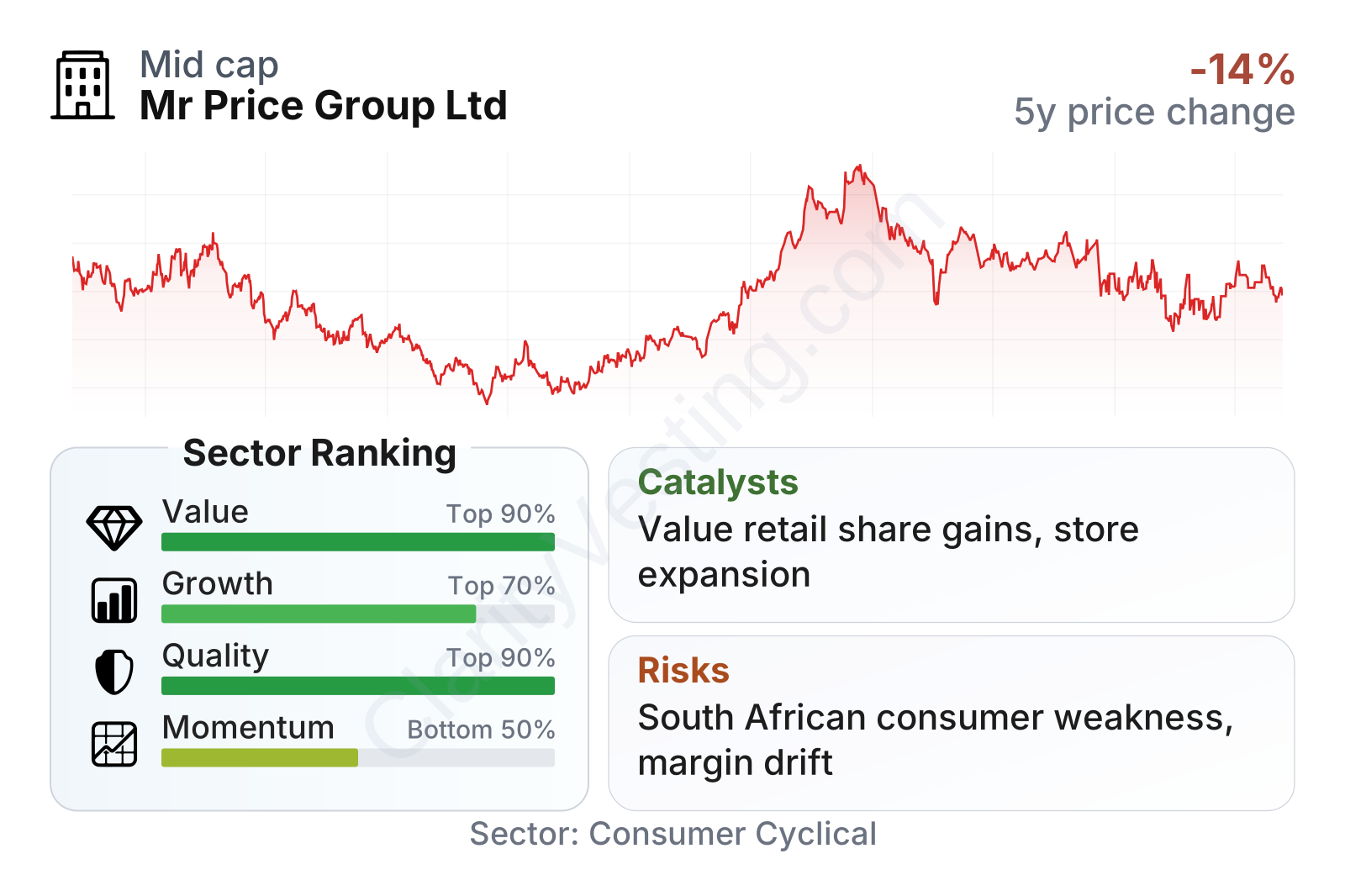
Mr Price Group stands out for a mix of quality and valuation metrics that look stronger than much of the broader consumer discretionary field. Profitability remains above sector norms, cash generation is meaningful, and leverage appears manageable when viewed against earnings power. Growth is more mixed: long-term expansion has been respectable, but recent top-line momentum has been slower than the sector median. Market behavior also shows a split picture, with a strong multi-year share performance followed by weaker recent momentum.
The stock’s lower beta suggests less volatility than many consumer cyclical names, which is notable for a retailer exposed to discretionary spending. With a market capitalization in the low billions of dollars, Mr Price is large enough to benefit from scale, but still concentrated enough that South African consumer conditions have an outsized influence on results.
Growth
Mr Price operates in a sector that can still grow over the long term, even if it is not a classic high-growth industry. Apparel and home retail benefit from population growth, urbanization, digital shopping adoption, and continued demand for value-oriented products. In emerging markets especially, retailers that combine affordability with strong brand appeal can keep gaining share even when the broader economy is uneven. That backdrop is favorable for a company whose identity is built around value.
The group’s strategy for future expansion appears logical. It continues to build store presence, strengthen its online and omnichannel capabilities, and widen its offering across fashion, home, and sport. Acquisitions in adjacent retail categories have also broadened the platform. For a long-term view, the most important strategic point is that Mr Price is not trying to win through luxury positioning or heavy discounting alone; it is trying to own the space between affordability, fashion relevance, and scale.
Recent revenue growth looks positive but not especially fast, which fits the profile of a mature retailer rather than a rapid expansion company. Even so, the longer-term record is more encouraging: revenue per share and earnings per share over five years compare well against many peers, showing that the business has been able to compound despite a difficult consumer backdrop. That is often more meaningful than one softer year of sales growth.
Cash generation is an important bright spot. Free cash flow has improved markedly over time, which gives the company more room to fund store rollouts, technology upgrades, logistics improvements, and shareholder distributions without leaning too heavily on debt. For a retailer, durable cash production is often one of the clearest signs that merchandising discipline and inventory management are working.
A practical catalyst is continued market-share capture in value retail. If consumer pressure remains elevated, shoppers may keep favoring lower-priced chains with strong brand visibility. Another potential driver is the integration and scaling of acquired businesses, particularly in categories that deepen the group’s presence beyond core apparel. Improvements in digital fulfillment and inventory systems could also support better sell-through and fewer markdowns over time.
Recent company reporting has pointed to ongoing sales growth, continued expansion in store footprint, and resilience in customer demand despite constrained household spending. That does not guarantee a major acceleration, but it does suggest the company remains operationally relevant in a difficult market and still has room to expand its share across its core categories.
Risks
This article is for informational purposes only and does not constitute financial advice. Some content is AI-generated. See Disclaimer


