Stock Analysis · Marqeta Inc (MQ)
Overview
Marqeta is a payments technology company that provides the software infrastructure behind modern card programs. In simple terms, it helps businesses issue and manage debit, prepaid, and credit cards, whether physical or virtual, and control how those cards are used. Its platform is designed for companies that want flexible payment tools without building the entire system themselves. Customers have included fintech companies, digital banks, expense management platforms, buy-now-pay-later providers, and businesses operating marketplaces or on-demand services.
The company mainly earns money from the card activity processed on its platform. When a card transaction runs through Marqeta’s system, the company records revenue tied to processing and related services. Revenue can move up or down not only because of customer growth, but also because of accounting treatment linked to card programs and network economics, so reported sales can sometimes look more volatile than underlying payment activity.
Based on company filings, Marqeta’s main revenue sources are concentrated in one broad category rather than many separate business lines.
- Platform and processing revenue: about 95%+ of total revenue. This includes interchange-related economics, card processing, program management services, and usage-based fees tied to transactions on cards powered by Marqeta.
- Other services: less than 5%. This can include smaller service and program-related items, but the company does not present large stand-alone secondary segments in the way some diversified fintech peers do.
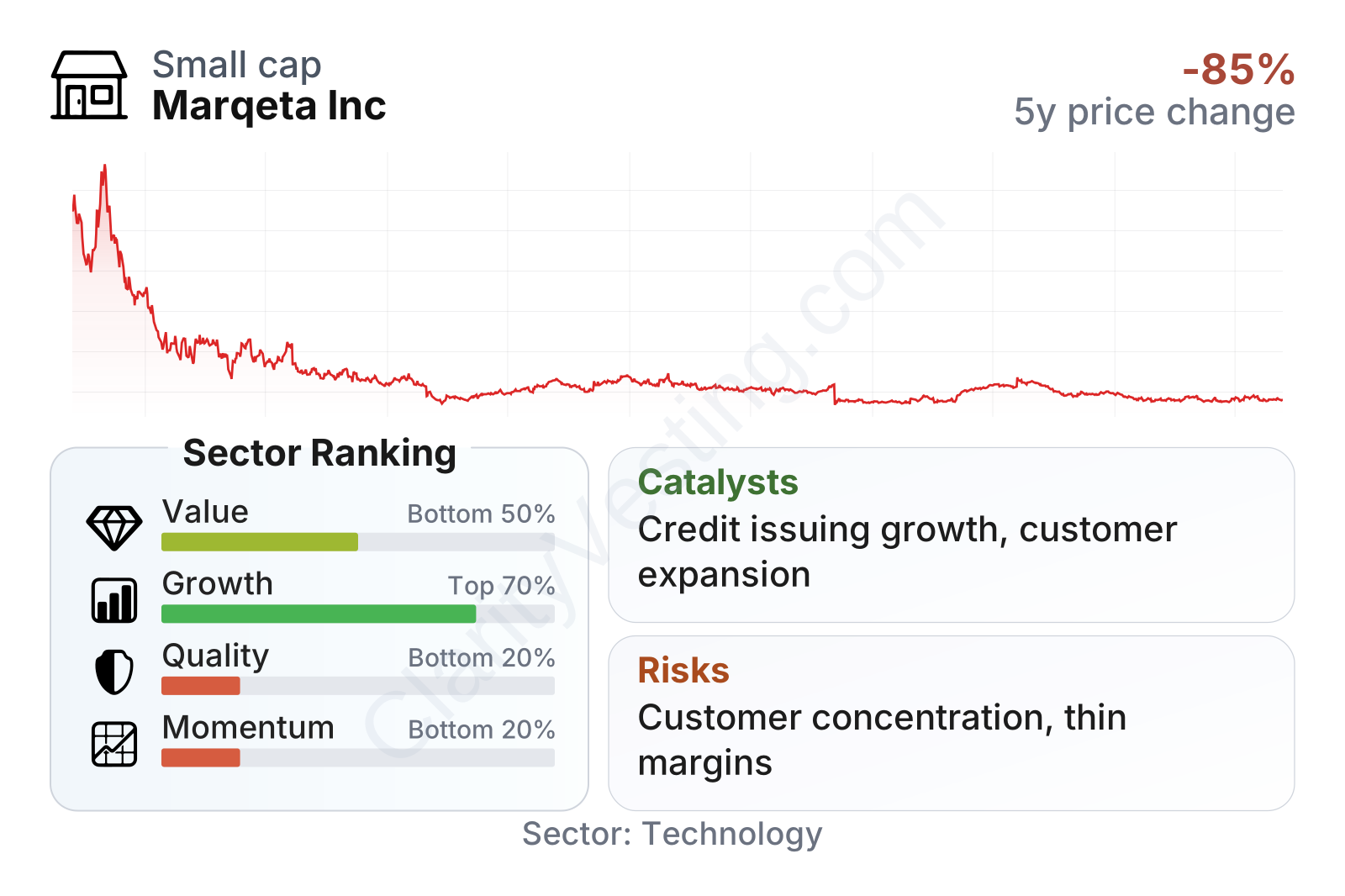
Customer concentration is an important part of the business model. A meaningful share of Marqeta’s activity has historically come from a small number of very large customers, especially in card programs for major fintech partners. That has helped scale the business quickly, but it also makes revenue swings more noticeable when a major client changes program structure, growth pace, or provider mix.
The business flow has changed significantly in recent years. Revenue expanded strongly in the early growth phase, then became distorted by customer mix changes and accounting effects, while gross profit held up better than reported sales. More recently, Marqeta has been working to diversify its customer base, broaden its products, and improve profitability rather than pursuing growth at any cost.
The operating picture shows why the company has been difficult to read from the top line alone: gross profit improved through the earlier years even while operating expenses stayed heavy, then 2024 showed a clear profitability step-up, while 2025 brought another sharp shift in reported revenue mix. That makes gross profit and cash generation more useful than revenue alone when judging progress.
Key Figures
| Metric | Value | Sector ⓘ |
|---|---|---|
| Date | Sep 12, 2026 | |
| Context | ||
| Sector | Technology | |
| Industry | Software - Infrastructure | |
| Market Cap ⓘ | $1.68B | |
| Beta ⓘ | 1.29 | |
Value (Cheapness) | ||
| P/E Ratio ⓘ | 179.50 | 29.51 |
| FCF Yield ⓘ | 10.15% | 4.25% |
| EBIT / EV ⓘ | 0.24% | 2.85% |
| PEG ⓘ | 1.35 | |
Growth (Business expansion) | ||
| Revenue Growth ⓘ | 17.00% | 15.40% |
| RPS Growth (5Y CAGR) ⓘ | 9.07% | 8.56% |
| EPS Growth (5Y CAGR) ⓘ | N/A | -11.88% |
| Margin Growth (5Y Trend) ⓘ | N/A | 0.46% |
| FCF Growth (5Y CAGR) ⓘ | 31.22% | 9.80% |
Quality (Business durability) | ||
| ROIC (Latest) ⓘ | 0.43% | 9.44% |
| ROIC (5Y Median) ⓘ | -9.47% | 8.30% |
| Net Debt / EBIT (Latest) ⓘ | -0.29 | 0.54 |
| Net Debt / EBIT (5Y Median) ⓘ | N/A | 0.44 |
| Operating Margin (Latest) ⓘ | 0.35% | 9.58% |
| Operating Margin (5Y Median) ⓘ | -24.71% | 8.25% |
| Debt to Equity (Latest) ⓘ | 0.94% | 33.33% |
| Profit Margin (Latest) ⓘ | 1.53% | 7.14% |
| Free Cash Flow (Latest) ⓘ | $170.65M | |
Momentum (Price trend) | ||
| 3Y Return ⓘ | -38.33% | +45.48% |
| 12M Return (excl. last month) ⓘ | -38.99% | +23.48% |
| 6M Return ⓘ | +2.32% | +20.93% |
| Price vs. 200-Day MA ⓘ | -3.51% | +7.43% |
Marqeta is now a relatively small public technology company, and its share price history reflects that. After a very high valuation in 2021, the stock went through a long reset and has remained weak versus the broader software group. The table points to a mixed profile: growth is slightly above the sector median, cash generation is solid, leverage is exceptionally low, but profitability and capital efficiency still rank near the bottom of the sector. In other words, the balance sheet is a strength, while the business model is still proving that it can convert scale into durable returns.
Growth
Marqeta operates in a sector with attractive long-term demand drivers. Digital payments continue to take share from cash and checks, businesses increasingly want embedded financial services, and more companies are building custom payment experiences instead of relying on one-size-fits-all bank products. Card issuing, tokenized payments, just-in-time funding, and virtual cards all fit into this trend, giving Marqeta exposure to a part of fintech infrastructure that should keep expanding over time.
The company’s strategy also makes sense on paper. Rather than becoming a consumer brand, Marqeta sits in the background and provides the technology layer for other companies. That can be appealing because once a card program is launched, switching providers can be operationally complex. The company has been expanding beyond its original prepaid and debit strengths into credit, expense management, embedded finance, and more international opportunities. It has also been emphasizing products such as modern credit card issuing, flexible controls, and token-based payments that fit enterprise and fintech demand.
Revenue growth has been uneven. The early surge was followed by a sharp contraction period, then a return to positive growth in late 2024 and through 2025 into 2026. The latest year-over-year growth rate is around the high teens, slightly above the sector median. That suggests the business has stabilized, but it does not yet show the kind of sustained acceleration that would remove all doubts about long-term scale advantages.
Cash generation has improved much more clearly than accounting earnings. Trailing free cash flow moved from low or negative levels a few years ago to well above $100 million more recently, and the five-year growth rate in free cash flow is far ahead of the sector median. That matters because it shows tighter cost control and better operating discipline, even though net margins remain modest.
Recent company updates have highlighted continued product expansion and customer wins across expense management, lending, and embedded finance use cases. Management has also emphasized its relationship with large existing partners while trying to reduce dependence on any one program. A meaningful catalyst is the combination of recovery in core transaction volumes and wider adoption of newer products such as credit issuing and card program management tools. If Marqeta can deepen usage within existing customers while adding more mid-sized and enterprise accounts, growth could become more balanced than in the past.
Risks
This article is for informational purposes only and does not constitute financial advice. Some content is AI-generated. See Disclaimer