Stock Analysis · Monolithic Power Systems Inc (MPWR)
Overview
Monolithic Power Systems, usually called MPS, designs and sells power management chips and related semiconductor solutions. In simple terms, its products help electronic devices convert, control, and use electricity efficiently. That function is essential in many modern products, from cars and industrial equipment to cloud servers, communications hardware, and consumer electronics.
The company is a fabless semiconductor business, which means it focuses on design, engineering, and marketing while relying on outside manufacturing partners to produce its chips. This model can support strong profitability because it avoids the massive capital spending required to own leading-edge chip factories. MPS has built its reputation around high-performance analog and mixed-signal power semiconductors, and it increasingly pairs those chips with modules, software, and system-level solutions that make its products more embedded in customer designs.
Based on the company’s recent annual reporting, revenue is spread across several end markets rather than depending on one single category. The main sources are:
- Enterprise Data: approximately 30% of revenue. This includes power solutions used in servers, cloud infrastructure, storage, and AI-related computing systems.
- Automotive: approximately 17%. This covers chips for advanced driver assistance systems, infotainment, lighting, powertrain-related functions, and in-vehicle electronics.
- Storage and Computing: approximately 15%. This includes notebooks, desktops, graphics, and storage applications.
- Communications: approximately 14%. This includes networking and telecom equipment.
- Industrial: approximately 10%. This area includes factory automation, power tools, smart meters, and broader industrial electronics.
- Consumer: approximately 9%. This includes a variety of everyday electronics and appliances.
- Other: approximately 5%. This captures smaller categories not broken out separately.
This mix matters because it shows that MPS is not only tied to one trend such as smartphones or PCs. Its exposure to data centers, automotive electronics, and industrial equipment gives it several possible growth paths at the same time.
The business model also shows a favorable pattern: revenue has expanded meaningfully over the last several years while gross profit and operating income have also risen, even as the company continued to increase spending on research and development. That suggests MPS has been able to grow without sacrificing the economics of the business.
Key Figures
| Metric | Value | Sector ⓘ |
|---|---|---|
| Date | Sep 12, 2026 | |
| Context | ||
| Sector | Technology | |
| Industry | Semiconductors | |
| Market Cap ⓘ | $60.67B | |
| Beta ⓘ | 1.66 | |
Value (Cheapness) | ||
| P/E Ratio ⓘ | 72.44 | 29.51 |
| FCF Yield ⓘ | 0.97% | 4.25% |
| EBIT / EV ⓘ | 1.66% | 2.85% |
| PEG ⓘ | 0.89 | |
Growth (Business expansion) | ||
| Revenue Growth ⓘ | 47.60% | 15.40% |
| RPS Growth (5Y CAGR) ⓘ | 23.02% | 8.56% |
| EPS Growth (5Y CAGR) ⓘ | -4.62% | -11.88% |
| Margin Growth (5Y Trend) ⓘ | 4.92% | 0.46% |
| FCF Growth (5Y CAGR) ⓘ | 31.21% | 9.80% |
Quality (Business durability) | ||
| ROIC (Latest) ⓘ | 21.78% | 9.44% |
| ROIC (5Y Median) ⓘ | 22.99% | 8.30% |
| Net Debt / EBIT (Latest) ⓘ | -1.02 | 0.54 |
| Net Debt / EBIT (5Y Median) ⓘ | -1.03 | 0.44 |
| Operating Margin (Latest) ⓘ | 30.07% | 9.58% |
| Operating Margin (5Y Median) ⓘ | 27.46% | 8.25% |
| Debt to Equity (Latest) ⓘ | N/A | 33.33% |
| Profit Margin (Latest) ⓘ | 24.50% | 7.14% |
| Free Cash Flow (Latest) ⓘ | $585.54M | |
Momentum (Price trend) | ||
| 3Y Return ⓘ | +166.39% | +45.48% |
| 12M Return (excl. last month) ⓘ | +70.72% | +23.48% |
| 6M Return ⓘ | +19.82% | +20.93% |
| Price vs. 200-Day MA ⓘ | -1.63% | +7.43% |
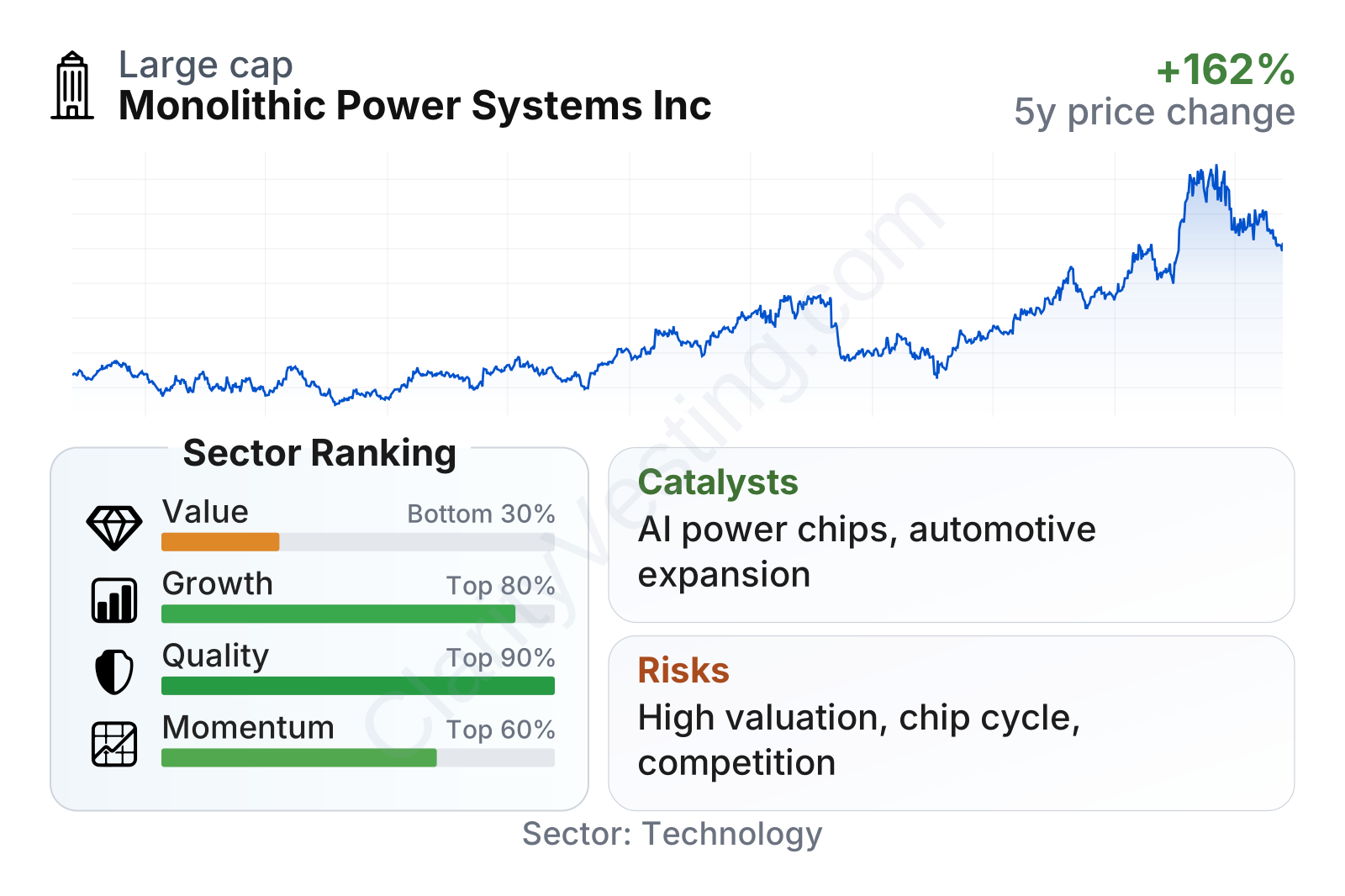
MPS stands out more for quality and growth than for traditional cheapness. Its profitability, returns on invested capital, and balance sheet rank well above much of the semiconductor sector, while growth metrics are also clearly ahead of the median. The weaker point is valuation: earnings and cash flow multiples are elevated, so the market is already placing a premium on the company’s business quality and expansion potential.
The stock has also shown very strong long-term momentum, with gains over several time frames well ahead of the broader sector. That reflects rising confidence in the company’s exposure to attractive markets such as AI infrastructure and automotive electronics, but it also means expectations are no longer modest.
Growth
MPS operates in a part of the semiconductor industry that still has structural room to expand. Power management is a basic requirement in nearly every electronic system, and that need becomes even more important as devices become more powerful, compact, and energy efficient. AI servers need advanced power delivery, electric and software-rich vehicles need more semiconductors, and industrial systems continue to add automation and intelligence. These are durable drivers rather than short-lived product cycles.
The company’s strategy appears consistent with those opportunities. MPS focuses on specialized power solutions rather than commodity chips, and it aims to deepen customer relationships by offering more complete systems and modules. That can make it harder for customers to switch suppliers once a design is qualified. In semiconductors, design wins often last for years, especially in automotive and industrial applications, so a broader product offering can support both growth and resilience.
Recent revenue growth has been strong after a softer period in 2023. The rebound is notable because it was not just a recovery from a weak base; the latest year-over-year pace is far above the sector median. Over a five-year view, revenue per share growth also remains well ahead of most semiconductor peers, which points to a business that has expanded meaningfully without relying mainly on share issuance.
Cash generation has also improved materially. Free cash flow has climbed sharply over the last few years and has recently remained at a high level. That is an important sign for long-term analysis because it shows growth is translating into real cash that can fund research, acquisitions, new products, and shareholder returns without depending on debt.
One of the strongest current catalysts is MPS’s exposure to enterprise data, especially systems tied to accelerated computing and AI infrastructure. These servers require increasingly sophisticated power architectures, and that plays directly into the company’s expertise. Another meaningful catalyst is automotive content growth. Modern vehicles contain more electronics every year, and MPS has been broadening its position in that market through products for infotainment, driver assistance, and other power-intensive functions.
Recent company communications have also highlighted continued momentum in data center and automotive demand, while product launches in power modules and battery-management-related solutions broaden the addressable market. Those developments strengthen the case that MPS is benefiting from long-duration industry trends rather than from a narrow one-off spike.
Risks
This article is for informational purposes only and does not constitute financial advice. Some content is AI-generated. See Disclaimer


