Stock Analysis · Moncler S.p.A (MONRF)
Overview
Moncler S.p.A is an Italian luxury apparel group best known for premium outerwear, especially down jackets, and it has expanded into knitwear, footwear, accessories, and broader lifestyle collections. The group operates mainly through two brands: Moncler, centered on luxury performancewear and seasonal fashion, and Stone Island, which focuses more on premium casualwear and fabric innovation. Its business model is built around brand exclusivity, direct control of distribution, and pricing power rather than large sales volumes.
The company’s revenue mix is dominated by the Moncler brand, with Stone Island contributing a smaller but still meaningful share. Based on recent annual reporting, the business can be summarized as follows:
- Moncler brand: approximately 84% of revenue. This includes outerwear, ready-to-wear, knitwear, footwear, bags, and accessories sold through directly operated stores, e-commerce, and selected wholesale partners.
- Stone Island brand: approximately 16% of revenue. This includes outerwear and casual luxury apparel with a stronger technical and streetwear identity.
Within distribution, direct sales are the engine of the group. In recent years, the direct-to-consumer channel has accounted for roughly 80% to 85% of total revenue, while wholesale has represented about 15% to 20%. That matters because direct sales usually carry better margins, strengthen brand control, and help the company manage pricing, customer data, and product presentation more tightly than traditional wholesale.
Geographically, Moncler is global, but Asia remains especially important, alongside Europe and the Americas. The company’s performance is closely tied to luxury demand, tourism flows, and consumer spending among high-income shoppers. It is not a mass-market clothing company; its economics rely on brand desirability and scarcity.
The business profile also stands out for very high gross profitability. Over the last several years, revenue increased from a little above €2.0 billion to slightly above €3.1 billion, while gross profit expanded even faster. Cost of goods has remained relatively contained compared with revenue, showing that the group has preserved premium pricing even while growing.
The long-term pattern is encouraging: sales have risen materially since 2021, gross profit has widened, and operating income has stayed strong. The most notable point is that revenue growth has not come with a collapse in profitability, which is a frequent problem in apparel. Moncler has so far managed expansion while keeping an unusually profitable structure for the sector.
Key Figures
| Metric | Value | Sector ⓘ |
|---|---|---|
| Date | Sep 12, 2026 | |
| Context | ||
| Sector | Consumer Cyclical | |
| Industry | Apparel Manufacturing | |
| Market Cap ⓘ | $14.17B | |
| Beta ⓘ | 1.07 | |
Value (Cheapness) | ||
| P/E Ratio ⓘ | 19.08 | 17.10 |
| FCF Yield ⓘ | 10.61% | 8.53% |
| EBIT / EV ⓘ | N/A | 6.46% |
| PEG ⓘ | 2.40 | |
Growth (Business expansion) | ||
| Revenue Growth ⓘ | 5.20% | 5.75% |
| RPS Growth (5Y CAGR) ⓘ | 10.27% | 9.14% |
| EPS Growth (5Y CAGR) ⓘ | -51.70% | -18.21% |
| Margin Growth (5Y Trend) ⓘ | 1.31% | -0.23% |
| FCF Growth (5Y CAGR) ⓘ | 0.23% | 4.91% |
Quality (Business durability) | ||
| ROIC (Latest) ⓘ | 35.26% | 12.61% |
| ROIC (5Y Median) ⓘ | 19.29% | 10.72% |
| Net Debt / EBIT (Latest) ⓘ | 0.40 | 2.10 |
| Net Debt / EBIT (5Y Median) ⓘ | -0.11 | 2.32 |
| Operating Margin (Latest) ⓘ | 28.95% | 9.25% |
| Operating Margin (5Y Median) ⓘ | 29.72% | 9.64% |
| Debt to Equity (Latest) ⓘ | 33.88% | 75.78% |
| Profit Margin (Latest) ⓘ | 19.96% | 5.33% |
| Free Cash Flow (Latest) ⓘ | $1.50B | |
Momentum (Price trend) | ||
| 3Y Return ⓘ | -10.30% | +14.53% |
| 12M Return (excl. last month) ⓘ | +9.92% | +3.08% |
| 6M Return ⓘ | -12.42% | +0.55% |
| Price vs. 200-Day MA ⓘ | -10.96% | -0.54% |
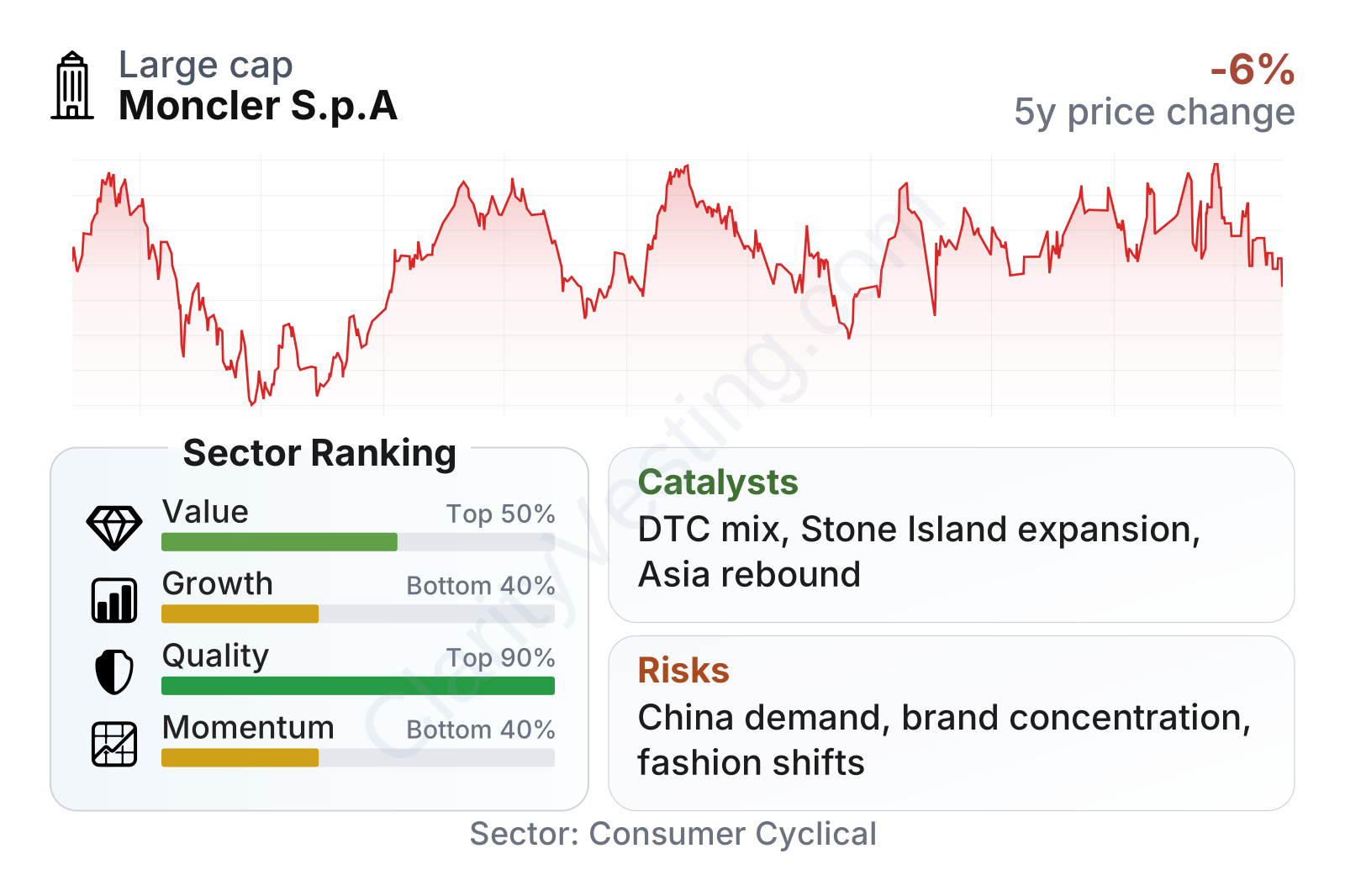
Moncler sits in the upper half of its sector on valuation and growth metrics, but its strongest profile is clearly business quality. Profitability, returns on invested capital, and balance sheet strength all rank well above many apparel peers. The weaker area is market momentum: the share price has lagged parts of the sector over multi-year periods, which suggests the market has been more cautious about future growth than the company’s margins alone would imply.
The stock’s historical price path shows meaningful volatility rather than a straight upward line. After strong highs in 2023 and early 2024, the shares pulled back and later recovered. That pattern is common in luxury names because sentiment can shift quickly when investors reassess China demand, consumer confidence, or the pace of store growth.
Growth
The luxury sector remains attractive over the long run, even if it can be uneven from year to year. Premium brands with global recognition often benefit from rising wealth in Asia, continued appetite for high-end personal goods, and the ability to increase prices faster than many consumer businesses. Moncler operates in a niche of luxury outerwear and technical fashion where brand identity matters enormously, which gives it a more defensible position than ordinary apparel makers.
Its strategy for future growth is coherent. The group continues to prioritize direct-to-consumer distribution, selective retail expansion, digital engagement, and brand collaborations that keep visibility high without turning the label into a mass product. The “Genius” platform and other limited-edition partnerships have helped Moncler stay culturally visible, especially with younger luxury consumers. Stone Island adds another growth lever because it broadens the group beyond classic winter outerwear and gives exposure to a different aesthetic.
Recent top-line growth looks moderate rather than explosive, roughly in the mid-single-digit range year over year, which is close to the sector median. That may seem underwhelming at first glance, but it needs to be read alongside the company’s high margins. Moncler does not need aggressive expansion to produce attractive economics; even moderate revenue growth can translate into strong cash generation when profitability is this high.
Cash generation is one of the most important positives in the case. Trailing free cash flow is comfortably above €1.5 billion, a very strong level for a company of this size. That gives management flexibility for dividends, share repurchases, selective investment, and resilience during luxury slowdowns. Over a longer period, free cash flow growth has been less impressive than revenue growth, but the absolute level remains a major support to the business profile.
A meaningful catalyst is the group’s ability to keep raising revenue through direct channels while preserving exclusivity. Another is geographic normalization if luxury demand improves in key Asian markets. If Stone Island keeps scaling internationally and Moncler continues expanding category depth beyond outerwear, the group’s growth mix could become more balanced and less seasonal.
Recent company updates have also highlighted continued investment in store quality, customer experience, and brand elevation rather than broad discount-driven volume. For a luxury company, that discipline is more important than chasing short-term sales spikes, because it protects long-term pricing power.
Risks
This article is for informational purposes only and does not constitute financial advice. Some content is AI-generated. See Disclaimer


