Stock Analysis · Magnite Inc (MGNI)
Overview
Magnite is an independent advertising technology company focused on helping media owners sell digital advertising space automatically. In simple terms, it runs software that connects publishers and broadcasters with advertisers that want to place ads across websites, mobile apps, connected TV platforms, and streaming services. The company was formed through the combination of Rubicon Project and Telaria, and it later expanded its scale with the acquisitions of SpotX and SpringServe. That made Magnite especially relevant in connected TV, the part of the market tied to streaming video.
The business mainly earns revenue by taking a fee from ad transactions that flow through its platform and from related software services used by publishers. Magnite reports revenue by channel rather than by customer type, so the clearest breakdown comes from those operating segments.
- Connected TV (CTV): approximately 45% to 50% of revenue recently. This includes advertising sold for streaming television and video inventory across smart TV apps, virtual cable services, broadcaster apps, and other premium streaming environments. This is Magnite’s most strategically important business.
- Online Video: approximately 20% to 25%. This covers video advertising outside traditional TV-like streaming, such as video shown on websites and mobile environments.
- Display: approximately 25% to 30%. This includes standard digital ad placements on websites and apps, such as banners and other non-video formats.
- Audio and other: low single-digit share. This includes smaller digital advertising formats and supporting activity that do not materially change the overall revenue mix.
That revenue mix matters because connected TV is generally seen as the highest-quality part of Magnite’s portfolio. It is tied to the ongoing shift of ad budgets away from traditional linear television and toward streaming, where publishers want more control over pricing, data, and inventory management.
The long-term financial picture has also improved. Revenue has expanded meaningfully since 2021, while gross profit and operating income have recovered after a difficult integration and restructuring period. A notable change is that profitability is no longer being consumed by operating costs the way it was in 2022 and 2023.
The business mix has become healthier over time: revenue has continued to rise, gross profit has expanded strongly since 2023, and operating income has turned positive after earlier losses. That suggests the company is now keeping more of each dollar of sales than it did during the heavier acquisition-integration phase.
Key Figures
| Metric | Value | Sector ⓘ |
|---|---|---|
| Date | Sep 12, 2026 | |
| Context | ||
| Sector | Communication Services | |
| Industry | Advertising Agencies | |
| Market Cap ⓘ | $3.41B | |
| Beta ⓘ | 2.29 | |
Value (Cheapness) | ||
| P/E Ratio ⓘ | 21.41 | 18.61 |
| FCF Yield ⓘ | 6.22% | 13.68% |
| EBIT / EV ⓘ | 3.39% | 4.54% |
| PEG ⓘ | 0.09 | |
Growth (Business expansion) | ||
| Revenue Growth ⓘ | 11.20% | 5.40% |
| RPS Growth (5Y CAGR) ⓘ | 7.80% | 4.62% |
| EPS Growth (5Y CAGR) ⓘ | -21.06% | -18.01% |
| Margin Growth (5Y Trend) ⓘ | N/A | 1.10% |
| FCF Growth (5Y CAGR) ⓘ | 14.18% | 5.88% |
Quality (Business durability) | ||
| ROIC (Latest) ⓘ | 12.39% | 8.38% |
| ROIC (5Y Median) ⓘ | -5.31% | 8.32% |
| Net Debt / EBIT (Latest) ⓘ | 2.39 | 1.99 |
| Net Debt / EBIT (5Y Median) ⓘ | N/A | 2.94 |
| Operating Margin (Latest) ⓘ | 14.17% | 14.89% |
| Operating Margin (5Y Median) ⓘ | -16.04% | 12.96% |
| Debt to Equity (Latest) ⓘ | 44.54% | 59.59% |
| Profit Margin (Latest) ⓘ | 22.49% | 8.77% |
| Free Cash Flow (Latest) ⓘ | $212.14M | |
Momentum (Price trend) | ||
| 3Y Return ⓘ | +196.01% | +46.64% |
| 12M Return (excl. last month) ⓘ | +9.34% | +2.16% |
| 6M Return ⓘ | +93.41% | +5.05% |
| Price vs. 200-Day MA ⓘ | +47.12% | +2.88% |
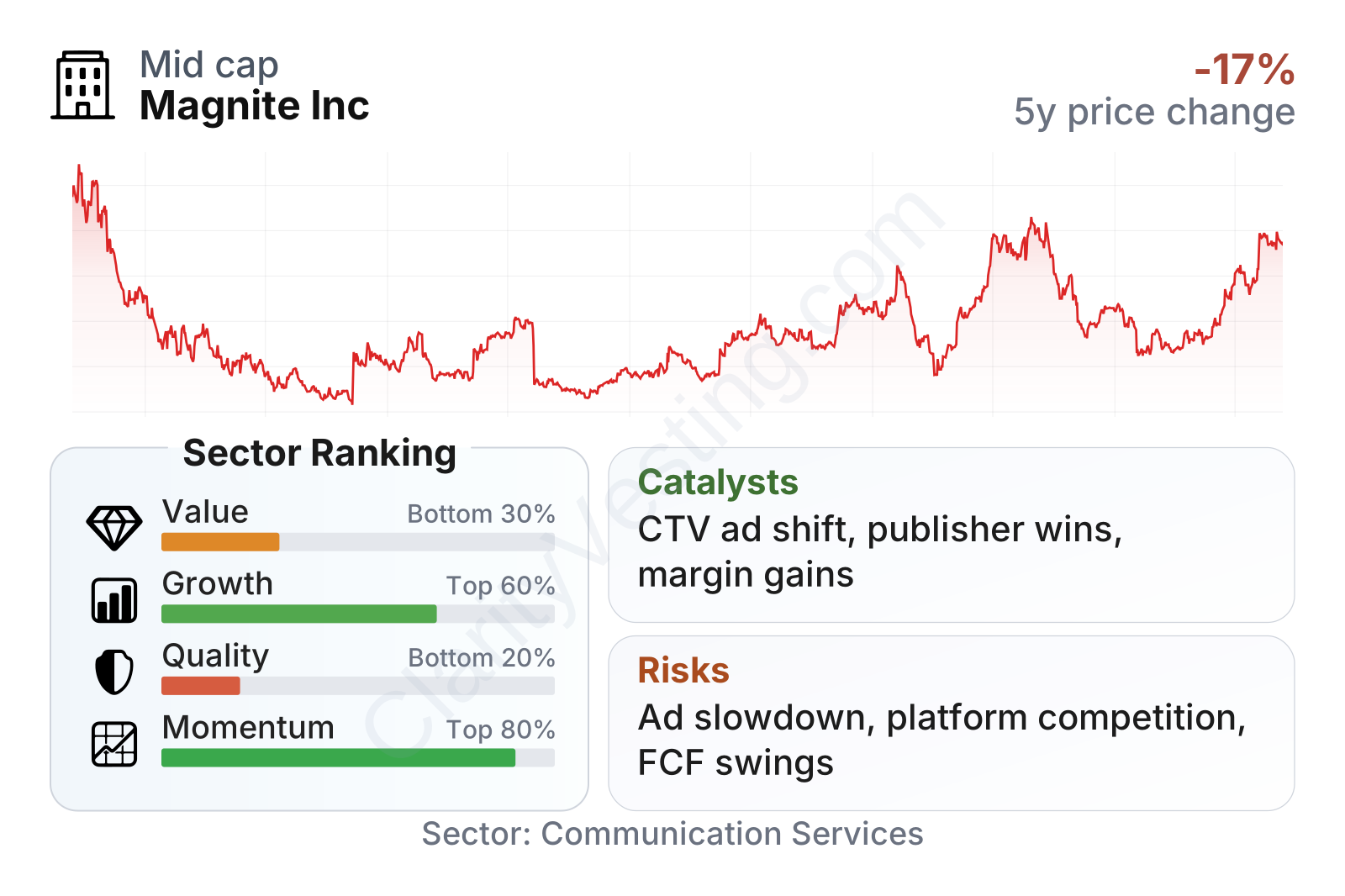
Magnite is a mid-sized company with a stock that has been much more volatile than the broader market, which fits the pattern of a smaller digital advertising platform exposed to changing industry sentiment. The metrics table shows a mixed but improving profile: growth and recent market momentum rank above much of the sector, while quality scores remain weaker because the company’s longer-term profitability record still reflects past losses and acquisition-related pressure. Current profitability and return on invested capital look better than that older history suggests.
The share price history also shows how cyclical sentiment can be. The stock fell sharply from 2021 highs, then partially recovered, which reflects both the market’s changing view of ad-tech businesses and the company’s own move from losses toward sustained profits.
Growth
Magnite operates in a sector with an attractive long-term backdrop. Digital advertising continues to take share from traditional media, and within digital, connected TV remains one of the most important growth areas. Streaming platforms are still building ad-supported tiers, broadcasters are shifting audiences toward internet-delivered viewing, and advertisers increasingly want automated tools to buy and measure campaigns across screens. That broad industry direction supports demand for the type of infrastructure Magnite provides.
The company’s strategy is logical for that environment. Rather than competing as a content owner, it acts as the software and transaction layer for publishers. This positioning can be valuable because many media companies prefer an independent platform rather than one directly tied to a giant demand-side buyer or a closed ecosystem. Magnite has emphasized sell-side tools, yield management, private marketplaces, identity solutions, and support for premium video inventory. Those capabilities are particularly relevant in connected TV, where publishers care about pricing control and transparency.
Revenue growth has cooled from the very high rates seen after major acquisitions, but the recent trend still points to healthy expansion. The latest year-over-year pace is around 11%, which is above the sector median and shows that the company is still growing even after the easiest comparison periods have passed. Over a five-year view, revenue per share has also advanced faster than much of the sector, which suggests the platform has been gaining scale rather than merely treading water.
Cash generation is more uneven. Free cash flow had improved substantially through 2025 before dropping sharply in the latest trailing period. That decline does not automatically mean the business model is weakening, but it does show that Magnite’s cash profile can swing from period to period. For a long-term view, the more encouraging point is that free cash flow has grown strongly over a multiyear period even though the latest number is soft.
A key catalyst is Magnite’s exposure to ad-supported streaming. As more major media companies and streaming services expand advertising tiers, the amount of premium video inventory available for automated selling can grow. Another support is the company’s relationship-driven position with large publishers and broadcasters, which can deepen as those customers consolidate their technology stack. Recent company updates and earnings materials have continued to highlight execution in CTV, supply path optimization, and product integration, all of which point to a business trying to capture a larger share of premium digital ad flows rather than relying only on general online ad market growth.
Risks
This article is for informational purposes only and does not constitute financial advice. Some content is AI-generated. See Disclaimer