Stock Analysis · MGM Resorts International (MGM)
Overview
MGM Resorts International is a large hospitality and gaming company best known for its casino resorts on the Las Vegas Strip, regional U.S. casinos, and its digital betting business through BetMGM. Its properties combine hotel rooms, casino floors, restaurants, entertainment venues, conventions, and nightlife. That mix matters because MGM is not only exposed to gambling demand, but also to tourism, business travel, live events, and group meetings.
The business is organized mainly around three revenue engines: Las Vegas Strip resorts, regional U.S. properties, and MGM China, with a smaller but strategically important digital segment through BetMGM. Based on the company’s recent annual filing, the revenue mix is approximately as follows:
- Las Vegas Strip resorts: about 49% — casino gaming, hotel rooms, food and beverage, entertainment, retail, and convention activity from flagship properties such as Bellagio, MGM Grand, Aria, Mandalay Bay, and Cosmopolitan operations.
- Regional operations: about 22% — casinos and hotels outside the Strip across several U.S. states, serving a more local and drive-in customer base.
- MGM China: about 18% — casino, hotel, and related resort activity in Macau through MGM China’s properties.
- Management and other operations: about 11% — this includes consolidated items outside the three main property groups, such as management fees and other non-core activities. BetMGM is strategically significant, but because of accounting presentation and ownership structure, its economic contribution is not shown as a large stand-alone revenue line in the same way as resort segments.
MGM’s revenue base has become larger over the last several years, but the earnings conversion has been less consistent. Revenue rose strongly from 2021 through 2025, while operating income and net income became more volatile. That pattern suggests a company with valuable assets and strong customer demand, but also with cost pressure and a capital structure that limits how much of each revenue dollar turns into bottom-line profit.
The long-term pattern shows expanding revenue, but also rising operating costs and a much sharper decline in net income in 2025 than in sales. In other words, MGM’s scale has grown, yet margin stability has become a more important question than topline demand alone.
Key Figures
| Metric | Value | Sector ⓘ |
|---|---|---|
| Date | Sep 12, 2026 | |
| Context | ||
| Sector | Consumer Cyclical | |
| Industry | Resorts & Casinos | |
| Market Cap ⓘ | $10.42B | |
| Beta ⓘ | 1.28 | |
Value (Cheapness) | ||
| P/E Ratio ⓘ | 24.68 | 17.10 |
| FCF Yield ⓘ | 16.04% | 8.53% |
| EBIT / EV ⓘ | 2.41% | 6.46% |
| PEG ⓘ | 0.51 | |
Growth (Business expansion) | ||
| Revenue Growth ⓘ | 1.00% | 5.75% |
| RPS Growth (5Y CAGR) ⓘ | 35.12% | 9.14% |
| EPS Growth (5Y CAGR) ⓘ | N/A | -18.21% |
| Margin Growth (5Y Trend) ⓘ | -19.37% | -0.23% |
| FCF Growth (5Y CAGR) ⓘ | 17.24% | 4.91% |
Quality (Business durability) | ||
| ROIC (Latest) ⓘ | 9.88% | 12.61% |
| ROIC (5Y Median) ⓘ | 9.91% | 10.72% |
| Net Debt / EBIT (Latest) ⓘ | 30.16 | 2.10 |
| Net Debt / EBIT (5Y Median) ⓘ | 18.71 | 2.32 |
| Operating Margin (Latest) ⓘ | 5.10% | 9.25% |
| Operating Margin (5Y Median) ⓘ | 9.79% | 9.64% |
| Debt to Equity (Latest) ⓘ | 1187.34% | 75.78% |
| Profit Margin (Latest) ⓘ | 2.40% | 5.33% |
| Free Cash Flow (Latest) ⓘ | $1.67B | |
Momentum (Price trend) | ||
| 3Y Return ⓘ | -5.00% | +14.53% |
| 12M Return (excl. last month) ⓘ | +24.24% | +3.08% |
| 6M Return ⓘ | +9.89% | +0.55% |
| Price vs. 200-Day MA ⓘ | +0.30% | -0.54% |
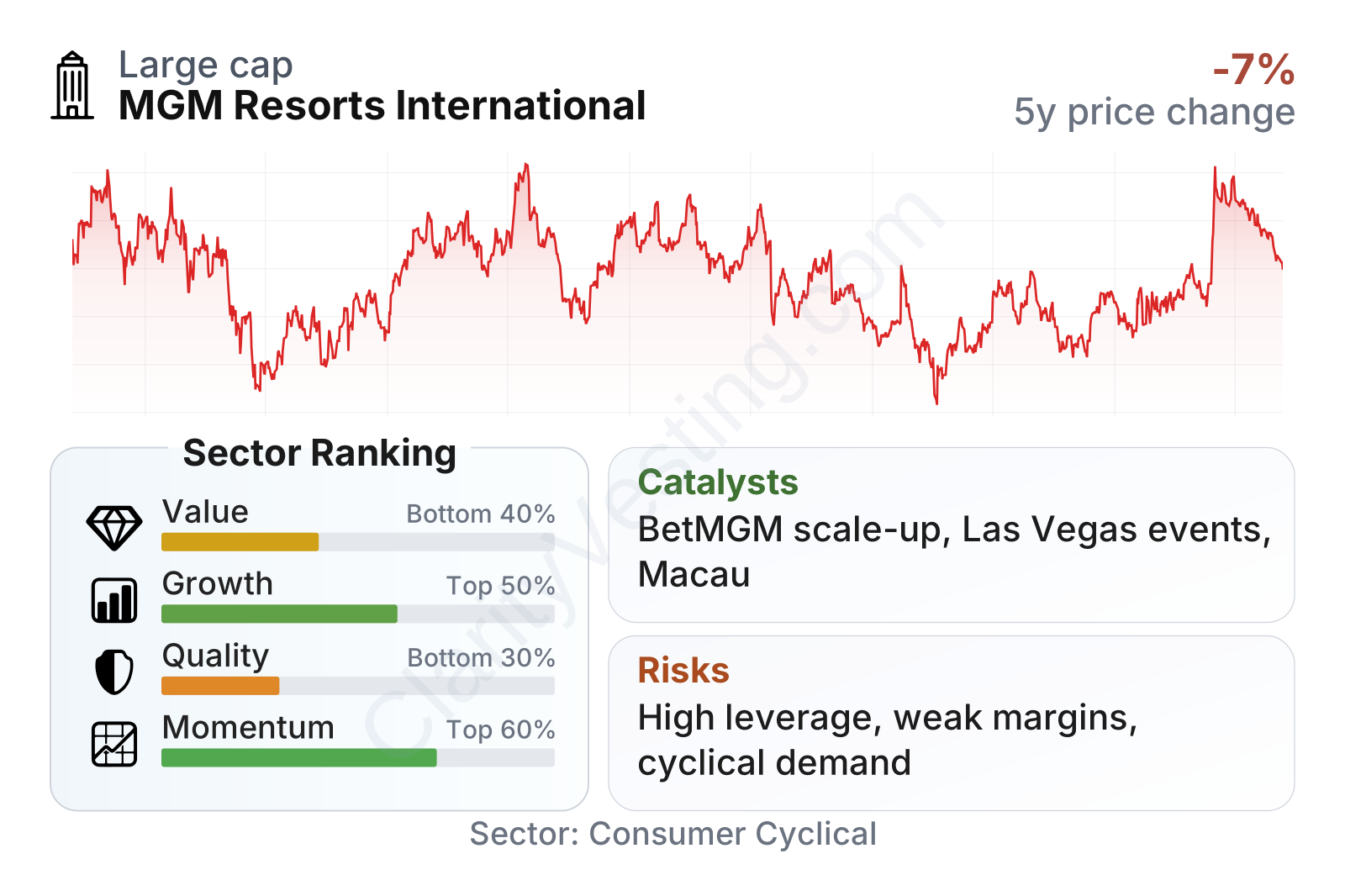
MGM is a mid-to-large company in consumer cyclical industries, and its recent profile is mixed. Growth and market momentum look relatively solid, while quality metrics rank weaker because leverage is unusually high and profitability trails the sector median. The valuation picture is also split: free cash flow yield looks strong, but earnings-based multiples are above the sector median, which usually means the market is giving more weight to cash generation and asset value than to current reported profit.
The stock has been volatile over the last several years, which fits the business model. Casino operators are sensitive to travel demand, consumer spending, conventions, and high-end gaming activity, so share price swings can be larger than for steadier consumer businesses.
Growth
The company operates in a sector with long-term support from travel, entertainment, sports betting, and premium experiences. Las Vegas remains a global destination with convention demand, major events, and high barriers to creating competing resorts at the same scale. Macau also remains important for global gaming demand, even if it can be more cyclical and policy-sensitive than U.S. markets.
MGM’s strategy for future growth is broader than simply adding more slot machines or hotel rooms. Management has been pushing on three themes: maximizing high-value Las Vegas assets, expanding digital gaming through BetMGM, and recycling capital through asset-light structures where real estate ownership is separated from operations. That approach can improve cash generation, although it can also make the financial statements look more complex and keep leverage elevated.
Recent growth has clearly slowed compared with the post-reopening surge. Year-over-year revenue increases moved from very high recovery rates in 2021 and 2022 to low-single-digit growth more recently, including some soft quarters in late 2024 and early 2025 before modest improvement. This is no longer a rebound phase; MGM is now being judged more on execution, pricing power, occupancy, gaming volumes, and cost control.
One encouraging point is cash generation. Free cash flow has remained substantial and recently improved from 2025 levels, reaching roughly $1.7 billion on a trailing basis. For a resort operator, that matters because cash flow supports debt service, share repurchases, technology investment, and digital expansion. It also helps offset the fact that accounting earnings have been weaker than revenue trends alone might suggest.
A meaningful catalyst is BetMGM. The online sports betting and iGaming market is still developing state by state in the U.S., and digital gaming can scale differently from physical resorts. MGM also continues to benefit from marquee events in Las Vegas, premium room pricing, and convention traffic. If Macau demand stays healthy and digital operations keep improving, these could provide incremental growth without the company needing a dramatic increase in resort footprint.
Recent company communications have also highlighted continuing share repurchases and ongoing focus on high-return uses of capital. That can support per-share results over time, especially when paired with stable resort cash flow.
Risks
This article is for informational purposes only and does not constitute financial advice. Some content is AI-generated. See Disclaimer


