Stock Analysis · La-Z-Boy Incorporated (LZB)
Overview
La-Z-Boy Incorporated is a U.S. furniture company best known for reclining chairs, upholstered seating, and a broader lineup of living room furniture. The business operates through a mix of manufacturing, wholesale distribution, and branded retail stores. In simple terms, La-Z-Boy makes furniture, sells it to independent dealers and company-owned stores, and also sells directly to households through its retail network and e-commerce channels.
The company’s revenue comes mainly from two operating segments disclosed in its recent filings, with an additional small contribution from other corporate activities. Based on the latest annual filing, the mix is approximately:
- Wholesale: about 72% of revenue. This segment includes manufacturing and selling upholstered furniture, casegoods, and accessories to dealers, distributors, and retail stores. Its core brands include La-Z-Boy, England, American Drew, Hammary, Kincaid, and Flexsteel under a licensing arrangement no longer central to the group’s identity.
- Retail: about 28% of revenue. This covers company-owned La-Z-Boy Furniture Galleries stores and direct consumer sales, including in-home design services and online transactions tied to the branded store network.
- Other and eliminations: less than 1%. This is mainly corporate activity and intercompany adjustments rather than a meaningful stand-alone source of sales.
That structure matters because wholesale gives the company scale and brand reach, while retail provides direct access to the customer, better control over presentation, and the chance to capture more value per sale. Over the last few years, total revenue has stayed above $2.0 billion, but profitability has narrowed as selling and administrative costs have taken a larger share of sales than they did at the post-pandemic peak.
The broad pattern shows a stable gross profit base, but a heavier operating cost burden than a few years ago. Revenue has recovered somewhat from the 2024 slowdown, yet earnings have not returned to earlier highs because store, marketing, and overhead costs remain elevated.
Key Figures
| Metric | Value | Sector ⓘ |
|---|---|---|
| Date | Sep 12, 2026 | |
| Context | ||
| Sector | Consumer Cyclical | |
| Industry | Furnishings, Fixtures & Appliances | |
| Market Cap ⓘ | $1.23B | |
| Beta ⓘ | 1.25 | |
Value (Cheapness) | ||
| P/E Ratio ⓘ | 15.55 | 17.10 |
| FCF Yield ⓘ | 8.40% | 8.53% |
| EBIT / EV ⓘ | 8.08% | 6.46% |
| PEG ⓘ | 1.10 | |
Growth (Business expansion) | ||
| Revenue Growth ⓘ | -3.40% | 5.75% |
| RPS Growth (5Y CAGR) ⓘ | -0.84% | 9.14% |
| EPS Growth (5Y CAGR) ⓘ | -49.07% | -18.21% |
| Margin Growth (5Y Trend) ⓘ | -1.51% | -0.23% |
| FCF Growth (5Y CAGR) ⓘ | 169.46% | 4.91% |
Quality (Business durability) | ||
| ROIC (Latest) ⓘ | 8.74% | 12.61% |
| ROIC (5Y Median) ⓘ | 12.84% | 10.72% |
| Net Debt / EBIT (Latest) ⓘ | 2.25 | 2.10 |
| Net Debt / EBIT (5Y Median) ⓘ | 0.88 | 2.32 |
| Operating Margin (Latest) ⓘ | 5.79% | 9.25% |
| Operating Margin (5Y Median) ⓘ | 8.11% | 9.64% |
| Debt to Equity (Latest) ⓘ | 53.44% | 75.78% |
| Profit Margin (Latest) ⓘ | 3.86% | 5.33% |
| Free Cash Flow (Latest) ⓘ | $103.12M | |
Momentum (Price trend) | ||
| 3Y Return ⓘ | +5.95% | +14.53% |
| 12M Return (excl. last month) ⓘ | +10.59% | +3.08% |
| 6M Return ⓘ | -5.58% | +0.55% |
| Price vs. 200-Day MA ⓘ | -15.67% | -0.54% |
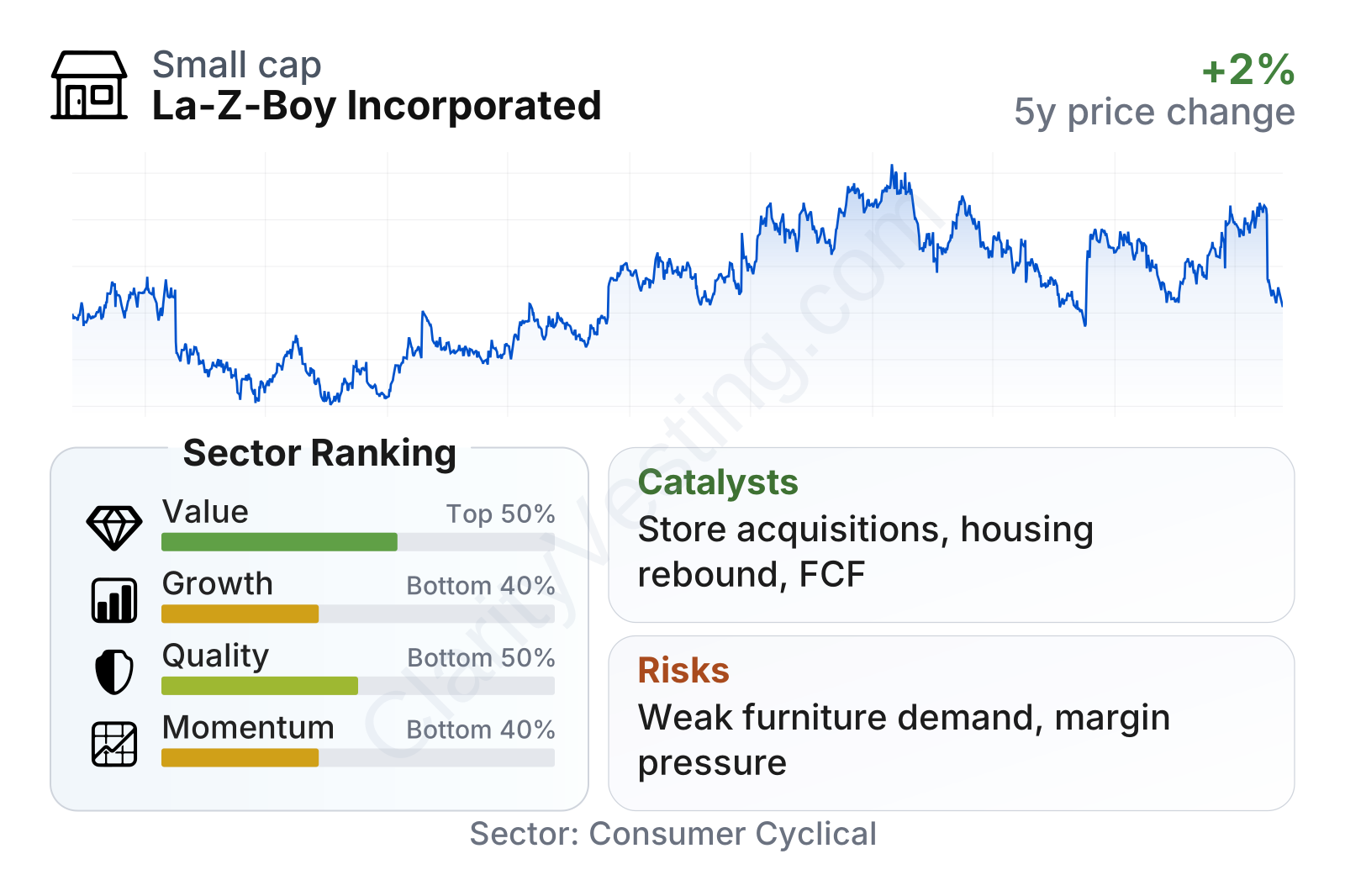
La-Z-Boy is a small-cap consumer company with a share price that has been volatile but generally stronger than many sector peers over parts of the last three years. The factor profile is mixed: valuation looks near the middle of the sector, balance sheet leverage is relatively moderate, but growth and profitability rank below many peers. Free cash flow remains an important offset, as cash generation has held up better than earnings growth.
Growth
La-Z-Boy operates in the home furnishings market, which is tied closely to housing activity, consumer confidence, household formation, and discretionary spending. This is not a structurally fast-growing sector in the way software or semiconductors can be, but it can still offer steady long-term demand because furniture is a recurring household purchase and brand recognition matters. Demand tends to improve when housing turnover, remodeling activity, and consumer sentiment recover.
The company’s strategy is centered on expanding and upgrading its branded retail footprint, strengthening its direct relationship with consumers, improving its supply chain, and using design services and customization to defend pricing. That approach is logical for a mature brand: it leans on recognition built over decades and tries to deepen wallet share rather than rely only on industry growth. A vertically connected model, where the company both manufactures and sells through branded stores, can also improve coordination on inventory, merchandising, and delivery times.
Recent sales trends show that growth has been uneven. After a strong rebound period in 2021 and 2022, revenue turned negative through much of 2023, then stabilized and moved around flat to low single-digit growth before slipping again recently. That pattern suggests La-Z-Boy is still dealing with a cautious furniture spending environment rather than enjoying a broad demand upswing.
Cash generation has been more encouraging than revenue growth. Free cash flow has improved markedly from the levels seen several years ago, even if year-to-year results can fluctuate. For a furniture company, this matters because cash can support store investments, acquisitions, dividends, and share repurchases without depending heavily on external financing.
A meaningful catalyst is the company’s continued effort to modernize and expand the La-Z-Boy store network while increasing design-driven selling. Another potential tailwind is any improvement in U.S. housing turnover and big-ticket consumer spending. Recent company updates have also highlighted acquisitions of independently owned La-Z-Boy Furniture Galleries stores, which can gradually increase retail sales capture and give management more direct control over execution.
Risks
This article is for informational purposes only and does not constitute financial advice. Some content is AI-generated. See Disclaimer


