Stock Analysis · Live Nation Entertainment Inc (LYV)
Overview
Live Nation Entertainment is the largest live entertainment company in the world. It operates across the concert value chain: it promotes live events, manages and represents artists, sells tickets, and owns or operates venues. In simple terms, the company helps put on concerts and festivals, fills venues with fans, and earns money from many points along that process.
Its business is organized into three main segments. Based on recent annual reporting, revenue is weighted heavily toward concerts, with ticketing and sponsorship making up smaller but strategically important contributions.
- Concerts: about 84% of revenue — This is the core business. It includes promoting concerts and festivals, artist management, venue operations, and related event activity. This segment is large because ticket sales collected for events flow through revenue, even though margins are not very high.
- Ticketing: about 12% of revenue — Primarily Ticketmaster. This includes service fees on tickets sold through its platforms, software and support for venues, and related ticketing services.
- Sponsorship & Advertising: about 4% of revenue — Brand partnerships, on-site advertising, digital promotion, and sponsorship deals tied to tours, venues, and festivals.
What stands out is that the smallest segment by revenue, sponsorship, tends to be attractive because it can carry stronger economics than event promotion itself. Ticketing is also important because it adds recurring platform-like revenue and strengthens Live Nation’s relationship with venues and fans.
Over the last several years, the company has expanded from a pandemic-damaged business into a much larger operation, with total revenue rising from roughly $6 billion in 2021 to more than $25 billion in 2025. Gross profit has also climbed materially, showing that growth has not come only from passing through higher ticket volumes.
The business mix shows a company with very large scale, but also one where costs move up quickly with revenue. That helps explain why Live Nation can post strong sales and cash generation while still showing relatively thin accounting margins.
Key Figures
| Metric | Value | Sector ⓘ |
|---|---|---|
| Date | Sep 12, 2026 | |
| Context | ||
| Sector | Communication Services | |
| Industry | Entertainment | |
| Market Cap ⓘ | $39.64B | |
| Beta ⓘ | 1.12 | |
Value (Cheapness) | ||
| P/E Ratio ⓘ | N/A | 18.61 |
| FCF Yield ⓘ | 3.47% | 13.68% |
| EBIT / EV ⓘ | 2.40% | 4.54% |
| PEG ⓘ | 4.44 | |
Growth (Business expansion) | ||
| Revenue Growth ⓘ | 9.40% | 5.40% |
| RPS Growth (5Y CAGR) ⓘ | 39.31% | 4.62% |
| EPS Growth (5Y CAGR) ⓘ | -33.47% | -18.01% |
| Margin Growth (5Y Trend) ⓘ | 10.59% | 1.10% |
| FCF Growth (5Y CAGR) ⓘ | -34.14% | 5.88% |
Quality (Business durability) | ||
| ROIC (Latest) ⓘ | 7.98% | 8.38% |
| ROIC (5Y Median) ⓘ | 11.97% | 8.32% |
| Net Debt / EBIT (Latest) ⓘ | 2.21 | 1.99 |
| Net Debt / EBIT (5Y Median) ⓘ | 2.38 | 2.94 |
| Operating Margin (Latest) ⓘ | 3.81% | 14.89% |
| Operating Margin (5Y Median) ⓘ | 4.61% | 12.96% |
| Debt to Equity (Latest) ⓘ | 13704.25% | 59.59% |
| Profit Margin (Latest) ⓘ | 0.51% | 8.77% |
| Free Cash Flow (Latest) ⓘ | $1.37B | |
Momentum (Price trend) | ||
| 3Y Return ⓘ | +108.39% | +46.64% |
| 12M Return (excl. last month) ⓘ | +16.98% | +2.16% |
| 6M Return ⓘ | +6.13% | +5.05% |
| Price vs. 200-Day MA ⓘ | +5.53% | +2.88% |
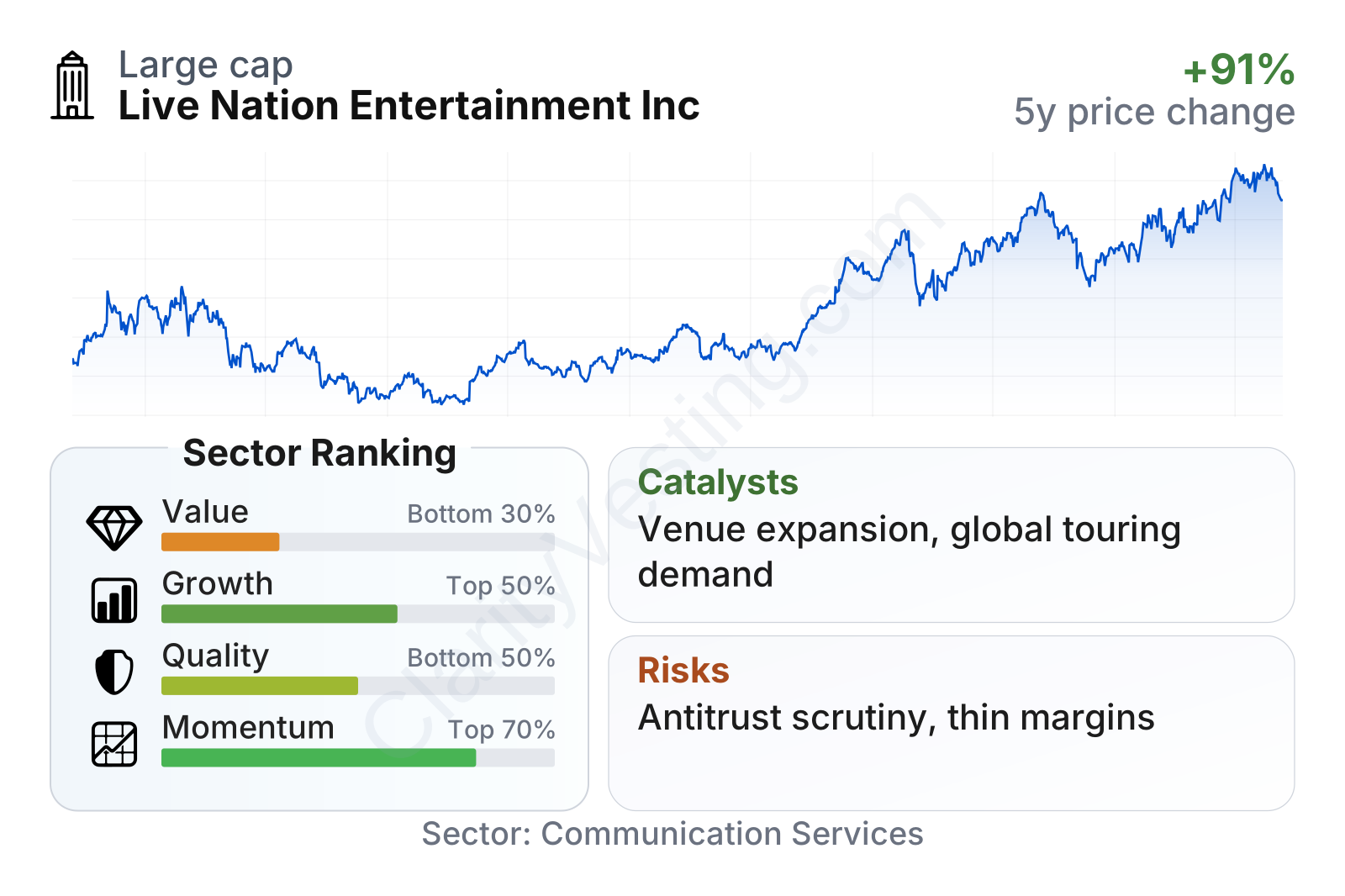
Live Nation is now a large-cap entertainment company with a stock that has significantly outperformed much of its sector over the last three years. Growth and momentum rank relatively well versus peers, while value metrics look weak, meaning the market is already assigning a premium to the business. Quality is more mixed: long-term returns on invested capital have been respectable, but current margins remain low and headline leverage ratios look unusual because the balance sheet structure can swing sharply.
Growth
Live Nation operates in a part of entertainment that has shown durable demand. Live experiences have remained attractive even as digital entertainment has expanded, and the concert industry has benefited from consumers prioritizing experiences. For major artists, touring has become an increasingly important income stream, which supports demand for large-scale promoters and ticketing platforms.
The company’s strategy for future growth is straightforward and logical. It is building more venues, deepening relationships with artists, expanding internationally, and using Ticketmaster to keep a central role in the event ecosystem. This creates a flywheel: more venues attract more tours, more tours bring more ticketing volume, and more fan engagement improves sponsorship opportunities.
Recent revenue growth has normalized from the extraordinary post-reopening surge, but it is still positive and remains ahead of the sector median. That matters because the easy rebound period is over; continued growth now depends more on execution, venue additions, international expansion, and sustained demand rather than simple recovery.
Free cash flow has been volatile, which is common for a business tied to event timing and working-capital swings, but it remains meaningfully positive on a trailing basis at around $1.2 billion to $1.4 billion in recent periods. That is an important support for the long-term case because it shows the company can turn scale into cash even when earnings margins look modest.
A notable catalyst is venue development. Live Nation has been adding and upgrading venues in key markets, which can increase control over scheduling, pricing, and premium fan experiences. Another catalyst is continued growth in stadium shows and global touring, where the company’s scale is difficult to match. The business also benefits when high-demand artists choose larger tours, since that boosts both promotion revenue and ticketing activity.
Recent company updates have also pointed to strong event pipelines and fan demand, with deferred revenue and ticket sales indicators continuing to support forward visibility. That does not eliminate volatility, but it suggests the demand environment has remained healthy.
Risks
This article is for informational purposes only and does not constitute financial advice. Some content is AI-generated. See Disclaimer


