Stock Analysis · LYFT Inc (LYFT)
Overview
Lyft operates a digital transportation marketplace. Its main business is connecting riders who need a trip with drivers who use their own vehicles, all through the Lyft app. The company is best known for ride-hailing in the United States and Canada, but it also offers related transportation services such as bikes and scooters in selected cities. In simple terms, Lyft does not primarily sell cars or own a large taxi fleet; it runs the software platform, manages payments, supports the network, and takes a share of the transaction.
Lyft reports revenue largely as a single line, but its business mix can still be understood through its filings and operating disclosures. Based on Lyft’s recent annual reporting, the company’s revenue sources are approximately:
- Ride-hailing marketplace revenue: about 90%+ — fees generated from rides booked on the platform, including the company’s share of rider payments after amounts due to drivers and certain incentives.
- Bike and scooter rentals: low single-digit share — short-distance urban transportation services offered in certain markets.
- Advertising, partnerships, and other revenue: low single-digit share — includes smaller commercial arrangements connected to the platform.
What matters most for a long-term view is that Lyft remains overwhelmingly tied to the health of its ride-hailing marketplace. That concentration makes the business easier to understand, but it also means company performance depends heavily on trip volume, pricing, driver supply, and competitive pressure in mobility.
Over the last several years, the business has become much more disciplined. Revenue has climbed from roughly $3.2 billion in 2021 to more than $6.3 billion in 2025, while gross profit also expanded. At the same time, research and development costs and some operating expenses have become much leaner relative to revenue. The biggest caution is that 2025 net income was heavily affected by a tax benefit, so bottom-line profitability looked much stronger than underlying operations alone would suggest.
The broad picture is a company that has scaled meaningfully, narrowed its operating losses, and improved cash generation, but still has a business model centered on one competitive service category.
Key Figures
| Metric | Value | Sector ⓘ |
|---|---|---|
| Date | Sep 12, 2026 | |
| Context | ||
| Sector | Technology | |
| Industry | Software - Application | |
| Market Cap ⓘ | $5.80B | |
| Beta ⓘ | 1.84 | |
Value (Cheapness) | ||
| P/E Ratio ⓘ | 2.19 | 29.51 |
| FCF Yield ⓘ | 19.75% | 4.25% |
| EBIT / EV ⓘ | 0.29% | 2.85% |
| PEG ⓘ | 0.28 | |
Growth (Business expansion) | ||
| Revenue Growth ⓘ | 16.10% | 15.40% |
| RPS Growth (5Y CAGR) ⓘ | 12.08% | 8.56% |
| EPS Growth (5Y CAGR) ⓘ | N/A | -11.88% |
| Margin Growth (5Y Trend) ⓘ | N/A | 0.46% |
| FCF Growth (5Y CAGR) ⓘ | N/A | 9.80% |
Quality (Business durability) | ||
| ROIC (Latest) ⓘ | 0.32% | 9.44% |
| ROIC (5Y Median) ⓘ | -18.34% | 8.30% |
| Net Debt / EBIT (Latest) ⓘ | 2.50 | 0.54 |
| Net Debt / EBIT (5Y Median) ⓘ | N/A | 0.44 |
| Operating Margin (Latest) ⓘ | 0.22% | 9.58% |
| Operating Margin (5Y Median) ⓘ | -6.94% | 8.25% |
| Debt to Equity (Latest) ⓘ | 38.86% | 33.33% |
| Profit Margin (Latest) ⓘ | 42.32% | 7.14% |
| Free Cash Flow (Latest) ⓘ | $1.15B | |
Momentum (Price trend) | ||
| 3Y Return ⓘ | +34.15% | +45.48% |
| 12M Return (excl. last month) ⓘ | +19.45% | +23.48% |
| 6M Return ⓘ | +18.30% | +20.93% |
| Price vs. 200-Day MA ⓘ | -3.35% | +7.43% |
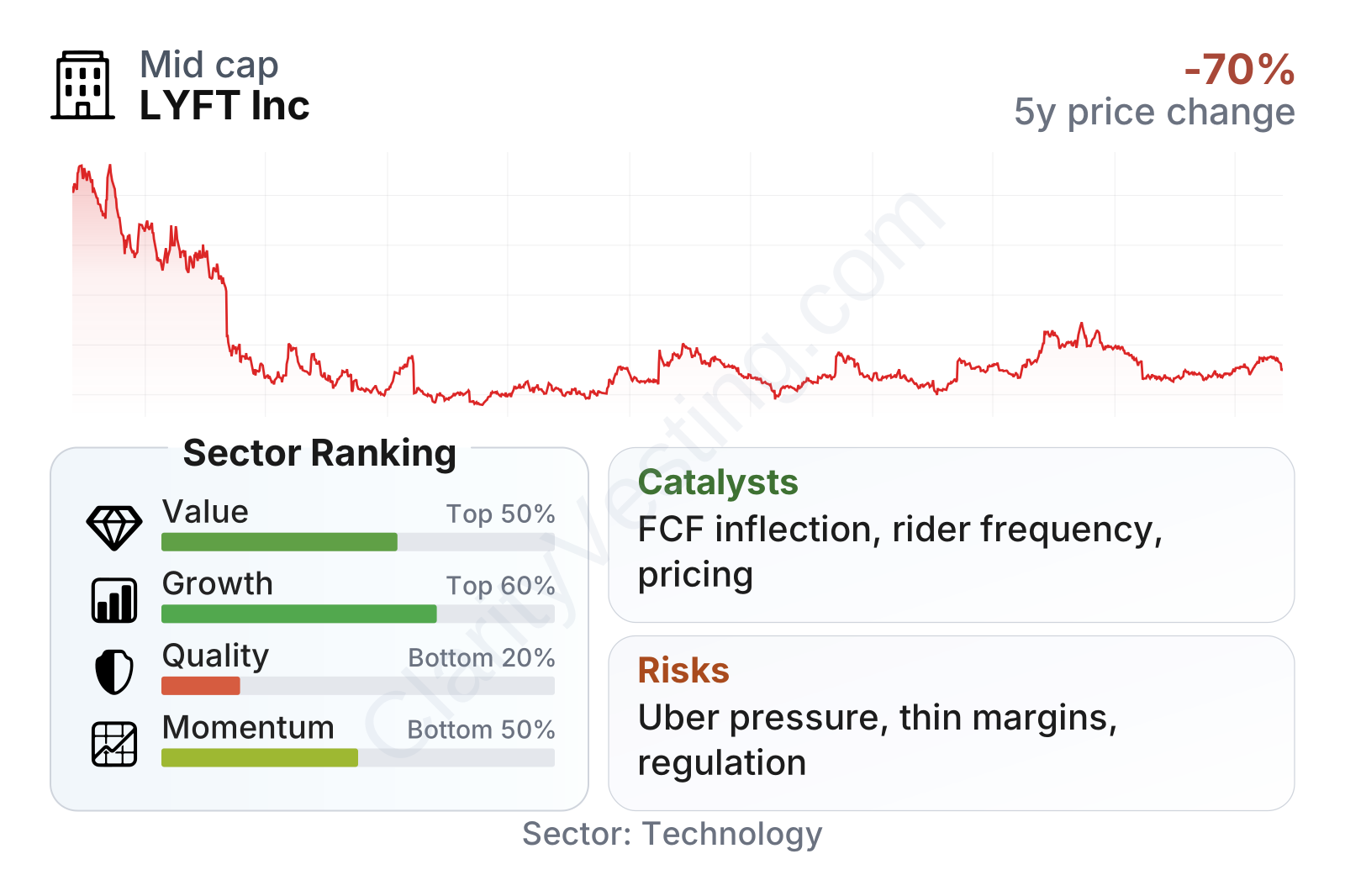
Lyft is a mid-sized company by market value, and its shares have been very volatile over the past several years. The beta of about 1.8 reflects that volatility. The stock remains far below its 2021 levels, even after periods of recovery, which shows that the market still sees meaningful uncertainty around long-term profitability and competitive positioning.
The metric table shows an unusual combination. On valuation, Lyft screens cheaply, with a very low P/E ratio and a free cash flow yield far above the sector median. On growth, the company is roughly in line with the sector on recent revenue expansion and has outpaced the sector median on revenue per share over five years. The weak area is quality: operating margin and returns on invested capital are still well below typical software-sector levels, even though they have improved sharply from prior years. In short, Lyft looks inexpensive and cash-generative, but not yet like a high-quality software business.
Growth
Lyft operates in a sector with durable long-term relevance. Urban mobility, airport traffic, event travel, and car-light living patterns continue to support app-based transportation demand. Ride-hailing is no longer an experimental category; it is part of everyday transportation behavior in many cities. That gives Lyft exposure to a large and recurring market, even if the pace of industry expansion is now steadier than in the early years.
Its recent strategy has been more pragmatic than expansive. Instead of trying to win through broad diversification, Lyft has focused on service levels, rider frequency, driver availability, pricing tools, and operating efficiency. That makes strategic sense for its current scale. The company’s challenge is not proving that people want ride-hailing; it is proving that this demand can translate into durable margins and cash flow in a market where competition remains intense.
Revenue growth has normalized after the sharp post-pandemic recovery. The latest yearly growth rate is around 16%, close to the sector median. That is healthy enough to show the platform is still expanding, but not so fast that it can hide execution problems. For Lyft, steady double-digit growth matters because it helps absorb platform costs and can improve economics if incentives and overhead stay controlled.
One of the strongest improvements has been cash generation. Free cash flow moved from negative territory in 2022 and 2023 to strongly positive levels in 2025 and 2026. That shift is important because it suggests the business is no longer relying only on accounting progress; it is increasingly converting activity into real cash. For a platform company in a competitive market, that is one of the clearest signs of better operating discipline.
A meaningful catalyst is Lyft’s effort to deepen rider engagement and improve marketplace balance. Better driver supply reduces wait times, while more frequent rider usage can improve unit economics. The company has also been expanding partnerships and product features aimed at increasing trip frequency and making the app more useful in daily transportation. Another opportunity comes from the possibility that industry pricing becomes more rational after years of aggressive competition. If that happens, even moderate revenue growth could have a larger effect on profit than in the past.
Recent company updates have also highlighted continued focus on service quality, airport share, and product execution. None of these are transformational on their own, but together they matter because Lyft does not need a brand-new industry to grow; it needs to get more value from an already established one.
Risks
This article is for informational purposes only and does not constitute financial advice. Some content is AI-generated. See Disclaimer


