Stock Analysis · Lululemon Athletica Inc (LULU)
Overview
Lululemon Athletica Inc. is a premium athletic apparel company best known for yoga-inspired leggings, training clothing, outerwear, and accessories. Over time, it has expanded from a niche women’s yoga brand into a broader athletic lifestyle business that now serves women and men, sells footwear and bags, and operates through both physical stores and digital channels. The company positions itself at the higher end of the market, where brand strength, product innovation, fit, and full-price selling matter more than pure volume.
Its revenue mix is still led by apparel and by direct sales to consumers rather than wholesale. Based on recent company reporting, the main sources of revenue can be summarized as follows:
- Women’s apparel: about 61% of revenue. This includes leggings, tops, sports bras, shorts, jackets, and other athletic clothing.
- Men’s apparel: about 23% of revenue. This covers training, running, golf, casual, and commuter-oriented products.
- Accessories and other: about 16% of revenue. This includes bags, yoga mats, socks, underwear, personal care items, and footwear.
Looking at channels, direct-to-consumer remains the largest earnings engine. Company filings indicate that revenue is primarily generated through company-operated stores, e-commerce, and a smaller contribution from outlet, wholesale, pop-up, and temporary locations. Geographically, North America is still the largest market, but international operations have been an important expansion area, especially in China and other selected overseas markets.
Lululemon’s business model is attractive when it works well: high gross margins, limited dependence on traditional wholesale partners, strong customer loyalty, and a premium brand that can often sell at full price. The trade-off is that premium positioning also requires constant product relevance and careful brand management.
The business has scaled meaningfully in recent years, with revenue rising from roughly $6.3 billion to more than $11 billion over four fiscal years. That said, recent flows also show pressure from rising operating expenses and some moderation in profitability after an exceptionally strong period.
Key Figures
| Metric | Value | Sector ⓘ |
|---|---|---|
| Date | Sep 12, 2026 | |
| Context | ||
| Sector | Consumer Cyclical | |
| Industry | Apparel Retail | |
| Market Cap ⓘ | $10.96B | |
| Beta ⓘ | 0.86 | |
Value (Cheapness) | ||
| P/E Ratio ⓘ | 8.15 | 17.10 |
| FCF Yield ⓘ | 12.36% | 8.53% |
| EBIT / EV ⓘ | 17.60% | 6.46% |
| PEG ⓘ | 0.97 | |
Growth (Business expansion) | ||
| Revenue Growth ⓘ | -4.30% | 5.75% |
| RPS Growth (5Y CAGR) ⓘ | 18.05% | 9.14% |
| EPS Growth (5Y CAGR) ⓘ | -24.63% | -18.21% |
| Margin Growth (5Y Trend) ⓘ | -1.81% | -0.23% |
| FCF Growth (5Y CAGR) ⓘ | -1.89% | 4.91% |
Quality (Business durability) | ||
| ROIC (Latest) ⓘ | 29.90% | 12.61% |
| ROIC (5Y Median) ⓘ | 42.42% | 10.72% |
| Net Debt / EBIT (Latest) ⓘ | 0.37 | 2.10 |
| Net Debt / EBIT (5Y Median) ⓘ | -0.16 | 2.32 |
| Operating Margin (Latest) ⓘ | 18.21% | 9.25% |
| Operating Margin (5Y Median) ⓘ | 22.95% | 9.64% |
| Debt to Equity (Latest) ⓘ | 44.69% | 75.78% |
| Profit Margin (Latest) ⓘ | 12.78% | 5.33% |
| Free Cash Flow (Latest) ⓘ | $1.35B | |
Momentum (Price trend) | ||
| 3Y Return ⓘ | -74.50% | +14.53% |
| 12M Return (excl. last month) ⓘ | -37.35% | +3.08% |
| 6M Return ⓘ | -37.44% | +0.55% |
| Price vs. 200-Day MA ⓘ | -34.65% | -0.54% |
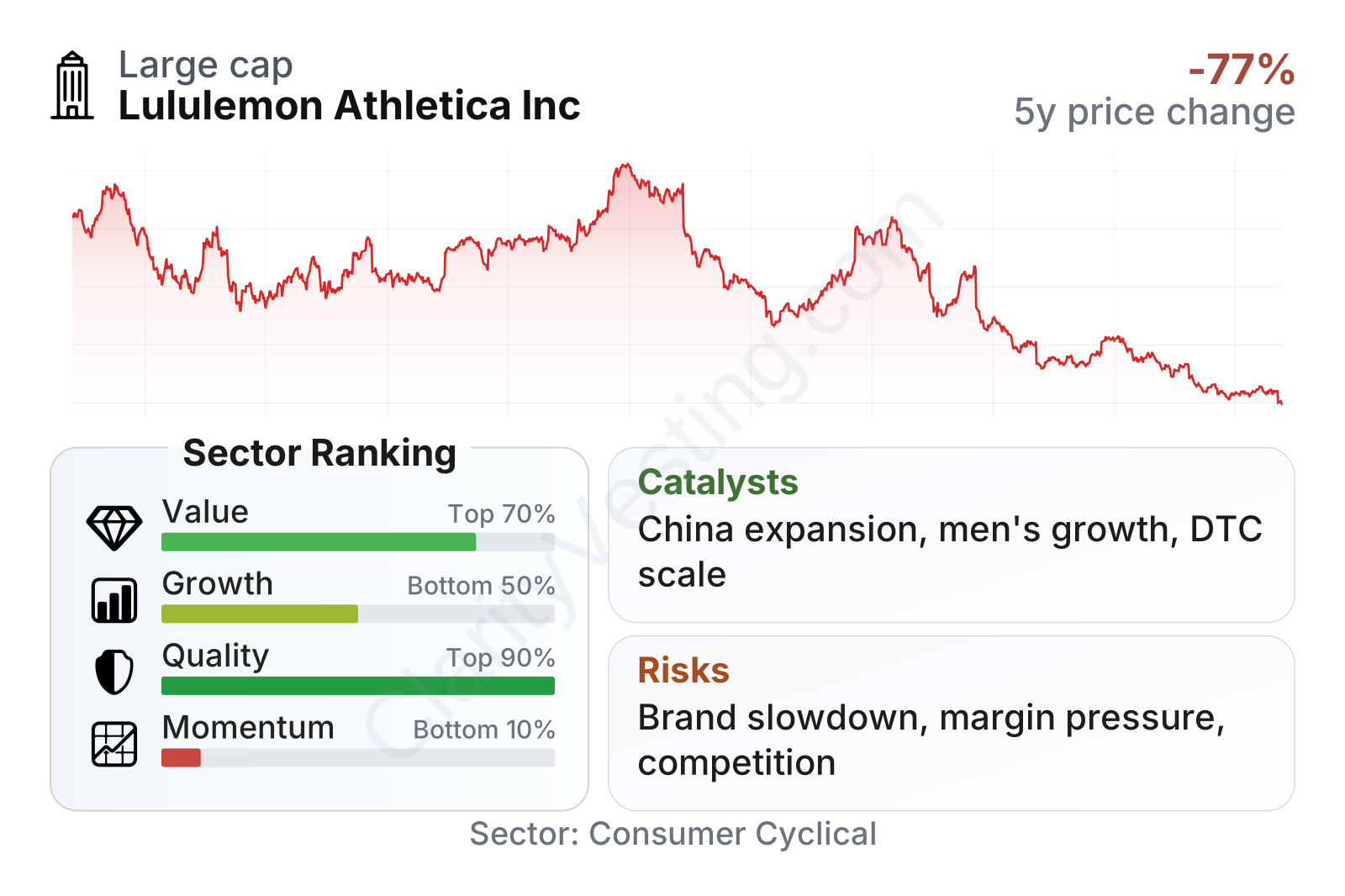
Lululemon stands out on business quality more than on recent market performance. Profitability remains well above most apparel retail peers, with operating margin around 18%, profit margin near 13%, and return on invested capital close to 30%. Balance sheet risk also looks contained, with debt-to-equity around 45% and net debt remaining low relative to earnings. On valuation, the shares trade at a much lower earnings multiple than both the company’s own history and the sector median, while cash generation remains solid. The weak point is the near-term growth and momentum profile: recent revenue growth has turned negative, earnings trends have softened, and the stock has materially underperformed the broader consumer discretionary peer group.
Growth
Lululemon operates in the broader athletic apparel and athleisure market, which has benefited for years from casualization, wellness trends, and the blending of sportswear with everyday clothing. This remains a large and relevant category, but it is no longer an easy growth market where strong brands can expand without resistance. Competition is heavier, consumers are more price-sensitive, and demand has become less predictable in several regions.
The company’s strategy for future growth still makes logical sense. Management has been building around several levers: expanding men’s apparel, growing internationally, increasing digital engagement, extending the brand into footwear and accessories, and using its store base as both a selling and community-building platform. Among these, international growth appears especially important because North America is already relatively mature compared with the company’s smaller presence abroad.
Revenue growth has clearly slowed. The company posted very strong year-over-year gains above 20% and even above 30% earlier in the cycle, then decelerated into single digits before slipping slightly negative most recently. That does not erase the longer-term expansion record, but it does show that Lululemon has moved from rapid scaling into a more demanding phase where product cycles, local execution, and consumer sentiment have a larger effect on results.
Cash generation remains an important stabilizer. Free cash flow has stayed positive and substantial, even though it has come down from peak levels. For a retailer, that matters because it provides flexibility for store openings, supply chain investment, product development, and share repurchases without leaning heavily on debt.
One of the strongest potential catalysts is international expansion, particularly in China, where Lululemon has been opening stores and building brand awareness from a smaller base than many global sportswear names. Another possible growth driver is the men’s segment, which is still meaningfully smaller than women’s apparel and therefore offers room for share gains if the assortment continues to resonate. Product extensions such as footwear are less proven, but they can enlarge the addressable market if execution improves.
Recent company updates have also emphasized ongoing store expansion and brand-building efforts abroad. For long-term analysis, that is more important than short-term fluctuations in one quarter, because the central question is whether the brand can become more global rather than remain primarily North American.
Risks
This article is for informational purposes only and does not constitute financial advice. Some content is AI-generated. See Disclaimer


