Stock Analysis · Logitech International SA (LOGI)
Overview
Logitech International SA designs and sells computer and digital accessories used for work, gaming, video collaboration, music creation, education, and home entertainment. Its products include mice, keyboards, webcams, headsets, tablet accessories, gaming gear, conference room equipment, and streaming tools. The company sells globally through large retailers, online marketplaces, distributors, and direct channels.
Logitech’s business is easier to understand by looking at product categories rather than technical specifications. Based on the company’s latest annual reporting for fiscal 2026, revenue is spread across several hardware lines, which helps reduce dependence on a single product family.
- Pointing devices: about 27% of revenue. This includes mice, trackballs, presentation remotes, and related accessories.
- Keyboards and combos: about 23%. This includes standalone keyboards and keyboard-mouse bundles for consumers and office users.
- Gaming: about 18%. This covers gaming mice, keyboards, headsets, steering wheels, controllers, and simulation gear sold mainly under Logitech G.
- Video collaboration: about 15%. This includes conference cameras, room systems, and workplace collaboration hardware for businesses.
- Tablet accessories: about 7%. This category mainly includes keyboard cases and accessories for iPads and other tablets.
- Webcams: about 4%. These serve remote work, content creation, and personal communication.
- Headsets and earphones: about 4%. This includes office and consumer audio devices outside the gaming category.
- Mobile speakers and other: about 2%. This is the smallest group and includes smaller accessory lines.
Geographically, Logitech is broadly diversified, with the Americas and EMEA typically representing the largest regions, followed by Asia Pacific. That footprint matters because demand can shift between consumer spending cycles, corporate IT budgets, and regional retail trends.
The business mix also shows a useful pattern: after the pandemic boom and the following correction, Logitech rebuilt growth while keeping tight control of costs. Revenue in fiscal 2026 moved back toward the upper end of its recent range, while operating income and net income rose faster than sales, suggesting improved efficiency rather than growth purchased through heavy spending.
Over the last five fiscal years, sales fell sharply after the pandemic surge, but profitability recovered well. Gross profit has improved, operating expenses have remained controlled, and fiscal 2026 ended with stronger operating and net income than the prior two years. That points to a business that has regained balance after an unusually volatile demand cycle.
Key Figures
| Metric | Value | Sector ⓘ |
|---|---|---|
| Date | Sep 12, 2026 | |
| Context | ||
| Sector | Technology | |
| Industry | Computer Hardware | |
| Market Cap ⓘ | $14.71B | |
| Beta ⓘ | 0.65 | |
Value (Cheapness) | ||
| P/E Ratio ⓘ | 18.84 | 29.51 |
| FCF Yield ⓘ | 6.91% | 4.25% |
| EBIT / EV ⓘ | 7.24% | 2.85% |
| PEG ⓘ | 1.83 | |
Growth (Business expansion) | ||
| Revenue Growth ⓘ | 6.90% | 15.40% |
| RPS Growth (5Y CAGR) ⓘ | 0.49% | 8.56% |
| EPS Growth (5Y CAGR) ⓘ | -18.44% | -11.88% |
| Margin Growth (5Y Trend) ⓘ | 2.76% | 0.46% |
| FCF Growth (5Y CAGR) ⓘ | 46.96% | 9.80% |
Quality (Business durability) | ||
| ROIC (Latest) ⓘ | 34.96% | 9.44% |
| ROIC (5Y Median) ⓘ | 27.37% | 8.30% |
| Net Debt / EBIT (Latest) ⓘ | -1.83 | 0.54 |
| Net Debt / EBIT (5Y Median) ⓘ | -2.11 | 0.44 |
| Operating Margin (Latest) ⓘ | 18.49% | 9.58% |
| Operating Margin (5Y Median) ⓘ | 14.31% | 8.25% |
| Debt to Equity (Latest) ⓘ | 3.59% | 33.33% |
| Profit Margin (Latest) ⓘ | 16.28% | 7.14% |
| Free Cash Flow (Latest) ⓘ | $1.02B | |
Momentum (Price trend) | ||
| 3Y Return ⓘ | +54.86% | +45.48% |
| 12M Return (excl. last month) ⓘ | +5.75% | +23.48% |
| 6M Return ⓘ | +10.51% | +20.93% |
| Price vs. 200-Day MA ⓘ | +2.15% | +7.43% |
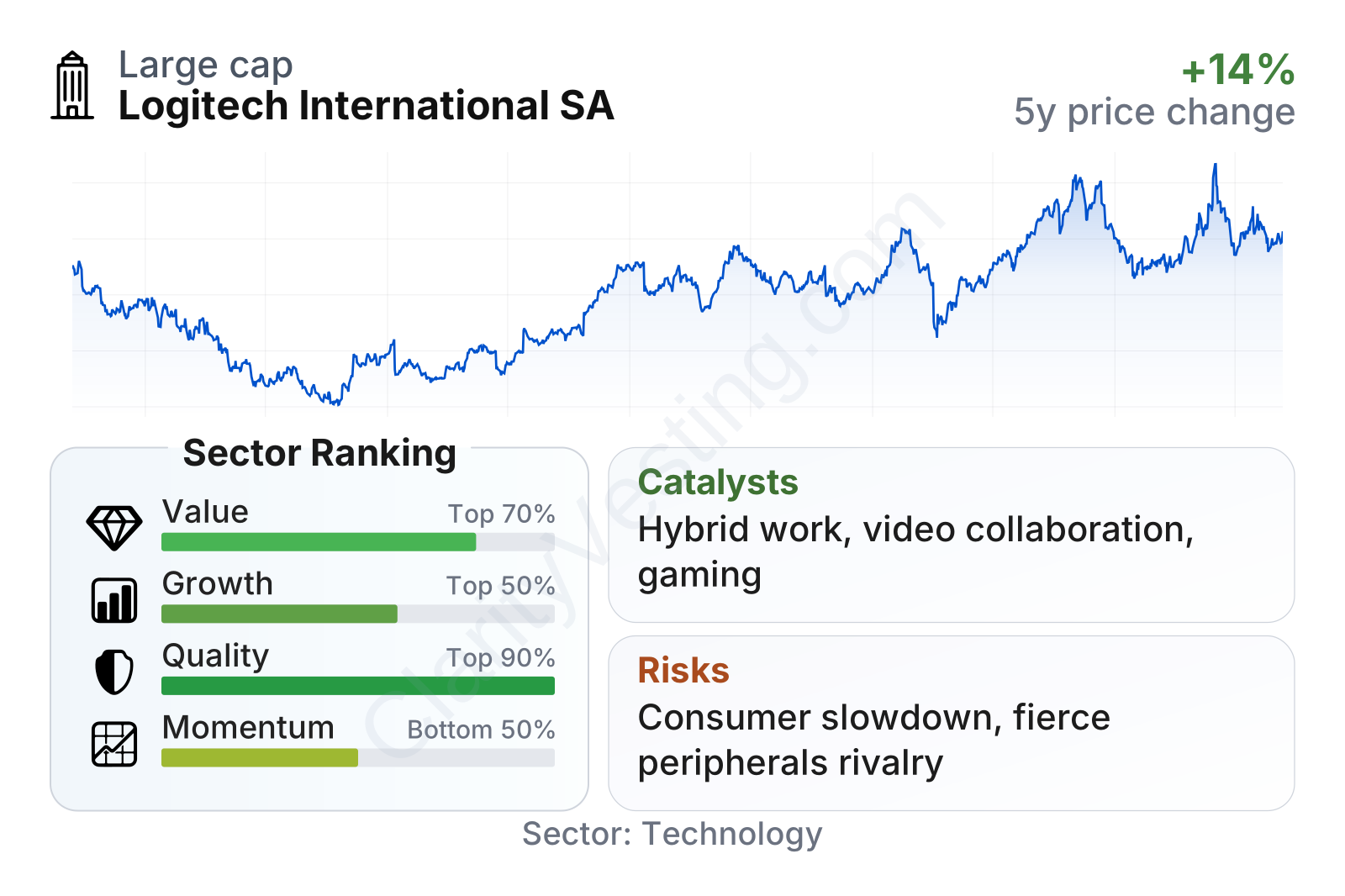
Logitech is a large but not mega-cap hardware company, and its shares have been volatile over the last several years: strong gains during demand rebounds were followed by sharp pullbacks, then another recovery. In the latest factor snapshot, the strongest area is quality, where Logitech ranks near the top of its sector. Returns on invested capital are far above typical peers, margins are clearly stronger than the industry median, and the balance sheet remains exceptionally conservative with very low leverage and net cash. Value metrics also look relatively favorable versus the sector, helped by a free cash flow yield and earnings multiple that compare well against many technology names. Growth is more mixed: recent revenue growth has turned positive again, but longer-term sales and earnings growth still reflect the post-pandemic reset. Price momentum is the weakest area, indicating the stock’s recent trading strength has been less impressive than that of many technology peers.
Growth
Logitech operates in several markets that still have long-term expansion potential, even if none of them grows in a straight line. Hybrid work supports demand for keyboards, mice, webcams, headsets, and video collaboration tools. Gaming remains a large global category with room for premium accessories and simulation products. Digital content creation also supports webcams, microphones, lighting, and streaming gear. In other words, Logitech is not tied to a single trend; it sits across multiple device categories connected to how people work, play, and create.
The company’s strategy for future growth is fairly logical. It focuses on categories where branded accessories matter, where design and user experience can justify premium pricing, and where products are replaced more often than core computers. Logitech also benefits from a broad installed base: someone who buys one accessory may later add another within the same ecosystem for office use, gaming, tablet productivity, or conferencing.
Revenue growth has clearly improved from the contraction period of 2022 and 2023. After several quarters of decline, Logitech returned to sustained year-over-year expansion, and recent quarters have been posting mid-single-digit to high-single-digit gains. That is not exceptional growth by technology standards, but it does suggest that the post-pandemic inventory correction and demand normalization are largely behind the company.
Cash generation is another encouraging point. Free cash flow climbed sharply from the depressed levels seen during the downturn, remained healthy even after a temporary pullback, and recently moved back close to the $1 billion level. For a hardware company, that is important because it shows Logitech is converting profits into actual cash rather than relying on aggressive accounting or debt-funded expansion.
Recent company announcements also support the growth case. Logitech has continued to refresh its enterprise collaboration lineup, expand AI-enabled workplace features around meeting rooms and peripherals, and deepen its presence in simulation gaming through products and brand partnerships. The company does not need a single transformative breakthrough for growth to continue; a steady flow of product upgrades and category share gains can be enough.
A meaningful catalyst is the enterprise side of the business. Video collaboration is smaller than the PC accessory categories, but it can carry higher strategic value because business customers can be sticky, purchase in larger deployments, and return for upgrades as offices modernize meeting spaces. If enterprise demand remains healthy, it can help make Logitech less dependent on consumer electronics cycles.
Risks
This article is for informational purposes only and does not constitute financial advice. Some content is AI-generated. See Disclaimer


