Stock Analysis · Littelfuse Inc (LFUS)
Overview
Littelfuse Inc. is an electronic components manufacturer focused on products that protect circuits, control power, and sense or switch electrical activity. In simple terms, the company makes many of the small but critical parts that help electronic systems operate safely and reliably. Its components are used in vehicles, industrial equipment, electronics, renewable energy systems, and electrical infrastructure.
The business is organized around three main segments. Based on the company’s recent annual reporting, revenue is led by transportation, followed by electronics, then industrial. Approximate revenue mix is:
- Transportation: about 44% of revenue. This includes automotive fuses, relays, switches, sensors, and other components used in passenger vehicles, commercial vehicles, and increasingly electrified vehicle platforms.
- Electronics: about 34% of revenue. This segment includes circuit protection devices, semiconductor products, and related parts used in consumer electronics, computing, telecom, and other electronic applications.
- Industrial: about 22% of revenue. This includes products for factory equipment, energy systems, HVAC, appliances, power distribution, and other industrial uses.
Littelfuse’s model is attractive because many of its parts are low-cost compared with the end product, but essential for safety and performance. That often gives suppliers staying power once a design is approved, especially in automotive and industrial systems where qualification cycles can be long.
The recent financial flow also shows how cyclical this business can be. Revenue and gross profit recovered after the 2023-2024 slowdown, but earnings were pressured by rising operating expenses and weaker margins before beginning to stabilize. That combination matters: the company still generates meaningful cash, yet profitability has been less consistent than its end-market positioning might suggest.
Key Figures
| Metric | Value | Sector ⓘ |
|---|---|---|
| Date | Sep 12, 2026 | |
| Context | ||
| Sector | Technology | |
| Industry | Electronic Components | |
| Market Cap ⓘ | $10.98B | |
| Beta ⓘ | 1.47 | |
Value (Cheapness) | ||
| P/E Ratio ⓘ | N/A | 29.51 |
| FCF Yield ⓘ | 4.03% | 4.25% |
| EBIT / EV ⓘ | 1.01% | 2.85% |
| PEG ⓘ | 1.91 | |
Growth (Business expansion) | ||
| Revenue Growth ⓘ | 20.40% | 15.40% |
| RPS Growth (5Y CAGR) ⓘ | 3.52% | 8.56% |
| EPS Growth (5Y CAGR) ⓘ | -20.69% | -11.88% |
| Margin Growth (5Y Trend) ⓘ | -15.70% | 0.46% |
| FCF Growth (5Y CAGR) ⓘ | 6.67% | 9.80% |
Quality (Business durability) | ||
| ROIC (Latest) ⓘ | 2.32% | 9.44% |
| ROIC (5Y Median) ⓘ | 13.09% | 8.30% |
| Net Debt / EBIT (Latest) ⓘ | 0.76 | 0.54 |
| Net Debt / EBIT (5Y Median) ⓘ | 1.06 | 0.44 |
| Operating Margin (Latest) ⓘ | 4.07% | 9.58% |
| Operating Margin (5Y Median) ⓘ | 15.27% | 8.25% |
| Debt to Equity (Latest) ⓘ | 27.09% | 33.33% |
| Profit Margin (Latest) ⓘ | -0.31% | 7.14% |
| Free Cash Flow (Latest) ⓘ | $442.39M | |
Momentum (Price trend) | ||
| 3Y Return ⓘ | +78.79% | +45.48% |
| 12M Return (excl. last month) ⓘ | +81.63% | +23.48% |
| 6M Return ⓘ | +33.17% | +20.93% |
| Price vs. 200-Day MA ⓘ | +15.73% | +7.43% |
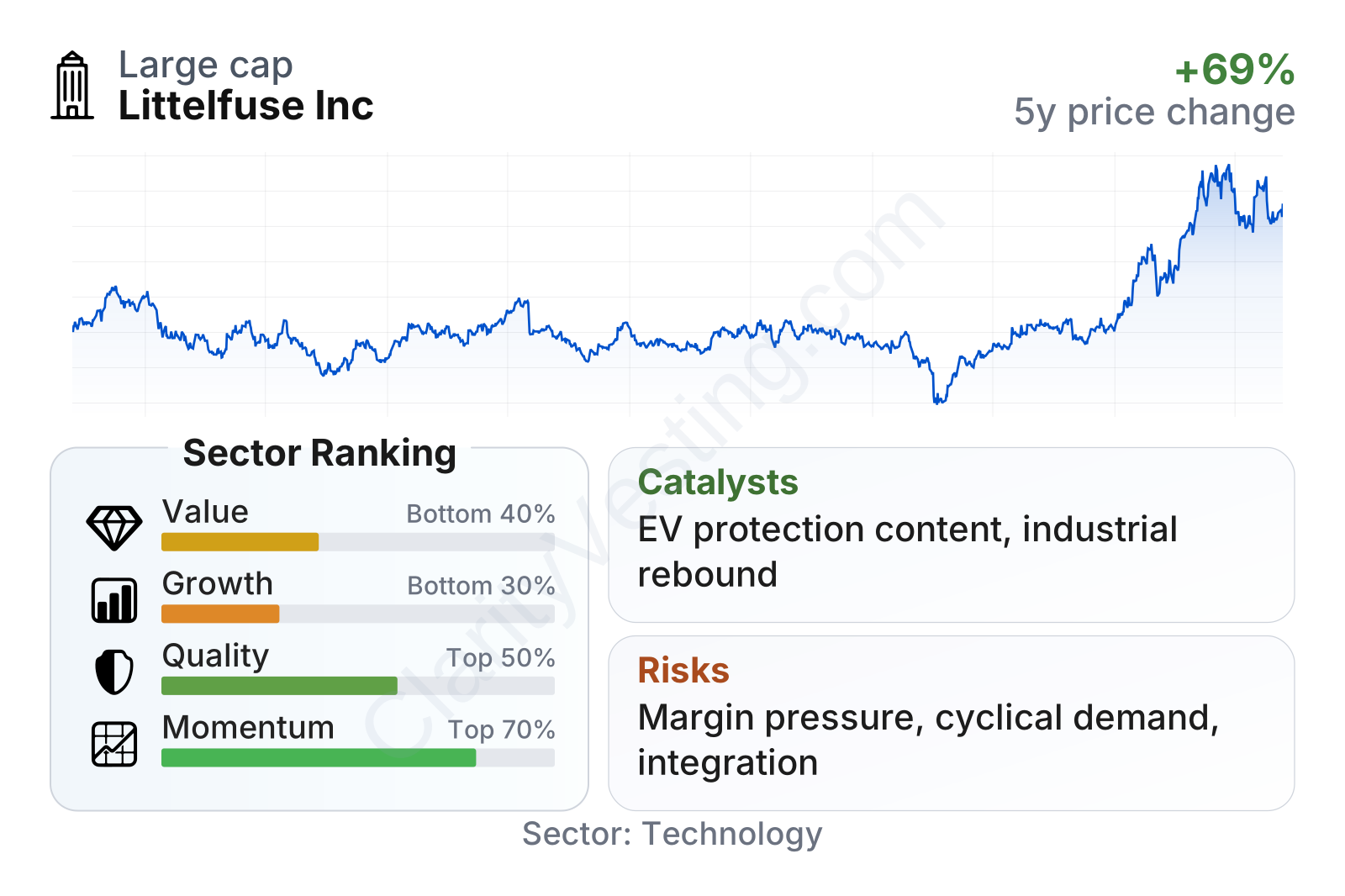
Littelfuse is a mid-sized technology hardware company with a market value around $11 billion and a stock that has been more volatile than the broader market, reflected in a beta near 1.5. The factor profile is mixed. Quality ranks around the middle of the sector, helped by a healthy balance sheet and solid long-term returns on invested capital, but recent profitability is notably weaker than its own history. Growth also ranks in the lower part of the sector because long-term revenue and earnings trends have been uneven even though the latest year-over-year sales growth has improved. Value does not stand out as cheap relative to the sector, and that matters because the stock’s recent price performance has been very strong.
The stock-price chart highlights a sharp rerating into 2026 after a weak patch in 2024 and 2025. That recovery suggests the market is increasingly pricing in a cyclical rebound rather than today’s depressed margin structure.
Growth
Littelfuse operates in markets with credible long-term demand drivers. Vehicle electrification increases the need for circuit protection, power control, and sensing components. Industrial automation, energy storage, renewable power systems, charging infrastructure, and higher electronics content across machines and devices also support demand. These are not short-lived themes; they are multi-year changes in how electrical systems are designed.
The company’s strategy broadly fits those trends. Littelfuse has built a portfolio across protection, power semiconductors, and electromechanical components, which gives it exposure to several layers of the electrical value chain instead of depending on only one niche. It also has a history of using acquisitions to expand product breadth and customer access. For a company of this size, that can be a useful way to deepen positions in specialized categories where qualification barriers matter.
Recent sales momentum has clearly improved. After a period of declining year-over-year revenue through much of 2023 and 2024, growth turned positive in 2025 and accelerated into 2026, recently reaching roughly 20%. That points to a real recovery in demand and suggests the company is benefiting from a better mix of automotive, electronics, and industrial orders. The challenge is that one strong year does not erase the more modest longer-term growth record, so the key question is whether this rebound becomes durable.
Cash generation remains one of the more constructive parts of the picture. Free cash flow has generally stayed positive and has recently rebounded toward the upper end of its recent range, with trailing twelve-month free cash flow above $400 million. That gives the company room to fund capital spending, maintain research and development, and preserve flexibility for acquisitions or balance-sheet management even when earnings are under pressure.
One important catalyst is the rising electrical complexity inside vehicles, especially hybrids, electric vehicles, and advanced driver systems, all of which need more protection and control components. Another is the gradual normalization after the industrial and electronics downturn that affected many component suppliers in 2023 and 2024. If end-market volumes continue to recover while costs are brought back under control, revenue growth could translate into a much stronger profit recovery than recent headline margins imply.
Risks
This article is for informational purposes only and does not constitute financial advice. Some content is AI-generated. See Disclaimer


