Stock Analysis · Klaviyo Inc (KVYO)
Overview
Klaviyo is a software company that helps businesses manage customer relationships and marketing. Its platform is used mainly by consumer brands, especially online merchants, to collect customer data, segment audiences, send personalized emails and text messages, automate campaigns, and measure results. In simple terms, Klaviyo aims to be the system that helps a brand know who its customers are, what they are likely to buy, and when to contact them.
The business model is mostly subscription-based and usage-based. Customers typically pay for access to the platform according to the number of profiles stored and the volume of messages sent. Klaviyo has also been expanding beyond email into SMS and customer service-related tools, which broadens the amount each customer can spend on the platform.
Based on company filings, revenue is overwhelmingly generated from the sale of Klaviyo’s software platform and related services, with the core drivers coming from marketing automation and customer communications.
- Subscription and platform revenue: approximately 95%+ of total revenue. This includes access to Klaviyo’s customer data and marketing automation platform, email campaign tools, analytics, segmentation, and workflow automation.
- Usage-related messaging revenue: included within platform revenue and meaningful but not separately disclosed. This mainly reflects SMS and other message delivery activity tied to customer campaigns.
- Professional services and other revenue: low single-digit share. This generally includes onboarding, support, and implementation-related services where applicable.
Klaviyo’s financial profile shows a common software pattern: high gross margins, strong revenue expansion, and improving operating discipline, but still only recently approaching consistent profitability on a net income basis. Over the last several years, revenue has grown rapidly while losses have narrowed substantially, suggesting the company is moving from scale-building toward efficiency.
The long-term trend is notable: revenue has more than quadrupled since 2021, gross profit has scaled with it, and operating losses have come down sharply from very large levels in 2023. Research and development remains a major expense, which fits a company still investing heavily in product depth, while selling and administrative costs have become more controlled relative to revenue.
Key Figures
| Metric | Value | Sector ⓘ |
|---|---|---|
| Date | Sep 12, 2026 | |
| Context | ||
| Sector | Technology | |
| Industry | Software - Application | |
| Market Cap ⓘ | $4.90B | |
| Beta ⓘ | 0.57 | |
Value (Cheapness) | ||
| P/E Ratio ⓘ | N/A | 29.51 |
| FCF Yield ⓘ | 4.99% | 4.25% |
| EBIT / EV ⓘ | -0.10% | 2.85% |
| PEG ⓘ | N/A | |
Growth (Business expansion) | ||
| Revenue Growth ⓘ | 26.40% | 15.40% |
| RPS Growth (5Y CAGR) ⓘ | 38.47% | 8.56% |
| EPS Growth (5Y CAGR) ⓘ | -7.58% | -11.88% |
| Margin Growth (5Y Trend) ⓘ | N/A | 0.46% |
| FCF Growth (5Y CAGR) ⓘ | N/A | 9.80% |
Quality (Business durability) | ||
| ROIC (Latest) ⓘ | -0.17% | 9.44% |
| ROIC (5Y Median) ⓘ | N/A | 8.30% |
| Net Debt / EBIT (Latest) ⓘ | N/A | 0.54 |
| Net Debt / EBIT (5Y Median) ⓘ | N/A | 0.44 |
| Operating Margin (Latest) ⓘ | -0.35% | 9.58% |
| Operating Margin (5Y Median) ⓘ | -10.39% | 8.25% |
| Debt to Equity (Latest) ⓘ | 11.78% | 33.33% |
| Profit Margin (Latest) ⓘ | 0.49% | 7.14% |
| Free Cash Flow (Latest) ⓘ | $244.44M | |
Momentum (Price trend) | ||
| 3Y Return ⓘ | N/A | +45.48% |
| 12M Return (excl. last month) ⓘ | -43.11% | +23.48% |
| 6M Return ⓘ | -15.10% | +20.93% |
| Price vs. 200-Day MA ⓘ | -18.94% | +7.43% |
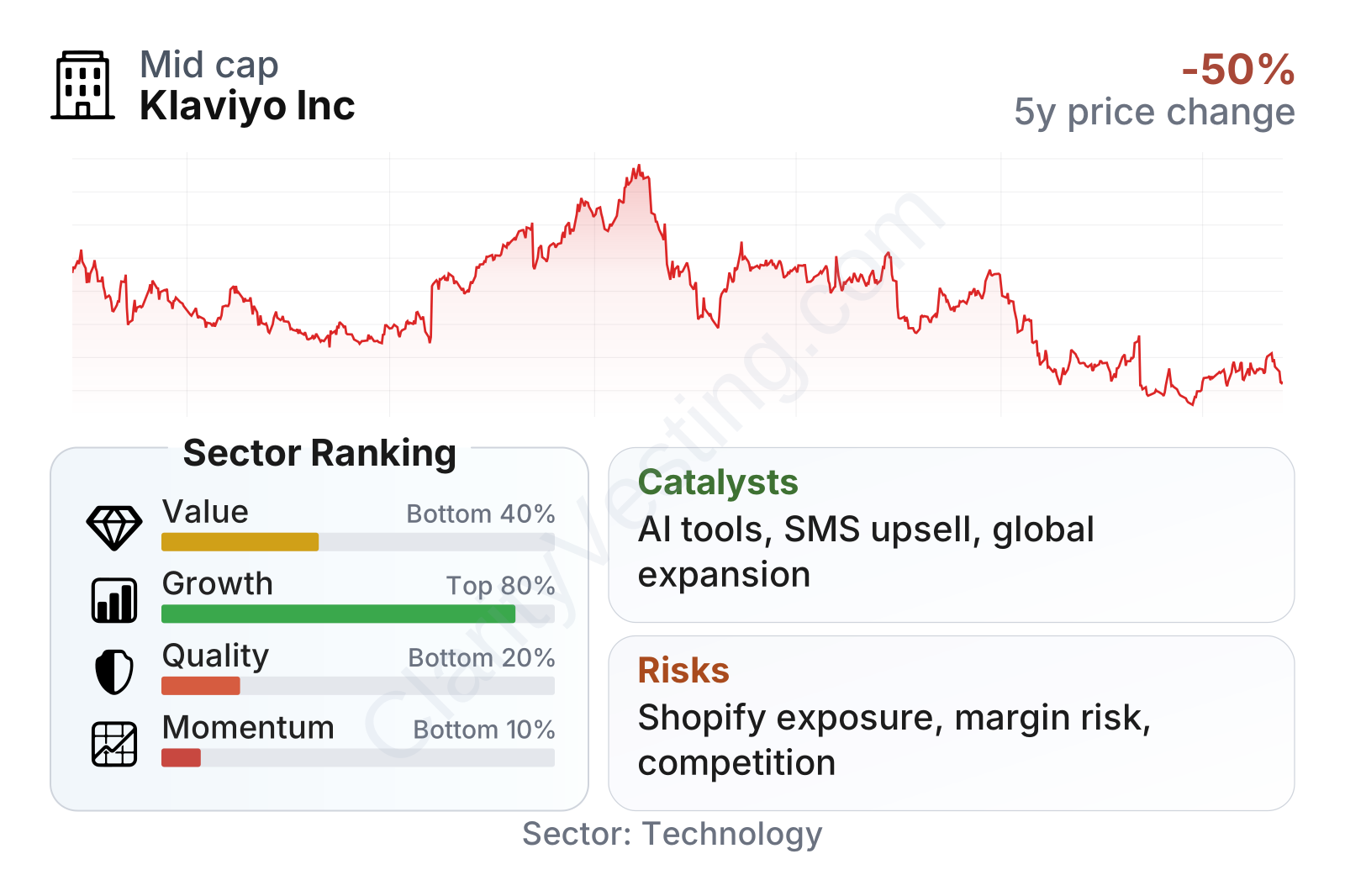
Klaviyo sits in an unusual position. Growth is strong relative to most software peers, while quality metrics still look weak because profitability remains thin and returns on capital are not yet established. Free cash flow generation is better than the earnings line suggests, and leverage is low. Market performance, however, has been weak recently, with the stock far below its earlier highs and trading below its longer-term trend.
Growth
Klaviyo operates in a large and still expanding area of software: digital marketing automation, customer data, and personalized commerce communication. This market benefits from durable trends such as the shift from physical retail to online and omnichannel selling, the growing importance of first-party customer data, and rising demand for measurable marketing tools. As privacy rules and platform changes make third-party targeting harder, brands increasingly want direct relationships with their own customers. That plays directly into Klaviyo’s positioning.
The company’s strategy appears coherent for future growth. Rather than trying to serve every kind of enterprise equally, Klaviyo has built a strong identity around consumer brands and commerce-oriented businesses. Its close integration with e-commerce platforms, especially Shopify, has historically helped customer acquisition and product relevance. This focus can make the platform easier to adopt for merchants that want revenue-driving campaigns rather than broad enterprise software complexity.
Revenue growth has remained strong, although the pace has moderated from the low-to-mid 30% range toward the mid-20% range more recently. Even with that slowdown, growth still remains well above the sector median, which suggests Klaviyo is still taking share or benefiting from a category with healthy demand. The more important point for long-term analysis is that growth has not collapsed as the company has become larger.
Another positive sign is cash generation.
Free cash flow has risen meaningfully over the last two years, reaching well above $200 million on a trailing basis. That matters because it shows the business is not simply growing through heavy cash burn. Klaviyo is demonstrating that customers can be acquired and retained while the company still produces cash, which gives it more flexibility to invest in product development, international expansion, and adjacent offerings.
A major catalyst is product expansion beyond email. Klaviyo has been building a broader customer relationship platform that includes SMS, analytics, and customer service functions. If customers adopt more modules, revenue per client can rise without needing the same pace of new customer additions. Another catalyst is international growth, since many smaller and mid-sized brands outside the U.S. still use fragmented tools.
Recent company communications have also emphasized artificial intelligence features embedded into campaign creation, personalization, and workflow optimization. For a platform built around customer data and marketing timing, AI can improve user productivity and campaign effectiveness in a practical way, which may strengthen retention and expansion rather than serving as a purely promotional feature.
Risks
This article is for informational purposes only and does not constitute financial advice. Some content is AI-generated. See Disclaimer


