Stock Analysis · Knowles Cor (KN)
Overview
Knowles Corporation is a specialized electronic components company that designs high-performance parts used in demanding applications where size, precision, reliability, and signal quality matter. After reshaping its portfolio in recent years, the business is now centered on capacitors and radio-frequency components rather than the consumer microphone activities that once defined the company. Its products are commonly used in defense systems, medical devices, industrial equipment, electric vehicles, communications infrastructure, and aerospace applications.
The company’s revenue base is now more concentrated and easier to understand than it was a few years ago. Based on recent company disclosures, the main sources of revenue are approximately:
- Precision Devices: about 70% to 75% of revenue. This segment includes high-performance capacitors, filtering products, and related components used in medical, defense, industrial, and electrification markets.
- MedTech & Specialty Audio: about 25% to 30% of revenue. This business includes balanced armature speakers and other specialty audio and hearing-health related components, serving medical and niche audio applications.
This mix matters for long-term analysis because it shifts Knowles away from more commoditized consumer electronics exposure and toward applications where customers often care more about performance qualification, product longevity, and reliability than about the lowest possible price.
There is also a visible improvement in the business structure over time. Revenue dropped sharply after prior portfolio changes, but operating profitability has remained positive and has recently recovered. Gross profit has been rebuilding, research and development spending remains meaningful, and 2025 showed a return to positive net income after periods distorted by large charges.
The business has become smaller than it was several years ago, but it also appears more focused. Recent years show steadier operating income conversion, while net income has been much more volatile because of non-operating items and charges rather than a complete breakdown in the core business.
Key Figures
| Metric | Value | Sector ⓘ |
|---|---|---|
| Date | Sep 12, 2026 | |
| Context | ||
| Sector | Technology | |
| Industry | Electronic Components | |
| Market Cap ⓘ | $3.02B | |
| Beta ⓘ | 1.59 | |
Value (Cheapness) | ||
| P/E Ratio ⓘ | 42.66 | 29.51 |
| FCF Yield ⓘ | 2.10% | 4.25% |
| EBIT / EV ⓘ | 2.95% | 2.85% |
| PEG ⓘ | 0.43 | |
Growth (Business expansion) | ||
| Revenue Growth ⓘ | 14.30% | 15.40% |
| RPS Growth (5Y CAGR) ⓘ | -7.21% | 8.56% |
| EPS Growth (5Y CAGR) ⓘ | -21.52% | -11.88% |
| Margin Growth (5Y Trend) ⓘ | -1.35% | 0.46% |
| FCF Growth (5Y CAGR) ⓘ | -11.50% | 9.80% |
Quality (Business durability) | ||
| ROIC (Latest) ⓘ | 8.76% | 9.44% |
| ROIC (5Y Median) ⓘ | 6.31% | 8.30% |
| Net Debt / EBIT (Latest) ⓘ | 1.08 | 0.54 |
| Net Debt / EBIT (5Y Median) ⓘ | 1.31 | 0.44 |
| Operating Margin (Latest) ⓘ | 14.71% | 9.58% |
| Operating Margin (5Y Median) ⓘ | 12.36% | 8.25% |
| Debt to Equity (Latest) ⓘ | 18.88% | 33.33% |
| Profit Margin (Latest) ⓘ | 10.63% | 7.14% |
| Free Cash Flow (Latest) ⓘ | $63.50M | |
Momentum (Price trend) | ||
| 3Y Return ⓘ | +160.18% | +45.48% |
| 12M Return (excl. last month) ⓘ | +89.60% | +23.48% |
| 6M Return ⓘ | +47.62% | +20.93% |
| Price vs. 200-Day MA ⓘ | +20.32% | +7.43% |
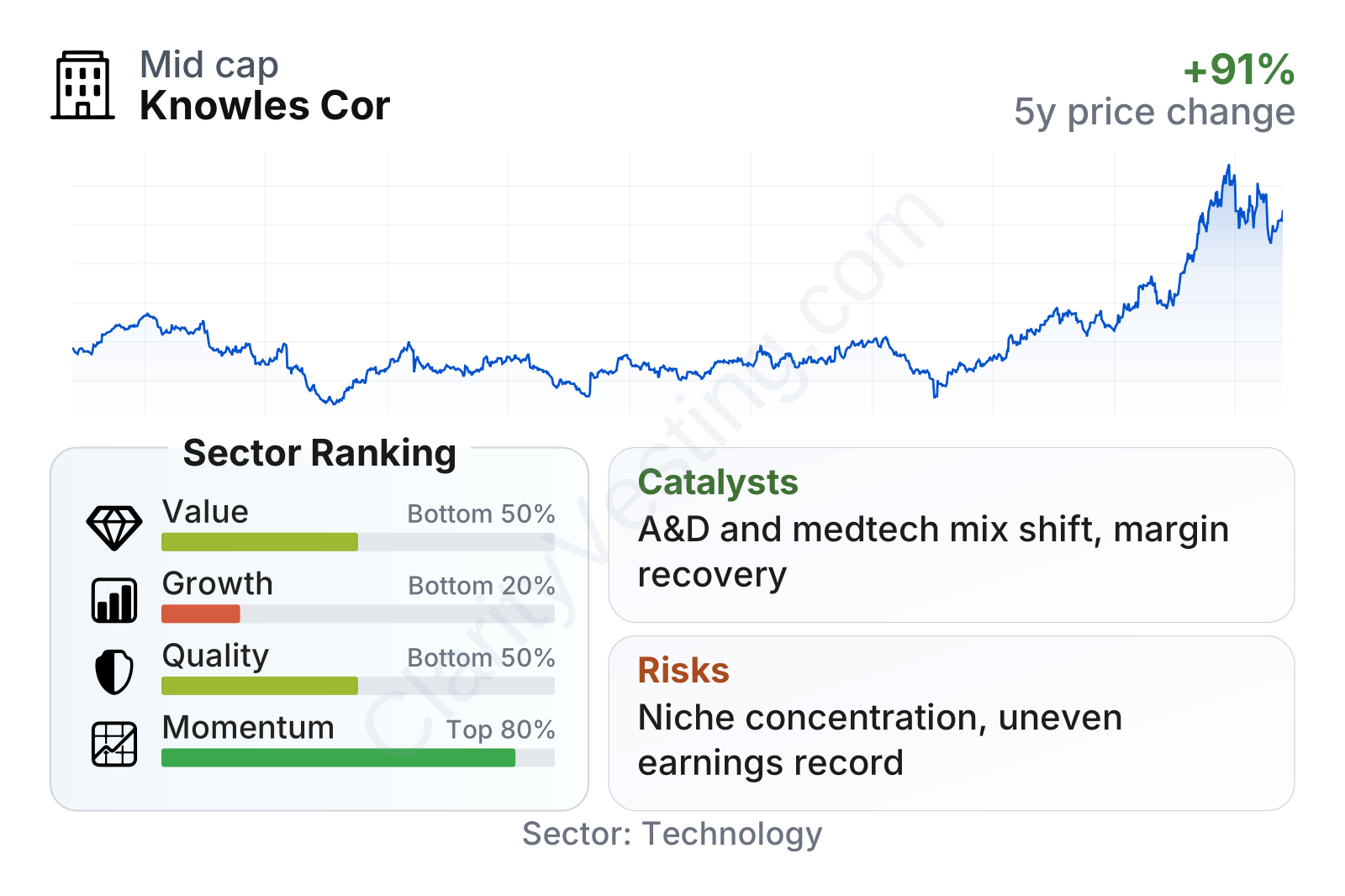
Knowles sits in a mixed position. Profitability is better than the sector median on operating margin and net margin, and leverage remains relatively moderate with debt-to-equity below many peers. On the other hand, growth metrics over a five-year view are weak because the company has been reshaped by divestitures and uneven demand. Market performance has been strong recently, but valuation measures look less conservative after that rally.
The stock’s recent path has been volatile but clearly stronger over the last year. That is consistent with a company moving from a restructuring period toward a cleaner earnings profile, even if the longer operating history still shows disruption.
Growth
Knowles operates in parts of the electronics market that have solid long-term demand drivers. Defense electronics, medical technology, industrial automation, electrification, and communications infrastructure all require specialized components that can withstand harsh environments or meet exact performance specifications. These are generally better long-term niches than low-end consumer hardware because product cycles can be longer and qualification barriers can be higher.
The current strategy also makes industrial sense. Management has spent the last few years simplifying the portfolio and emphasizing higher-value applications. That approach can support more durable margins if execution holds. Instead of trying to compete broadly across commodity electronics, Knowles is concentrating on segments where design expertise and customer qualification matter more.
Recent sales trends are encouraging after a long weak patch. Year-over-year revenue moved from steep declines in 2023 to renewed expansion through late 2024, 2025, and into 2026, with recent quarterly growth running in the low-to-mid teens. That does not erase the weak five-year record, but it does suggest that the company is currently on a better trajectory than the longer history implies.
Cash generation remains an important support for the growth case, although it has softened from earlier highs. Trailing free cash flow is still positive, but it has moved down from levels above $100 million to around the mid-$60 million range more recently. In practical terms, the company is still producing cash, but the cushion is not as large as it was during stronger periods.
A notable catalyst is the company’s repositioning toward aerospace and defense, electrification, and medical end markets through its Precision Devices activities. If those programs continue to expand, Knowles could benefit from a mix shift toward products with stronger margins and longer production lives. Another important factor is that investors have recently started to reward that repositioning, which suggests the market sees clearer earnings potential than it did during the restructuring phase.
Risks
This article is for informational purposes only and does not constitute financial advice. Some content is AI-generated. See Disclaimer


