Stock Analysis · Juventus Football Club S.p.A (JVTSF)
Overview
Juventus Football Club S.p.A. is one of the most recognized soccer clubs in Europe. Based in Turin, Italy, the company runs a professional football team, manages a global sports brand, and monetizes fan interest through media rights, sponsorships, matchday activity, and player trading. Unlike a typical entertainment company, Juventus’ results depend not only on brand strength and commercial execution, but also on sporting performance, league participation, and the transfer market.
Its business model is built around a mix of recurring and variable income. Broadcast rights and commercial partnerships are usually the largest pillars, while ticketing and player trading can make annual results more volatile. In years with stronger sporting participation and better commercial momentum, revenue can expand quickly; when performance weakens or European competition is missed, revenue can fall just as fast.
Based on recent annual reporting patterns, Juventus’ main revenue sources can be summarized approximately as follows:
- Broadcasting and media rights: often around 35% to 45% of revenue, driven by Serie A, UEFA distributions, and other audiovisual agreements.
- Sponsorships, advertising, and commercial deals: often around 25% to 35%, supported by shirt sponsors, technical partners, licensing, and broader brand partnerships.
- Player registration rights and trading-related income: often around 15% to 25%, depending heavily on transfer activity and accounting gains on player sales.
- Matchday and stadium-related revenue: often around 10% to 15%, including ticket sales, hospitality, and stadium services.
- Merchandising and other revenue: usually a smaller share, but still important for fan monetization and brand reach.
What stands out is that Juventus is not just selling entertainment content on the field. It is also managing a portfolio of intangible assets: player contracts, brand value, media visibility, and global fan engagement. That combination can create upside in successful seasons, but it also makes the company less predictable than many long-term listed businesses.
The multi-year income flow shows how sensitive Juventus is to swings in revenue and cost structure. Revenue recovered strongly in the latest fiscal year, and losses narrowed sharply, but operating profitability has still been inconsistent because wages, transfer amortization, and financing costs absorb a large share of the business.
Key Figures
| Metric | Value | Sector ⓘ |
|---|---|---|
| Date | Sep 12, 2026 | |
| Context | ||
| Sector | Communication Services | |
| Industry | Entertainment | |
| Market Cap ⓘ | $1.00B | |
| Beta ⓘ | 0.60 | |
Value (Cheapness) | ||
| P/E Ratio ⓘ | N/A | 18.61 |
| FCF Yield ⓘ | 17.06% | 13.68% |
| EBIT / EV ⓘ | -13.45% | 4.54% |
| PEG ⓘ | N/A | |
Growth (Business expansion) | ||
| Revenue Growth ⓘ | -9.10% | 5.40% |
| RPS Growth (5Y CAGR) ⓘ | -6.07% | 4.62% |
| EPS Growth (5Y CAGR) ⓘ | N/A | -18.01% |
| Margin Growth (5Y Trend) ⓘ | N/A | 1.10% |
| FCF Growth (5Y CAGR) ⓘ | N/A | 5.88% |
Quality (Business durability) | ||
| ROIC (Latest) ⓘ | N/A | 8.38% |
| ROIC (5Y Median) ⓘ | -39.40% | 8.32% |
| Net Debt / EBIT (Latest) ⓘ | N/A | 1.99 |
| Net Debt / EBIT (5Y Median) ⓘ | N/A | 2.94 |
| Operating Margin (Latest) ⓘ | -19.42% | 14.89% |
| Operating Margin (5Y Median) ⓘ | -42.79% | 12.96% |
| Debt to Equity (Latest) ⓘ | 436.11% | 59.59% |
| Profit Margin (Latest) ⓘ | -16.20% | 8.77% |
| Free Cash Flow (Latest) ⓘ | $170.78M | |
Momentum (Price trend) | ||
| 3Y Return ⓘ | -37.29% | +46.64% |
| 12M Return (excl. last month) ⓘ | -24.00% | +2.16% |
| 6M Return ⓘ | -7.69% | +5.05% |
| Price vs. 200-Day MA ⓘ | -18.82% | +2.88% |
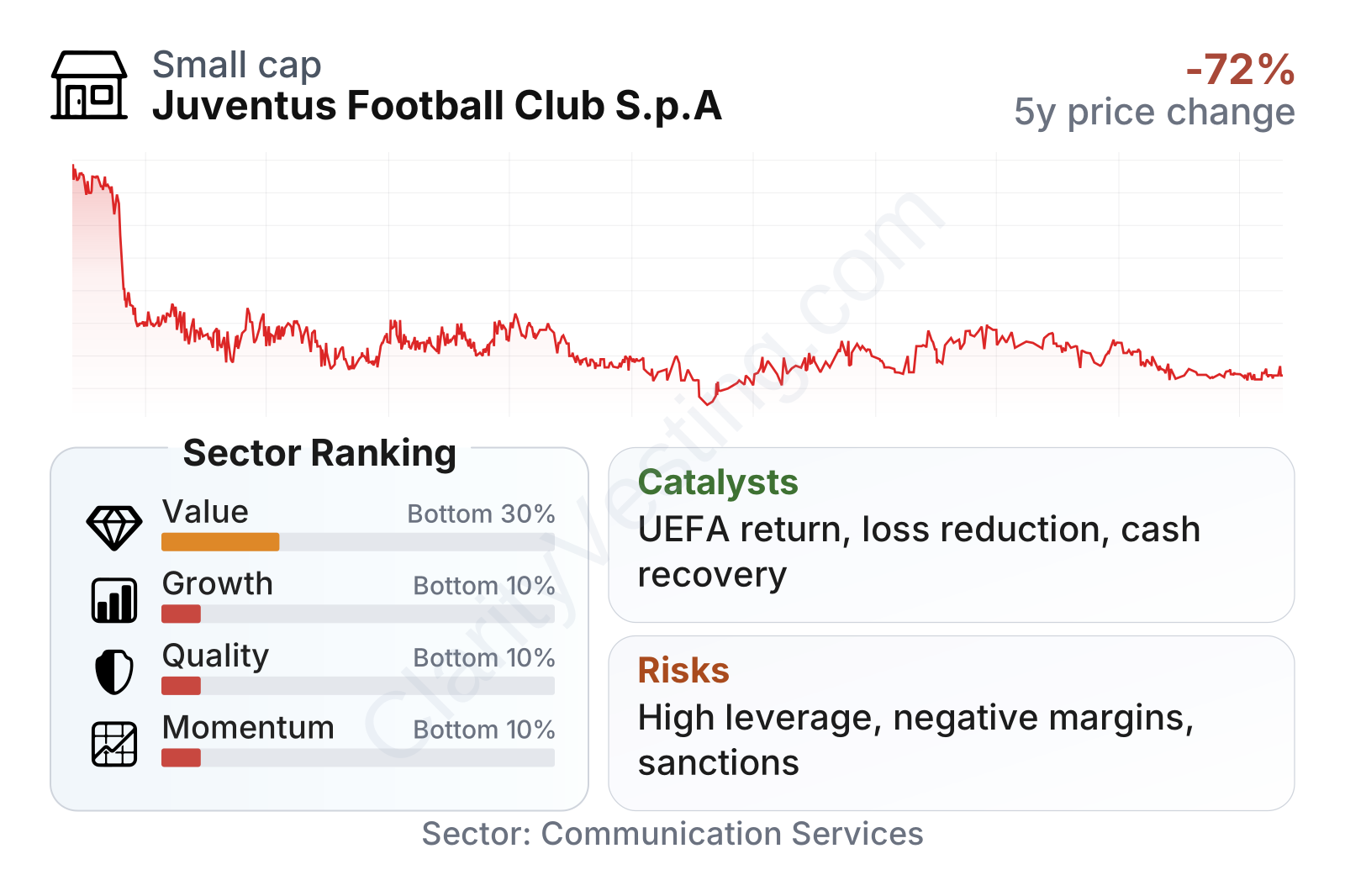
The broad picture is mixed. Market capitalization is around the $1 billion mark, making Juventus a relatively small public company by U.S. market standards. On the positive side, cash generation has improved meaningfully and free cash flow looks stronger than the sector median. On the weaker side, the company ranks near the bottom of its sector on growth, profitability, and balance-sheet strength. Price performance has also been notably weaker than the wider Communication Services group over short and multi-year periods.
One number deserves special attention: debt relative to equity is far above normal sector levels, while margins remain negative. That means current financial improvement is real, but the business has not yet established the kind of stable earnings profile that usually supports premium long-term valuations.
Growth
European football remains a large and growing entertainment market, supported by global media distribution, digital fan engagement, streaming, tourism, and sponsorship demand from international brands. Elite clubs with strong identities can still grow through overseas audiences, premium partnerships, content monetization, women’s football, and better stadium economics. In that sense, Juventus operates in a sector with long-term relevance and global reach.
For Juventus specifically, the growth case depends less on industry expansion alone and more on rebuilding sporting and financial consistency. The club still has one of the most valuable brands in Italian football and broad international recognition. If management can convert that brand into steadier commercial growth while maintaining more disciplined player costs, the earnings profile could improve materially from depressed levels.
The recent growth pattern has been uneven rather than steady. Revenue has moved sharply from year to year, reflecting how exposed the club is to competition results, transfer activity, and regulatory developments. That volatility matters because long-term compounding tends to favor businesses with more dependable top-line expansion.
A more encouraging sign is cash flow. Even with accounting losses, recent free cash flow has improved substantially, suggesting working-capital movements, transfer timing, and operating recovery have helped liquidity. For a football club, that matters because cash flexibility can support squad investment, debt servicing, and day-to-day resilience during weaker seasons.
One of the clearest catalysts ahead is renewed participation in major European competition. UEFA tournaments do not just add prize money; they also increase visibility, commercial attractiveness, and matchday demand. Another possible tailwind is continued normalization after prior years of disruption and sanctions, which could allow management to focus more on operations and less on crisis response.
Recent company updates have also pointed to a much narrower net loss in the latest fiscal year compared with the previous one, alongside higher revenue. That does not mean the turnaround is complete, but it does suggest Juventus is moving away from the severe financial strain seen in earlier periods.
Risks
This article is for informational purposes only and does not constitute financial advice. Some content is AI-generated. See Disclaimer


