Stock Analysis · Imax Corp (IMAX)
Overview
IMAX Corp. is an entertainment technology company best known for its premium large-format movie experience. In simple terms, it helps theaters offer a higher-end version of going to the movies through proprietary projection systems, sound, screens, theater design, and the IMAX brand. The company also works with filmmakers and studios to optimize movies for its format and earns money when those movies play in IMAX theaters around the world.
Its business is more asset-light than a traditional theater chain. IMAX does not mainly rely on owning large numbers of cinemas. Instead, it provides technology, licenses its systems, supports operations, and shares in box office revenue generated on its network. That gives it exposure to moviegoing demand without the full cost structure of a large theater operator.
Based on recent annual reporting, IMAX’s revenue mix is centered on three main buckets:
- Content Solutions and Technologies: approximately 45% to 55% of revenue. This includes theater system sales, leasing, maintenance, and technology-related services tied to the IMAX network.
- Content and Enhanced Experiences: approximately 25% to 35% of revenue. This includes box office sharing, distribution-related activity, and other revenue connected to films shown in IMAX theaters.
- Other Theater and Brand-Related Revenue: approximately 15% to 25% of revenue. This can include theater maintenance, joint revenue arrangements, and other ancillary items connected to the installed base and brand ecosystem.
The broad pattern matters more than small yearly shifts: IMAX combines recurring revenue from its theater network with film-driven upside when major releases perform well. Over the last several years, revenue has recovered from pandemic-era disruption, while profitability has improved as the company has scaled its network and controlled operating costs.
The long-term financial picture shows a recovery that has turned into operating leverage. Revenue has climbed meaningfully since 2021, gross profit has expanded faster than costs, and operating income has improved more clearly than total expenses, suggesting the model benefits when the box office and system activity strengthen.
Key Figures
| Metric | Value | Sector ⓘ |
|---|---|---|
| Date | Sep 12, 2026 | |
| Context | ||
| Sector | Communication Services | |
| Industry | Entertainment | |
| Market Cap ⓘ | $2.86B | |
| Beta ⓘ | 0.40 | |
Value (Cheapness) | ||
| P/E Ratio ⓘ | 70.39 | 18.61 |
| FCF Yield ⓘ | 4.42% | 13.68% |
| EBIT / EV ⓘ | 2.44% | 4.54% |
| PEG ⓘ | 0.89 | |
Growth (Business expansion) | ||
| Revenue Growth ⓘ | 12.20% | 5.40% |
| RPS Growth (5Y CAGR) ⓘ | 14.41% | 4.62% |
| EPS Growth (5Y CAGR) ⓘ | 73.44% | -18.01% |
| Margin Growth (5Y Trend) ⓘ | 10.13% | 1.10% |
| FCF Growth (5Y CAGR) ⓘ | N/A | 5.88% |
Quality (Business durability) | ||
| ROIC (Latest) ⓘ | 8.64% | 8.38% |
| ROIC (5Y Median) ⓘ | 7.22% | 8.32% |
| Net Debt / EBIT (Latest) ⓘ | 1.71 | 1.99 |
| Net Debt / EBIT (5Y Median) ⓘ | 2.70 | 2.94 |
| Operating Margin (Latest) ⓘ | 17.21% | 14.89% |
| Operating Margin (5Y Median) ⓘ | 13.00% | 12.96% |
| Debt to Equity (Latest) ⓘ | 79.42% | 59.59% |
| Profit Margin (Latest) ⓘ | 9.84% | 8.77% |
| Free Cash Flow (Latest) ⓘ | $126.39M | |
Momentum (Price trend) | ||
| 3Y Return ⓘ | +179.90% | +46.64% |
| 12M Return (excl. last month) ⓘ | +100.31% | +2.16% |
| 6M Return ⓘ | +35.97% | +5.05% |
| Price vs. 200-Day MA ⓘ | +30.00% | +2.88% |
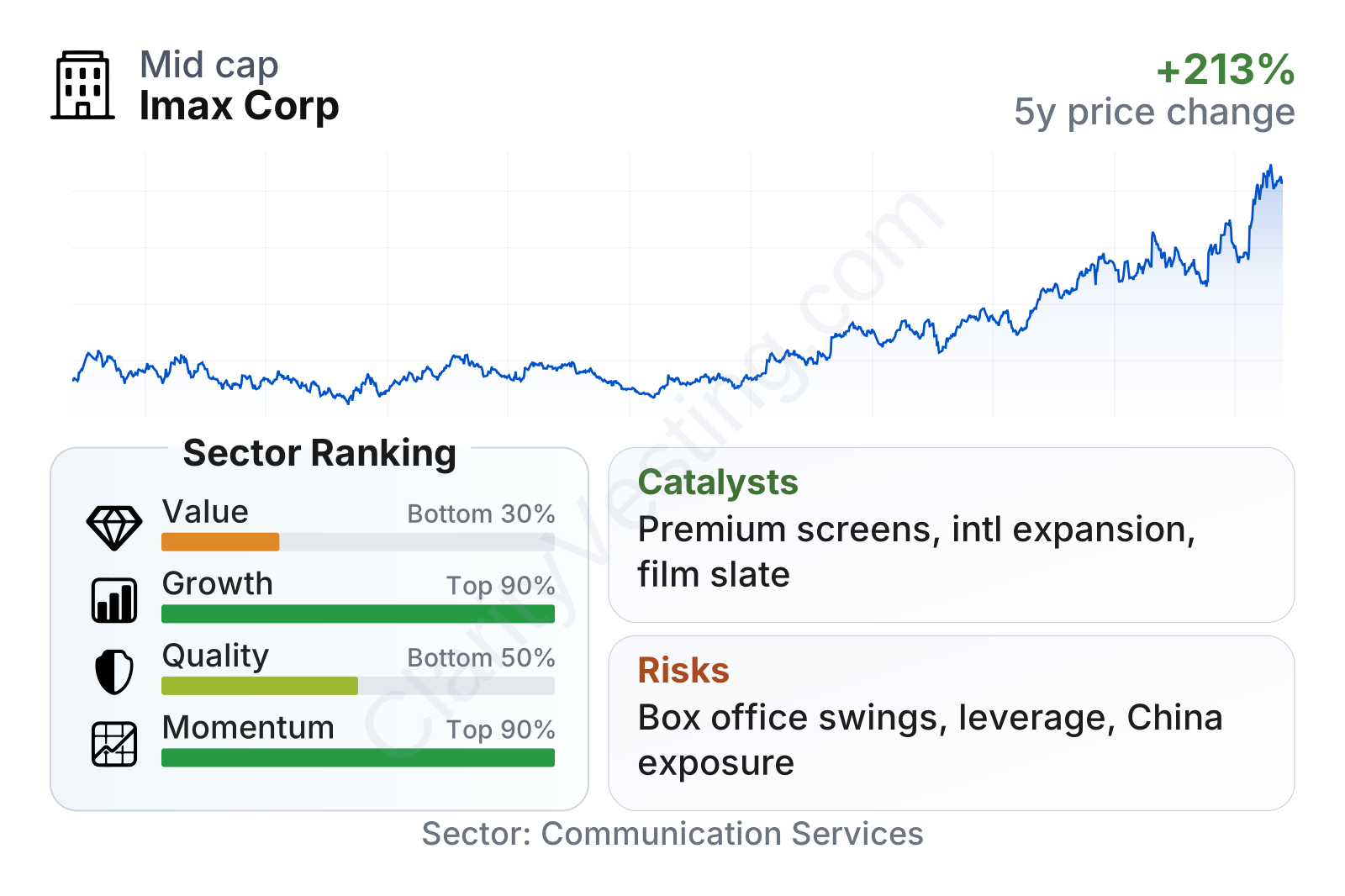
IMAX is a mid-sized entertainment company with a market value in the low single-digit billions and a relatively low beta, meaning its share price has historically moved less violently than many stocks. The factor profile is unusual: growth and market momentum rank very strongly against the sector, while value looks weak because the earnings multiple is far above the sector median. Quality is mixed rather than poor across the board, with margins and returns around or slightly above sector norms in some areas, but leverage somewhat heavier than average.
The stock’s multi-year climb has been strong, especially since late 2024, reflecting better business performance and improving confidence in premium cinema demand. At the same time, the table suggests the market is already recognizing that progress. In other words, operating trends have improved, but the stock is no longer being valued like a recovery situation.
Growth
IMAX operates in a part of entertainment that still has a clear role despite the growth of streaming. Premium theatrical experiences have held up better than standard moviegoing in many markets because audiences are more willing to leave home for films that feel visually and sonically distinctive. That dynamic supports IMAX’s positioning: it is not trying to compete with every screen, but to capture the most valuable moviegoing occasions.
The company’s strategy for future growth is understandable and coherent. It is expanding its global network, deepening relationships with major studios and filmmakers, and benefiting from demand for premium formats in both Hollywood and local-language cinema, especially in international markets. The model also has a useful mix of recurring and variable revenue. A larger installed base of systems can support steadier technology and maintenance income, while strong film slates can add upside through box office participation.
Revenue growth has not been smooth from quarter to quarter, which is normal for a business tied to film release timing. Still, the broader direction has been favorable. Recent year-over-year growth has been above the sector median, and the longer-term revenue-per-share trend also stands out as much stronger than typical peers in Communication Services.
Cash generation has improved sharply from the uneven levels seen during the industry recovery. Free cash flow has moved from negative or modestly positive territory to well above $100 million on a trailing basis, a meaningful sign that earnings are increasingly converting into cash. That matters because it gives the company more flexibility for debt management, technology investment, and network expansion.
A key catalyst is the continued global shift toward premium large-format screens. Studios increasingly reserve major franchise titles, event movies, and visually ambitious releases for premium formats because those screenings often generate higher revenue per screen. IMAX also benefits when local-language blockbusters succeed in markets such as China, India, Japan, and parts of Europe and the Middle East, since its network is international rather than purely U.S.-based.
Another important tailwind is the company’s filmmaker and studio integration. IMAX has built a recognizable premium brand, and some directors specifically use IMAX cameras or expanded aspect ratios. That creates a stronger reason for audiences to choose an IMAX screening instead of an ordinary one, which is a meaningful advantage in a theatrical market where differentiation matters.
Risks
This article is for informational purposes only and does not constitute financial advice. Some content is AI-generated. See Disclaimer


