Stock Analysis · InterContinental Hotels Group PLC (ICHGF)
Overview
InterContinental Hotels Group PLC, usually known as IHG, is one of the world’s largest hotel companies. It operates mainly as a brand owner, franchisor, and manager rather than as a heavy owner of hotel real estate. That distinction matters for long-term analysis because it means the business is built more on fees, brand strength, reservation systems, and hotel-owner relationships than on directly owning large numbers of buildings.
IHG’s brand portfolio spans luxury, premium, and mainstream lodging. Its best-known names include InterContinental, Kimpton, Regent, Six Senses, Hotel Indigo, Crowne Plaza, voco, Holiday Inn, Holiday Inn Express, avid, and Staybridge Suites. This wide spread helps the company serve different price points and travel needs, from business trips to resort stays and extended-stay demand.
The company’s revenue is mainly generated from hotel-related fees and system services. Based on recent annual reporting structure, the mix is broadly concentrated in the following areas:
- Franchise fees and related charges — the largest source, likely around half to three-fifths of total revenue. These fees come from independently owned hotels using IHG brands, systems, and loyalty platform.
- Managed hotel fees — roughly one-fifth to one-quarter. These are fees earned when IHG operates hotels on behalf of owners.
- Owned, leased, and managed lease-type hotel revenue — a smaller but still meaningful share, often around one-sixth to one-fifth, depending on portfolio changes.
- Reimbursable and other revenue — a relatively small contribution, tied to services provided to hotel owners and other ancillary activities.
That fee-heavy model gives IHG an attractive economic profile. Revenue can still move with travel demand, but capital intensity is lower than for hotel groups that own more properties directly. Over the last several years, the business has also shown a clear recovery and expansion path, with revenue rising from just under $3 billion in 2021 to above $5 billion by 2025, while operating income and net income improved materially as travel normalized and room growth continued.
The longer-term pattern is encouraging: revenue has climbed steadily since the pandemic recovery, and profitability has generally rebounded faster than sales. That is consistent with a business model where scale, brand fees, and loyalty economics can produce strong incremental margins once occupancy and room rates recover.
Key Figures
| Metric | Value | Sector ⓘ |
|---|---|---|
| Date | Sep 12, 2026 | |
| Context | ||
| Sector | Consumer Cyclical | |
| Industry | Lodging | |
| Market Cap ⓘ | $22.77B | |
| Beta ⓘ | 1.02 | |
Value (Cheapness) | ||
| P/E Ratio ⓘ | 32.97 | 17.10 |
| FCF Yield ⓘ | 7.67% | 8.53% |
| EBIT / EV ⓘ | 10.20% | 6.46% |
| PEG ⓘ | 1.26 | |
Growth (Business expansion) | ||
| Revenue Growth ⓘ | 5.60% | 5.75% |
| RPS Growth (5Y CAGR) ⓘ | 20.50% | 9.14% |
| EPS Growth (5Y CAGR) ⓘ | -61.46% | -18.21% |
| Margin Growth (5Y Trend) ⓘ | 6.83% | -0.23% |
| FCF Growth (5Y CAGR) ⓘ | 10.48% | 4.91% |
Quality (Business durability) | ||
| ROIC (Latest) ⓘ | 166.43% | 12.61% |
| ROIC (5Y Median) ⓘ | 70.72% | 10.72% |
| Net Debt / EBIT (Latest) ⓘ | 1.34 | 2.10 |
| Net Debt / EBIT (5Y Median) ⓘ | 2.64 | 2.32 |
| Operating Margin (Latest) ⓘ | 26.57% | 9.25% |
| Operating Margin (5Y Median) ⓘ | 22.34% | 9.64% |
| Debt to Equity (Latest) ⓘ | -152.48% | 75.78% |
| Profit Margin (Latest) ⓘ | 13.40% | 5.33% |
| Free Cash Flow (Latest) ⓘ | $1.75B | |
Momentum (Price trend) | ||
| 3Y Return ⓘ | +117.67% | +14.53% |
| 12M Return (excl. last month) ⓘ | +37.77% | +3.08% |
| 6M Return ⓘ | +20.69% | +0.55% |
| Price vs. 200-Day MA ⓘ | +38.51% | -0.54% |
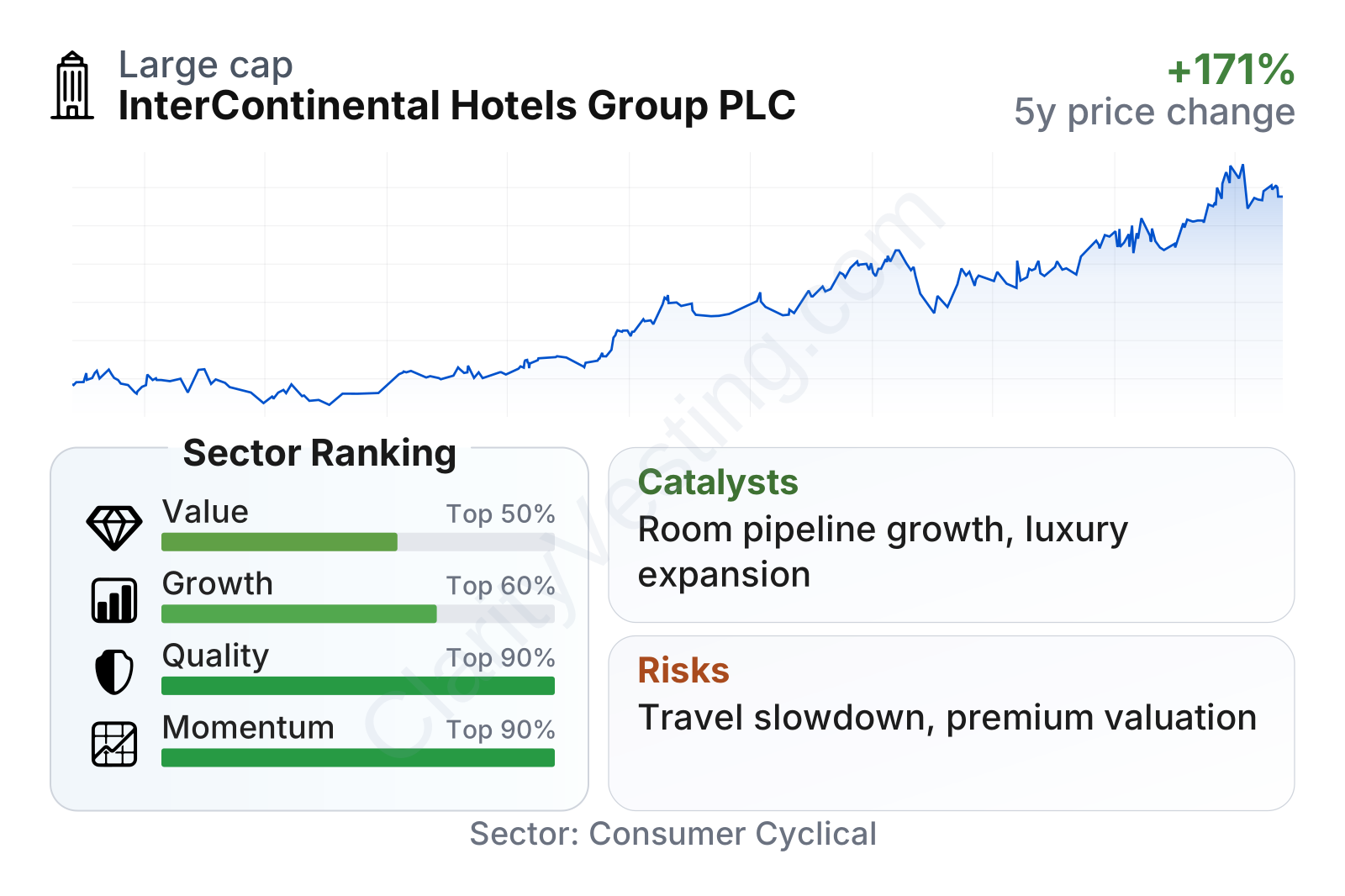
IHG stands out most clearly on business quality and market performance. Profitability is well above the lodging sector median, with operating margin in the mid-20% range and profit margin notably stronger than many peers. Returns on capital are exceptionally high, although these numbers are boosted by the group’s asset-light model and capital structure, so they should be read as a sign of strong economics rather than in isolation.
Growth is more mixed in the short term. Recent year-over-year revenue growth is modest compared with the sector median, but the five-year record remains solid, especially in revenue per share and free cash flow expansion. The market has recognized that strength: the stock’s multi-year price performance has been far ahead of the broader sector, which helps explain why valuation multiples now sit at a premium.
Growth
Global lodging remains a structurally growing industry over the long run, supported by rising travel demand, expanding middle classes in many regions, and the continued globalization of business and tourism. Even though hotel demand is cyclical from year to year, the long-range direction of branded accommodation has generally been upward. IHG is well positioned within that trend because branded chains continue gaining share from independent hotels, especially where loyalty programs, digital booking tools, and standardized service matter to travelers and property owners.
IHG’s strategy also makes sense for future growth. The company has leaned into an asset-light model, which allows it to add rooms without tying up large amounts of capital in owned buildings. That usually supports better returns and more flexible expansion. It has also been building out newer brands such as voco and avid while strengthening premium and luxury exposure through brands like Six Senses and Regent. This gives IHG a broader runway than relying only on mature legacy brands.
Recent top-line growth looks more moderate than some sector peers, which suggests the easy rebound phase is largely over. However, that does not necessarily weaken the long-term case. For hotel groups like IHG, unit growth, fee rate quality, and revenue per available room trends can matter more than raw sales acceleration in any single year. The company’s five-year revenue trajectory still points to a business that has expanded meaningfully since the post-pandemic reset.
Cash generation is an important part of the growth picture. IHG has been producing strong free cash flow, with the latest trailing figure around $1.5 billion and a solid multi-year growth trend. That provides flexibility for dividends, buybacks, debt management, and selective brand investment. For a business based on franchise and management fees, healthy cash conversion is one of the clearest signs that the operating model is working.
One meaningful catalyst is continued net system expansion. In plain terms, that means adding more hotels and more rooms under IHG brands. Another is the growth of the loyalty ecosystem, now centered around IHG One Rewards, which can improve repeat bookings and make the company more attractive to hotel owners choosing a flag. A further opportunity comes from the luxury and lifestyle segment, where room growth and fee potential are often stronger than in more mature midscale categories.
Recent company updates have also emphasized development activity, openings, and pipeline strength across regions. That matters because hotel companies often show their future momentum through the signed pipeline before revenue appears in reported numbers. If conversion activity remains healthy and new signings continue, it supports a longer runway for fee growth than current same-year revenue alone may suggest.
Risks
This article is for informational purposes only and does not constitute financial advice. Some content is AI-generated. See Disclaimer