Stock Analysis · Hovnanian Enterprises Inc. PFD DEP1/1000A (HOVNP)
Overview
Hovnanian Enterprises is a U.S. homebuilder. It designs, builds, markets, and sells single-family homes, townhomes, condominiums, and attached homes across several states. The company also provides related financial services, mainly mortgage financing and title services for its homebuyers. Even though the security here is the preferred stock HOVNP, the underlying business exposure comes from the broader Hovnanian Enterprises homebuilding operation.
The business is driven primarily by selling newly built homes and developing residential communities. Like most builders, results depend on how many homes are delivered, the average selling price of those homes, construction costs, land spending, and the availability of mortgage credit for buyers.
Revenue is heavily concentrated in homebuilding, with financial services representing only a small supporting stream. Based on recent annual filings, the mix is approximately:
- Homebuilding operations: roughly more than 95% of total revenue, coming from home sales and land-related activity.
- Financial services: roughly 1% to 5% of total revenue, mainly mortgage banking and title services tied to home sales.
Geographically, Hovnanian operates in a diversified set of U.S. housing markets rather than relying on only one region, which helps reduce some local market risk. Still, the company remains closely tied to the overall health of the U.S. housing cycle.
The long-term picture shows a business that lifted revenue to around the $3 billion level over recent years, but with a noticeably sharper drop in profitability in the latest period. Gross profit and operating income weakened materially even though sales stayed relatively stable, which suggests margin pressure rather than a collapse in demand.
Key Figures
| Metric | Value | Sector ⓘ |
|---|---|---|
| Date | Sep 12, 2026 | |
| Context | ||
| Sector | Consumer Cyclical | |
| Industry | Homebuilding & Construction Supplies | |
| Market Cap ⓘ | $3.14B | |
| Beta ⓘ | N/A | |
Value (Cheapness) | ||
| P/E Ratio ⓘ | N/A | 17.10 |
| FCF Yield ⓘ | 6.31% | 8.53% |
| EBIT / EV ⓘ | N/A | 6.46% |
| PEG ⓘ | N/A | |
Growth (Business expansion) | ||
| Revenue Growth ⓘ | N/A | 5.75% |
| RPS Growth (5Y CAGR) ⓘ | 1.50% | 9.14% |
| EPS Growth (5Y CAGR) ⓘ | N/A | -18.21% |
| Margin Growth (5Y Trend) ⓘ | -5.54% | -0.23% |
| FCF Growth (5Y CAGR) ⓘ | -5.03% | 4.91% |
Quality (Business durability) | ||
| ROIC (Latest) ⓘ | 0.96% | 12.61% |
| ROIC (5Y Median) ⓘ | 16.38% | 10.72% |
| Net Debt / EBIT (Latest) ⓘ | 10.50 | 2.10 |
| Net Debt / EBIT (5Y Median) ⓘ | 2.63 | 2.32 |
| Operating Margin (Latest) ⓘ | 2.28% | 9.25% |
| Operating Margin (5Y Median) ⓘ | 9.98% | 9.64% |
| Debt to Equity (Latest) ⓘ | 114.20% | 75.78% |
| Profit Margin (Latest) ⓘ | N/A | 5.33% |
| Free Cash Flow (Latest) ⓘ | $197.78M | |
Momentum (Price trend) | ||
| 3Y Return ⓘ | +40.08% | +14.53% |
| 12M Return (excl. last month) ⓘ | +8.02% | +3.08% |
| 6M Return ⓘ | -4.99% | +0.55% |
| Price vs. 200-Day MA ⓘ | -2.60% | -0.54% |
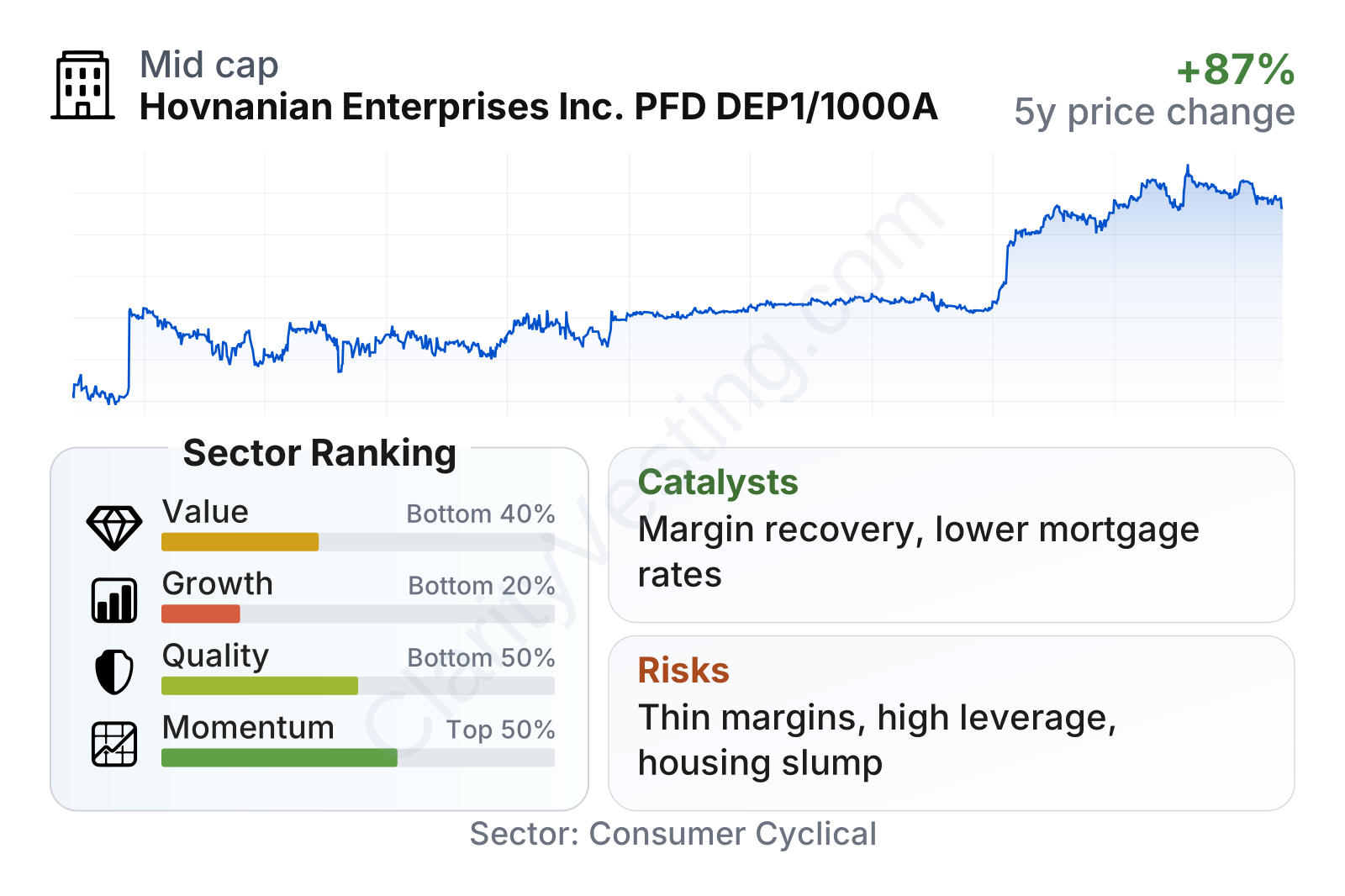
The market value is in the mid-single-digit billions, which places Hovnanian in the smaller public homebuilder group rather than among the industry giants. The overall factor profile is mixed: value metrics look relatively solid, momentum has been strong, but growth and balance-sheet quality rank weaker versus much of the sector. Free cash flow generation remains meaningful, yet leverage is still elevated enough to matter.
The share price trend has been positive over the last several years, with the preferred shares moving from the low teens to around the low $20s. That steady climb suggests improving market confidence, but it also means the market has already recognized at least part of the operational recovery and debt-reduction progress.
Growth
The company operates in residential construction, a sector with long-term support from U.S. population growth, household formation, and a structural shortage of housing supply in many markets. Those are helpful background forces. However, homebuilding is not a smooth growth industry. It is highly cyclical and can swing quickly with mortgage rates, consumer confidence, and affordability.
Hovnanian’s strategy has centered on community development, disciplined pricing, market selection, and efforts to improve its capital structure over time. That strategy is sensible for a builder with a more leveraged history: protect margins where possible, pace land investment carefully, and convert deliveries into cash. The business also benefits when resale housing remains tight, because that can push buyers toward new construction.
Recent growth indicators are less exciting than the sector backdrop might suggest. Revenue growth has flattened on the latest year-over-year reading, and the company’s five-year revenue-per-share growth trails the sector median by a wide margin. In other words, the industry may still offer opportunity, but Hovnanian has recently been converting that opportunity into growth less effectively than many peers.
Cash generation is a more constructive point. Free cash flow remains positive, and the latest trailing figure is far better than the very low level seen earlier in the period shown. For a homebuilder, this matters because cash supports land acquisition, debt management, and resilience during slower selling environments. A meaningful catalyst would be any continued improvement in housing affordability or mortgage-rate relief, since even a modest improvement can help orders, deliveries, and margins. Company filings and public updates have also shown continued attention to land pipeline management and community count, which can support future volume if demand cooperates.
A more specific opportunity comes from the company’s operating leverage. If gross margins stabilize after the recent decline, earnings can improve faster than revenue because a large part of overhead does not need to rise as quickly. That makes margin recovery one of the clearest business catalysts to watch.
Risks
This article is for informational purposes only and does not constitute financial advice. Some content is AI-generated. See Disclaimer


