Stock Analysis · Hilton Worldwide Holdings Inc (HLT)
Overview
Hilton Worldwide Holdings Inc. is one of the largest hotel companies in the world. It operates an asset-light model: in simple terms, Hilton mostly does not own the hotel buildings carrying its brands. Instead, it earns fees by franchising brands such as Hilton Hotels & Resorts, Hampton, DoubleTree, Embassy Suites, Waldorf Astoria, Conrad, Homewood Suites, Home2 Suites, Motto, Tempo, Signia, Canopy, Curio Collection, Tapestry Collection, Spark, LivSmart Studios, Graduate, and others, and by managing hotels for owners. This structure usually requires less capital than owning real estate directly and can produce strong margins and cash generation when travel demand is healthy.
Hilton’s revenue is mainly generated from fees and hotel operations. Based on the company’s recent annual reporting structure, the largest sources are approximately:
- Franchise and licensing fees: about 55% to 60% of revenue. This includes fees paid by hotel owners to use Hilton brands, reservation systems, loyalty platform, and operating standards.
- Owned and leased hotel revenue: about 20% to 25%. This comes from the smaller portion of hotels that Hilton directly operates through ownership or lease arrangements.
- Management and other fees: about 15% to 20%. This includes base and incentive management fees from running hotels on behalf of third-party owners, plus related services.
Geographically, Hilton is still heavily exposed to the United States, but its growth strategy increasingly relies on international expansion, especially in Asia-Pacific, Europe, the Middle East, and fast-growing lifestyle and extended-stay categories.
The business mix is attractive for long-term analysis because franchising and management tend to be more resilient than hotel ownership. As Hilton adds rooms, it can grow fee income without needing to invest the full cost of building hotels itself.
The revenue base has expanded strongly since the post-pandemic rebound, while operating income has risen faster than overhead costs. That pattern fits Hilton’s fee-heavy model: once the network gets larger, incremental revenue can convert into profit efficiently.
Key Figures
| Metric | Value | Sector ⓘ |
|---|---|---|
| Date | Sep 12, 2026 | |
| Context | ||
| Sector | Consumer Cyclical | |
| Industry | Lodging | |
| Market Cap ⓘ | $68.91B | |
| Beta ⓘ | 1.06 | |
Value (Cheapness) | ||
| P/E Ratio ⓘ | 45.03 | 17.10 |
| FCF Yield ⓘ | 2.91% | 8.53% |
| EBIT / EV ⓘ | 3.54% | 6.46% |
| PEG ⓘ | 1.27 | |
Growth (Business expansion) | ||
| Revenue Growth ⓘ | 2.50% | 5.75% |
| RPS Growth (5Y CAGR) ⓘ | 25.18% | 9.14% |
| EPS Growth (5Y CAGR) ⓘ | -3.67% | -18.21% |
| Margin Growth (5Y Trend) ⓘ | 5.83% | -0.23% |
| FCF Growth (5Y CAGR) ⓘ | 183.72% | 4.91% |
Quality (Business durability) | ||
| ROIC (Latest) ⓘ | 30.23% | 12.61% |
| ROIC (5Y Median) ⓘ | 20.49% | 10.72% |
| Net Debt / EBIT (Latest) ⓘ | 4.49 | 2.10 |
| Net Debt / EBIT (5Y Median) ⓘ | 4.52 | 2.32 |
| Operating Margin (Latest) ⓘ | 23.24% | 9.25% |
| Operating Margin (5Y Median) ⓘ | 21.06% | 9.64% |
| Debt to Equity (Latest) ⓘ | -222.48% | 75.78% |
| Profit Margin (Latest) ⓘ | 31.03% | 5.33% |
| Free Cash Flow (Latest) ⓘ | $2.01B | |
Momentum (Price trend) | ||
| 3Y Return ⓘ | +98.06% | +14.53% |
| 12M Return (excl. last month) ⓘ | +20.25% | +3.08% |
| 6M Return ⓘ | +4.15% | +0.55% |
| Price vs. 200-Day MA ⓘ | -2.27% | -0.54% |
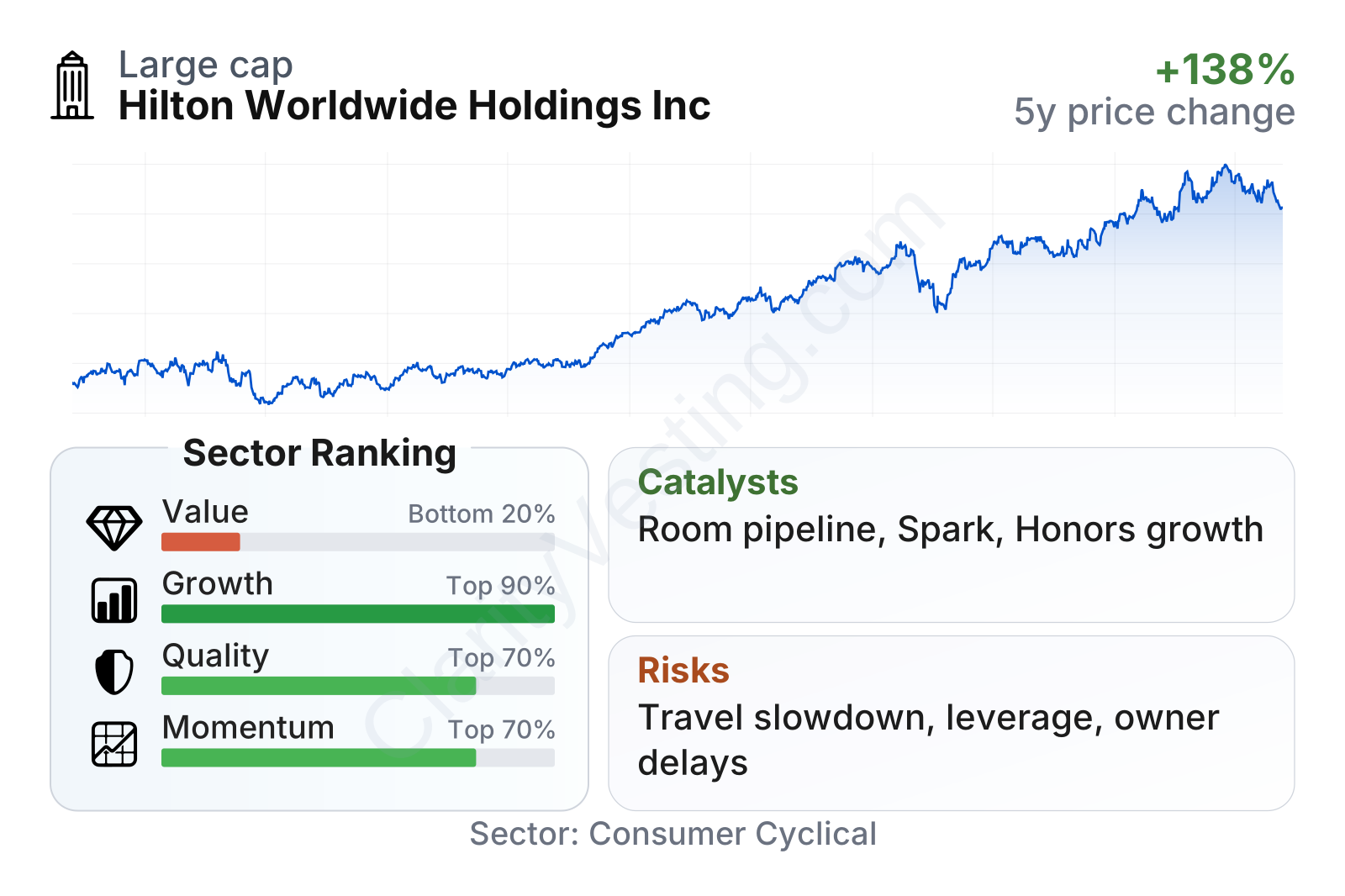
Hilton stands out for profitability, returns on capital, and share-price performance relative to much of the consumer cyclical sector. Operating margin is above 23%, return on invested capital is around 30%, and free cash flow remains strong. The weaker area is valuation: earnings and cash flow multiples are well above sector norms, so the market is already assigning a premium to the business. Leverage also looks elevated on a net debt to EBIT basis, while the negative debt-to-equity figure is mainly a balance-sheet effect caused by shareholder equity being below zero after years of buybacks and capital returns.
Growth
Hilton operates in a sector with durable long-term drivers. Travel demand benefits from rising global mobility, business travel normalization, tourism growth, loyalty-driven repeat bookings, and continued development in midscale, luxury, lifestyle, and extended-stay lodging. Hotels are cyclical in the short run, but the broader industry still has room to grow over time as branded chains take share from independent hotels and as international markets become more organized around major reservation and loyalty platforms.
Hilton’s strategy also makes sense for future growth. The company focuses on signing more hotels into its system, expanding room count, pushing new brands into unmet segments, and using its Hilton Honors loyalty ecosystem to keep occupancy and pricing power healthy across the network. This model can scale efficiently because new openings often increase fee revenue faster than corporate costs.
Recent revenue growth is no longer at the extraordinary rebound rates seen after the pandemic, but it remains positive. That slowdown is not necessarily a warning sign by itself; it reflects a business that has moved from recovery mode to steadier expansion. The more important question is whether Hilton can keep adding rooms, maintain pricing, and grow fee streams faster than the broader industry.
Cash generation is one of the strongest parts of the Hilton profile. Trailing free cash flow has climbed from a little over $400 million in early 2022 to above $2 billion more recently. For a hotel company built around management and franchise fees, that is an important sign because it shows the model can convert revenue into real cash, not just accounting profit.
A meaningful catalyst is Hilton’s development pipeline and brand expansion. The company has continued adding brands and entering categories where demand remains solid, including premium economy and extended stay. Graduate Hotels and LivSmart Studios broaden the platform further, while Spark has given Hilton an entry into the premium economy conversion space. Another growth driver is international room expansion, especially in markets where branded lodging still has a lower penetration rate than in the U.S.
Recent company updates have also emphasized continued system growth, resilient leisure demand, improving group trends, and loyalty engagement. For a business like Hilton, these signals matter because future earnings depend heavily on room additions and network activity rather than only on same-hotel revenue.
Risks
This article is for informational purposes only and does not constitute financial advice. Some content is AI-generated. See Disclaimer


