Stock Analysis · Harmonic Inc (HLIT)
Overview
Harmonic Inc is a communications technology company that helps video and broadband providers deliver content and internet access more efficiently. In simple terms, it sells the software, hardware, and services that cable operators, telecom companies, and media groups use to stream video, run TV platforms, and expand broadband networks.
In recent years, the business has become increasingly centered on broadband infrastructure, especially virtualized cable access technology. That matters because broadband networks are becoming more software-driven, which can improve flexibility for operators and create recurring upgrade opportunities for suppliers like Harmonic.
Based on the company’s recent filings, Harmonic’s revenue mainly comes from two operating segments:
- Broadband: approximately 75% to 80% of recent annual revenue. This segment includes cable access solutions, virtualized broadband software, related appliances, and support services used by network operators to deliver high-speed internet.
- Video: approximately 20% to 25% of recent annual revenue. This includes video streaming, broadcast delivery, playout, and SaaS-based video processing products used by media companies and service providers.
Within those segments, revenue is also split between products and services, with products still representing the larger share, while software subscriptions, support, and SaaS add a recurring component. The business mix has been shifting toward broadband over time, making Harmonic more exposed to telecom and cable network spending than to traditional broadcast equipment cycles.
From a cost structure perspective, Harmonic has historically maintained healthy gross profit, but earnings have been more uneven because operating expenses and demand swings can have a large effect on bottom-line results. That pattern makes revenue quality and backlog especially important for understanding the company.
The business expanded meaningfully from 2021 through 2024, with gross profit improving alongside revenue, before a sharp reset in 2025. That suggests the core economics can be attractive when demand is healthy, but it also shows how sensitive Harmonic remains to customer spending cycles and project timing.
Key Figures
| Metric | Value | Sector ⓘ |
|---|---|---|
| Date | Sep 12, 2026 | |
| Context | ||
| Sector | Technology | |
| Industry | Communication Equipment | |
| Market Cap ⓘ | $1.31B | |
| Beta ⓘ | 1.32 | |
Value (Cheapness) | ||
| P/E Ratio ⓘ | 48.00 | 29.51 |
| FCF Yield ⓘ | 4.12% | 4.25% |
| EBIT / EV ⓘ | 2.81% | 2.85% |
| PEG ⓘ | 1.84 | |
Growth (Business expansion) | ||
| Revenue Growth ⓘ | 53.50% | 15.40% |
| RPS Growth (5Y CAGR) ⓘ | -9.83% | 8.56% |
| EPS Growth (5Y CAGR) ⓘ | -14.68% | -11.88% |
| Margin Growth (5Y Trend) ⓘ | -0.33% | 0.46% |
| FCF Growth (5Y CAGR) ⓘ | 36.34% | 9.80% |
Quality (Business durability) | ||
| ROIC (Latest) ⓘ | 3.65% | 9.44% |
| ROIC (5Y Median) ⓘ | 6.92% | 8.30% |
| Net Debt / EBIT (Latest) ⓘ | 0.58 | 0.54 |
| Net Debt / EBIT (5Y Median) ⓘ | 1.88 | 0.44 |
| Operating Margin (Latest) ⓘ | 7.65% | 9.58% |
| Operating Margin (5Y Median) ⓘ | 3.84% | 8.25% |
| Debt to Equity (Latest) ⓘ | 36.11% | 33.33% |
| Profit Margin (Latest) ⓘ | -10.62% | 7.14% |
| Free Cash Flow (Latest) ⓘ | $53.91M | |
Momentum (Price trend) | ||
| 3Y Return ⓘ | +20.97% | +45.48% |
| 12M Return (excl. last month) ⓘ | +31.72% | +23.48% |
| 6M Return ⓘ | +28.07% | +20.93% |
| Price vs. 200-Day MA ⓘ | +4.93% | +7.43% |
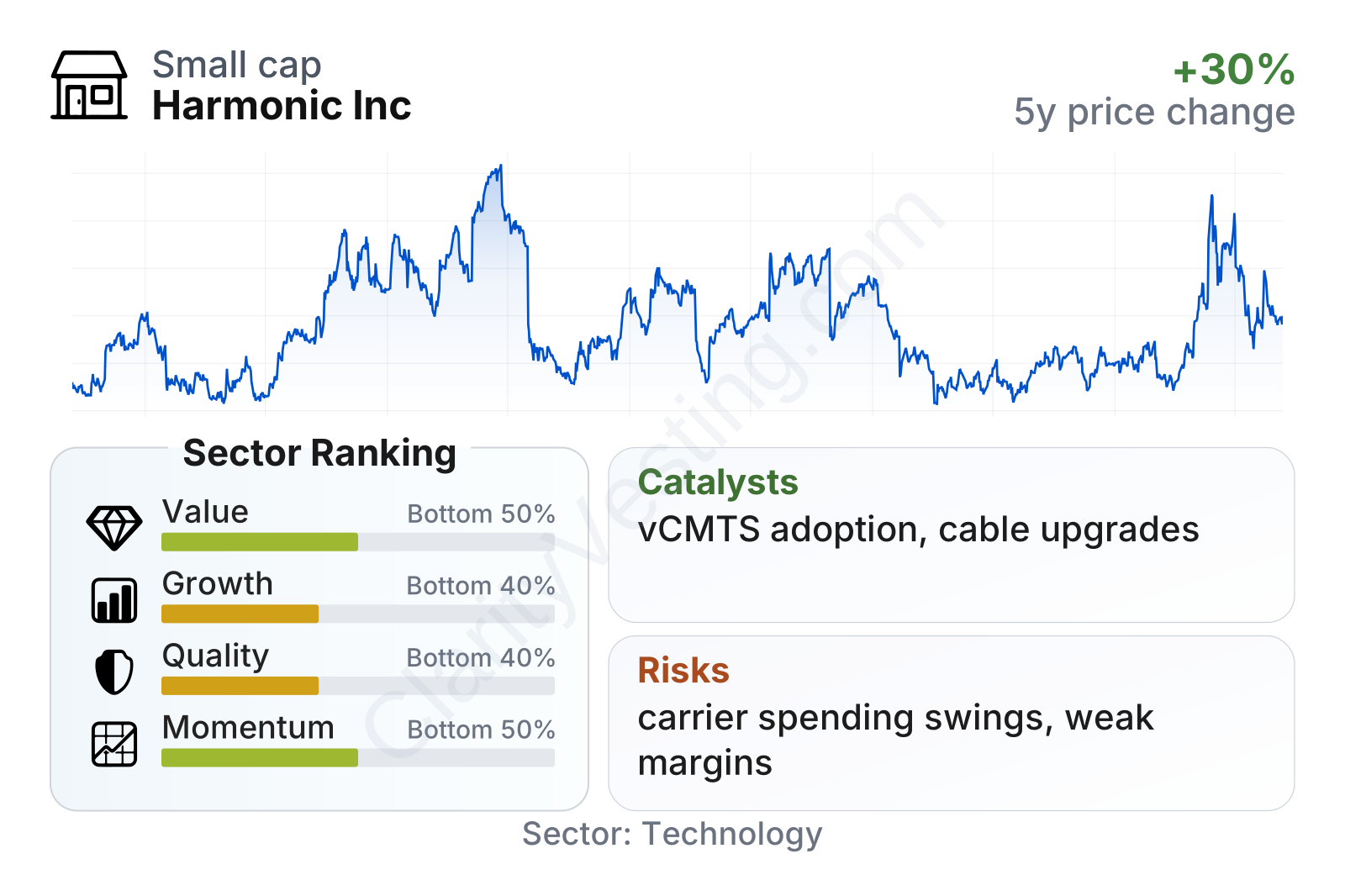
Harmonic is a small-cap technology company with a stock that has been more volatile than the broader market, which fits its above-average beta. The share price has recovered strongly in recent months, and recent momentum is better than much of the sector, but the fundamentals table is more mixed. Valuation is not especially cheap on earnings, growth metrics are weak relative to the sector because revenue recently turned negative year over year, and quality indicators such as return on invested capital and margins sit below many peers. One notable positive is cash generation: free cash flow has held up better than reported earnings over time, which can matter in a business where accounting results are sometimes distorted by one-time items.
Growth
Harmonic operates in a sector with real long-term demand drivers. Broadband consumption keeps rising as households and businesses use more streaming video, cloud applications, gaming, and connected devices. At the same time, cable and telecom operators are modernizing their networks to deliver faster speeds at lower cost. Harmonic’s broadband strategy is directly tied to that transition, especially through virtualized cable access products that replace older, more hardware-heavy systems.
The strategic logic is clear: if operators keep moving toward software-defined broadband architectures, Harmonic can sell not only initial deployments but also capacity expansions, software upgrades, and related support. That creates a more durable platform than relying mainly on one-off equipment sales. The company’s video business is smaller, but it still provides exposure to streaming and cloud-based video processing, where media customers continue to look for cost efficiency.
Revenue growth has been highly uneven. Harmonic posted very strong expansion in parts of 2021, 2022, and 2024, but that was followed by deep declines in several later quarters, including into 2026. This pattern suggests that demand is not moving in a straight line and that customer order timing can swing results sharply. For long-term analysis, that makes it more useful to focus on whether broadband adoption is deepening rather than reading too much into a single quarter.
Cash generation gives a somewhat better picture than revenue alone. Free cash flow improved substantially over the last few years, even though it has pulled back from a peak. That indicates Harmonic has shown an ability to convert at least part of its installed base and product activity into cash, which helps support flexibility during slower periods.
A meaningful catalyst is the continued rollout of next-generation broadband architectures by cable operators. Harmonic has positioned itself around virtualized DOCSIS and distributed access solutions, which are central technologies for network upgrades. Another potential tailwind is customer concentration in large operators: this creates risk, but if those customers accelerate deployments, Harmonic’s results can improve quickly. Recent company communications have also emphasized wins, deployments, and product developments tied to broadband transformation, which supports the idea that management is focused on the most promising part of the market.
Risks
This article is for informational purposes only and does not constitute financial advice. Some content is AI-generated. See Disclaimer


