Stock Analysis · HKT Trust (HKTTY)
Overview
HKT Trust is one of Hong Kong’s main telecommunications and technology infrastructure groups. Through its operating businesses, it provides mobile services, broadband internet, fixed-line communications, enterprise solutions, international telecom services, and related digital offerings. In simple terms, it runs essential connectivity networks for consumers, businesses, and public-sector customers. Its business model is built around recurring service revenue, which tends to be steadier than more cyclical industries because phone and internet access are everyday necessities.
The company’s revenue base is diversified across several telecom activities. Based on recent annual reporting by HKT, the main sources of revenue are approximately the following:
- Mobile communications: about 35% to 40% of revenue. This includes postpaid and prepaid mobile plans, handset sales, roaming, and related mobile services.
- Consumer fixed-line and broadband: about 25% to 30%. This covers home broadband, voice services, media-related consumer bundles, and other household connectivity products.
- Enterprise solutions: about 20% to 25%. This segment includes information and communications technology services, cloud, systems integration, cybersecurity, managed services, and digital transformation work for corporate and government clients.
- International telecommunications: about 5% to 10%. This generally includes wholesale connectivity, international carrier business, and cross-border network services.
- Other activities: below 5%. This can include smaller service lines and ancillary telecom-related activities.
That mix matters for long-term analysis because it shows HKT is not just a traditional phone company. It has a large base of subscription-like connectivity revenue, while enterprise technology services add a second growth engine. Over the last several years, revenue has been relatively stable to slightly rising, while operating profit has improved faster than sales, suggesting the company has been extracting better efficiency from a mature telecom base.
The longer-term pattern shows modest top-line expansion from the low HK$34 billion range to the mid-HK$36 billion range, while operating income and net income have held up well. Profit conversion has therefore looked resilient even when revenue growth has not been dramatic, which is typical of a telecom operator with a large installed customer base.
Key Figures
| Metric | Value | Sector ⓘ |
|---|---|---|
| Date | Sep 12, 2026 | |
| Context | ||
| Sector | Communication Services | |
| Industry | Telecom Services | |
| Market Cap ⓘ | $11.56B | |
| Beta ⓘ | 0.43 | |
Value (Cheapness) | ||
| P/E Ratio ⓘ | 16.94 | 18.61 |
| FCF Yield ⓘ | 111.40% | 13.68% |
| EBIT / EV ⓘ | N/A | 4.54% |
| PEG ⓘ | N/A | |
Growth (Business expansion) | ||
| Revenue Growth ⓘ | 7.90% | 5.40% |
| RPS Growth (5Y CAGR) ⓘ | 1.80% | 4.62% |
| EPS Growth (5Y CAGR) ⓘ | 33.96% | -18.01% |
| Margin Growth (5Y Trend) ⓘ | 1.76% | 1.10% |
| FCF Growth (5Y CAGR) ⓘ | 3.18% | 5.88% |
Quality (Business durability) | ||
| ROIC (Latest) ⓘ | 17.54% | 8.38% |
| ROIC (5Y Median) ⓘ | 8.32% | 8.32% |
| Net Debt / EBIT (Latest) ⓘ | 2.95 | 1.99 |
| Net Debt / EBIT (5Y Median) ⓘ | 5.72 | 2.94 |
| Operating Margin (Latest) ⓘ | 22.55% | 14.89% |
| Operating Margin (5Y Median) ⓘ | 21.96% | 12.96% |
| Debt to Equity (Latest) ⓘ | 145.43% | 59.59% |
| Profit Margin (Latest) ⓘ | 14.16% | 8.77% |
| Free Cash Flow (Latest) ⓘ | $12.88B | |
Momentum (Price trend) | ||
| 3Y Return ⓘ | +83.81% | +46.64% |
| 12M Return (excl. last month) ⓘ | +8.60% | +2.16% |
| 6M Return ⓘ | +5.49% | +5.05% |
| Price vs. 200-Day MA ⓘ | +12.51% | +2.88% |
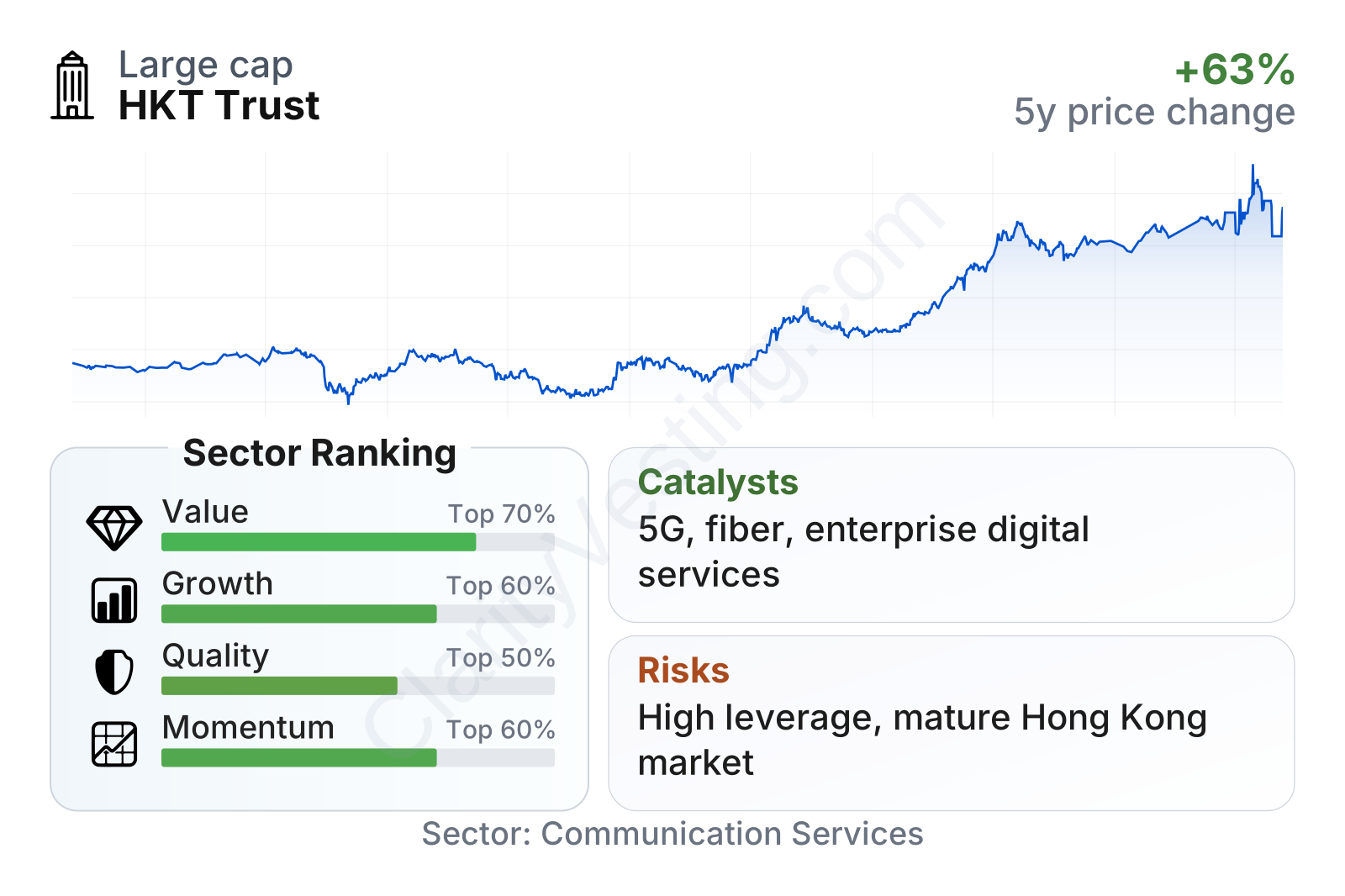
HKT sits in the large-cap range for its niche, and the stock has shown relatively low volatility, with a beta well below 1. In the latest factor view, quality and growth appear around the better half of the sector, while value also looks somewhat favorable. Profitability stands out: operating margin is around 23% versus roughly 15% for the sector median, profit margin is around 14% versus about 9%, and return on invested capital is also clearly stronger than the sector midpoint. The main offset is leverage, which remains heavier than many peers even though debt metrics have improved from earlier periods.
Growth
Telecom is not usually a fast-growth sector, but it is a durable one. Demand for mobile data, fiber broadband, business cloud connectivity, cybersecurity, and outsourced enterprise technology services continues to expand over time. That gives HKT exposure to a sector with limited explosiveness but strong staying power. For a long-term view, that can matter more than headline excitement.
HKT’s strategy makes sense in that context. The company is using its network position in Hong Kong to deepen customer relationships across mobile, broadband, and business solutions rather than relying on one single product. This bundled approach can reduce customer churn and raise revenue per user. On the enterprise side, digital transformation work offers a path to grow faster than the traditional fixed-line business.
The recent growth profile looks respectable rather than spectacular. Latest year-over-year revenue growth is running somewhat above the sector median, while the five-year revenue-per-share trend is more modest. That suggests HKT is still operating in a mature market, but recent execution has been solid enough to keep it from stagnating.
Cash generation remains a central positive point. Even without rapid expansion, telecom businesses can create meaningful cash flow when networks are already established and customer bases are sticky. HKT’s free cash flow level is strong in absolute terms, and its free-cash-flow yield screens well versus much of the sector. That supports the view that the business has real earning power behind its accounting profits.
One of the clearest catalysts is the ongoing rise in data consumption and enterprise outsourcing of network and IT functions. Fiber adoption, 5G monetization, cross-selling between home and mobile plans, and demand for managed digital services can all support gradual revenue and margin progress. In addition, HKT benefits from operating in Hong Kong, a dense and high-income market where advanced telecom services are widely used and infrastructure quality matters.
Risks
This article is for informational purposes only and does not constitute financial advice. Some content is AI-generated. See Disclaimer