Stock Analysis · Gitlab Inc (GTLB)
Overview
GitLab is a software company that helps businesses build, test, secure, and manage software in one platform. Its product is used by developers, security teams, and IT operations teams to handle the full software development lifecycle, from writing code to deploying applications and monitoring changes. The company is known for its “DevSecOps” positioning, which means combining software development, security, and operations into a more unified workflow.
Its business model is mainly subscription-based. GitLab sells access to its platform in different tiers, including self-managed versions that customers run in their own environments and software-as-a-service offerings hosted in the cloud. The company also generates a smaller amount of revenue from professional services and support.
Based on recent annual reporting, GitLab’s revenue sources are approximately:
- Subscription revenue: about 92% to 94% of total revenue. This includes paid plans for the GitLab platform, whether delivered as a cloud service or installed by customers in their own infrastructure.
- License revenue within subscriptions: the largest part of the business, tied to recurring access rights and usage-based expansion across engineering teams.
- Professional services and other revenue: about 6% to 8% of total revenue. This includes implementation help, training, and related support work.
What stands out is how much of the company’s revenue converts into gross profit. Revenue has risen sharply over the past several years, and the cost to deliver the software has remained relatively low compared with sales, producing gross margins in the high-80% range. At the same time, GitLab still spends heavily on research and development and on sales, which explains why accounting profits remain under pressure even as the core business scales.
The overall picture is of a software platform with a highly recurring revenue base, strong gross margins, and an expense structure that is still being worked toward steadier profitability.
Key Figures
| Metric | Value | Sector ⓘ |
|---|---|---|
| Date | Sep 12, 2026 | |
| Context | ||
| Sector | Technology | |
| Industry | Software - Infrastructure | |
| Market Cap ⓘ | $7.88B | |
| Beta ⓘ | 0.99 | |
Value (Cheapness) | ||
| P/E Ratio ⓘ | N/A | 29.51 |
| FCF Yield ⓘ | 2.71% | 4.25% |
| EBIT / EV ⓘ | -0.31% | 2.85% |
| PEG ⓘ | N/A | |
Growth (Business expansion) | ||
| Revenue Growth ⓘ | 21.30% | 15.40% |
| RPS Growth (5Y CAGR) ⓘ | 34.79% | 8.56% |
| EPS Growth (5Y CAGR) ⓘ | -27.42% | -11.88% |
| Margin Growth (5Y Trend) ⓘ | N/A | 0.46% |
| FCF Growth (5Y CAGR) ⓘ | N/A | 9.80% |
Quality (Business durability) | ||
| ROIC (Latest) ⓘ | -1.89% | 9.44% |
| ROIC (5Y Median) ⓘ | -17.94% | 8.30% |
| Net Debt / EBIT (Latest) ⓘ | N/A | 0.54 |
| Net Debt / EBIT (5Y Median) ⓘ | N/A | 0.44 |
| Operating Margin (Latest) ⓘ | -1.78% | 9.58% |
| Operating Margin (5Y Median) ⓘ | -28.35% | 8.25% |
| Debt to Equity (Latest) ⓘ | N/A | 33.33% |
| Profit Margin (Latest) ⓘ | -4.99% | 7.14% |
| Free Cash Flow (Latest) ⓘ | $213.67M | |
Momentum (Price trend) | ||
| 3Y Return ⓘ | -10.24% | +45.48% |
| 12M Return (excl. last month) ⓘ | +3.97% | +23.48% |
| 6M Return ⓘ | +105.92% | +20.93% |
| Price vs. 200-Day MA ⓘ | +48.40% | +7.43% |
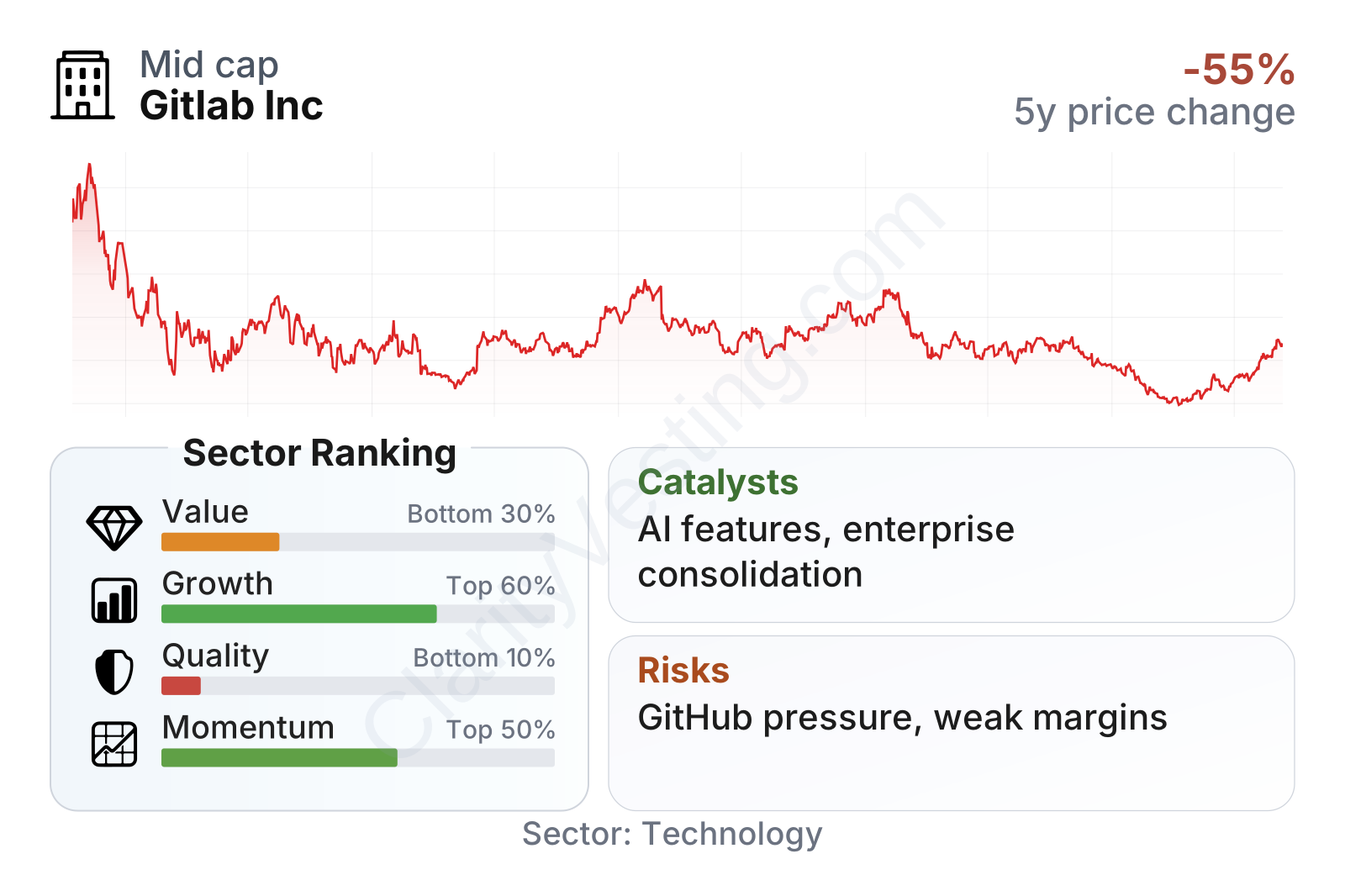
GitLab is a mid-sized software company with market value in the single-digit billions and share-price volatility close to the broader market. The table points to a business that scores better on growth than on value or quality. Revenue growth remains above the sector median, and long-term revenue-per-share expansion has been especially strong. However, profitability and returns on capital still trail much of the software group, which keeps the overall quality profile weak despite healthy free cash flow generation.
The stock’s trading pattern has also been uneven. Over several years, the share price has been volatile and remains well below its early post-listing levels, even though the recent six-month rebound has been strong. That combination usually signals a company where operating progress is improving faster than market confidence has fully stabilized.
Growth
GitLab operates in a sector with durable long-term demand. Software development is becoming more complex, more security-sensitive, and more automated. Companies want fewer disconnected tools, faster releases, and stronger compliance controls. That plays directly into GitLab’s strategy of offering a single platform rather than a collection of point solutions.
The company’s growth has clearly slowed from the exceptional rates seen earlier in its public-company life, but it is still expanding at a pace that compares favorably with much of the sector. Recent annual growth has moved down from very high levels into the low-20% range, which is a normal pattern for a software business reaching larger scale.
That deceleration matters, but it does not automatically weaken the long-term case. In GitLab’s case, the strategy still makes sense because the company is trying to expand within existing customers, move more users to higher-value tiers, and win larger enterprises that want one platform for code creation, testing, security scanning, compliance, and deployment. The broader the platform becomes, the easier it is for GitLab to argue that it can replace several tools at once.
A meaningful catalyst is artificial intelligence. GitLab has been adding AI features into its platform, including coding assistance and workflow automation. If these features improve developer productivity and remain tightly integrated with security and deployment tools, they can strengthen the platform’s value without requiring customers to adopt a separate product. Another catalyst is the ongoing push by large enterprises to consolidate vendors and control software complexity, which supports GitLab’s all-in-one message.
Cash generation has improved much faster than accounting earnings. Free cash flow moved from negative territory to solidly positive on a trailing basis, showing that the underlying economics are getting stronger even while reported net income remains negative.
Recent company communications have also emphasized enterprise adoption, security capabilities, and AI-enabled functionality. Those themes align well with where software budgets are still being spent: productivity, risk reduction, and tool consolidation.
Risks
This article is for informational purposes only and does not constitute financial advice. Some content is AI-generated. See Disclaimer